

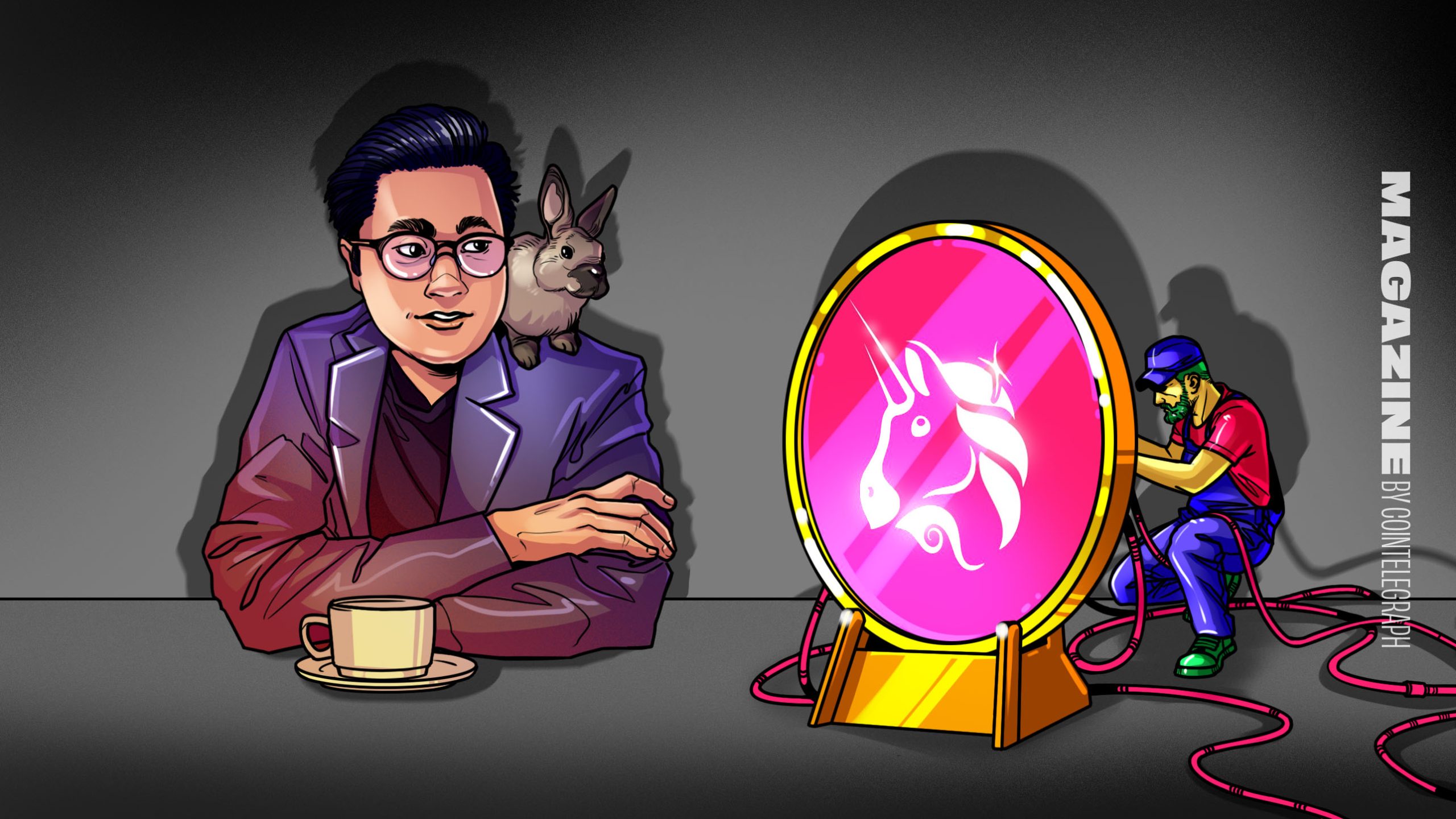
A US federal judge has dismissed a class action lawsuit that sought to hold Uniswap Labs and its founder Hayden Adams liable for scam tokens traded on the decentralized exchange (DEX).
Federal Judge Katherine Polk Failla ruled that the DEX cannot be held responsible for the actions of third-party token issuers.
But that’s not the only court case or jurisdiction with implications for smart contract developers.
Joshua Chu, co-chair of the Hong Kong Web3 Association, argues that the Uniswap ruling highlights a deeper tension between how US courts view decentralized finance (DeFi) infrastructure and how global standards expect platforms to manage illicit finance risks.
In an interview with Cointelegraph Magazine, Chu discussed the implications of the Uniswap decision, how it compares with the prosecution of Tornado Cash developer Roman Storm, and why developers won’t always be beyond the reach of standards set by intergovernmental bodies like the Financial Action Task Force (FATF).
This conversation has been edited for clarity and length.
Magazine: How should we interpret the Uniswap ruling in the broader legal debate over developer liability versus decentralized protocols?
Chu: I’ve had a hard time accepting the idea that Uniswap is really a neutral bystander. We have research showing that a significant portion of listed tokens on DEXes have exhibited rug pull patterns that mature analytics tools can automatically detect. These tools can score their risk and trigger front-end warnings.
For example, we see on blockchain scanners that certain wallets are earmarked as looking like wallets associated with risks. It is easy for developers to implement many of these safeguards without affecting the underlying smart contracts.
At the end of the day, it comes down to choice. Given that this is a sophisticated team that collects fees, the decision not to deploy these defenses for users begins to look less like neutral infrastructure and more like deliberate design that externalizes fraud risk to retail users.
Let’s face it, trading volume is how these infrastructures make a living or gain prominence.
Magazine: How does DeFi as neutral infrastructure square with international DeFi expectations?
Chu: One of the clear divergences we see here is the court’s position that DeFi is neutral infrastructure versus the stance FATF has taken. If you look at FATF statements — as well as regulators that follow FATF standards — it is the opposite of this ruling.
The judgment is not saying the FATF position is wrong. It just seems the judge did not engage with FATF guidance when it comes to certain illicit activities. Because of that, the way this ruling is interpreted could put the US in an awkward position internationally.
Magazine: What does the Uniswap ruling and the Tornado Cash prosecution tell us about how courts and regulators may evaluate developer responsibility in DeFi?
Chu: In Tornado Cash, just like with any decentralized platform, you are not purely dealing with code. There is also the foreseeability-of-harm factor. As we covered earlier, there are features that are readily available that you can plug in. I think it just comes down to the judge taking very different findings on the matter. The Tornado Cash decision aligns more with international standards.
For example, Uniswap could have substantially reduced harm by implementing the defenses I mentioned, which would be in line with FATF expectations on user-facing controls. But they were not doing it. So there are quite a few things that give a very divergent signal.
Read also
Features
You don’t need to be angry about NFTs
Features
‘Account abstraction’ supercharges Ethereum wallets: Dummies guide
Magazine: If a DeFi platform’s front end provides access to scam tokens, does the organization behind its development have liability?
Chu: In corporate law, we have something called piercing the corporate veil — at least in common law. So we see a lot of these fancy structures being employed. But how effective that corporate veil will ultimately be remains to be tested. The narrative, of course, is quite clear. They are pretty much trying to say that they are not profiting from it and are just trying to be the code.
If we return to the FATF position, you are putting certain infrastructure out there that has foreseeability of harm. If we turn it into something more physical and tangible, if you intentionally create a very dangerous tool right in the middle of the road, foreseeability of harm would get you into a lot of trouble in tort law. Of course, that does not apply in the same manner within the digital realm. So there is a delineation.
On one hand, regulators in the US still have to answer to international bodies about continuing developments in Anti-Money Laundering and Combating the Financing of Terrorism (AML/CFT), as well as other regulatory developments in that area.
Magazine: How different would the case have turned out if it were against a centralized exchange?
Chu: That depends on the jurisdiction. On the assumption that there is somehow a jurisdictional locus in either Hong Kong or elsewhere in the Asia-Pacific, we are seeing much more rapid alignment with international standards, where fintech rules are increasingly built on user journey expectations within the regulation itself. So mandating clear risk disclosures, suitability checks, onboarding safeguards and front-end warnings for these online platforms within the user journey is something that is expected here. Not having them can potentially put them at risk of liability as well.
And we have seen significant regulatory action against floating platforms that try to play the regulatory arbitrage game. Some have been asked to cease and desist from operating in the Middle East hubs. And we are seeing more and more regulatory clampdowns on this.
Again, it is always better for these platforms to bring themselves up to standard first rather than risk finding themselves on the receiving end of regulatory enforcement later.
So there is that. Of course, this is the first case I have seen where the court has really sided with the neutral infrastructure narrative, which is basically what is getting all the press. Whether this particular ruling survives in other parts of the US remains to be seen as well.
Read also
Features
You don’t need to be angry about NFTs
Features
‘Account abstraction’ supercharges Ethereum wallets: Dummies guide
Magazine: Could decisions like this affect how the US is evaluated by FATF on its efforts to tackle illicit finance in DeFi?
Chu: This judgment is actually pulling US regulatory actions back as well. Because if you look at the FATF report from last year, they had already earmarked this year’s focus, which is that regulators from each member state should be focusing on how to tackle DeFi infrastructure.
As we know, last year Kim Jong Un took the limelight, and one of the key facilitators of his ability to launder billions of illicit proceeds was these DeFi platforms. So there is an expectation that jurisdictions have to rein this in.
If your jurisdiction is refusing to rein it in properly because of gaps in statutes or gaps in regulatory guidelines, then of course, you will have those relevant states falling short of the FATF’s set objectives for that year.
The US is not above the FATF. It is a member state as well.
Subscribe
The most engaging reads in blockchain. Delivered once a
week.

Yohan Yun
Yohan (Hyoseop) Yun is a Cointelegraph staff writer and multimedia journalist who has been covering blockchain-related topics since 2017. His background includes roles as an assignment editor and producer at Forkast, as well as reporting positions focused on technology and policy for Forbes and Bloomberg BNA. He holds a degree in Journalism and owns Bitcoin, Ethereum, and Solana in amounts exceeding Cointelegraph’s disclosure threshold of $1,000.
Disclaimer
Cointelegraph Magazine publishes long-form journalism, analysis and narrative reporting produced by Cointelegraph’s in-house editorial team with subject-matter expertise.
All articles are edited and reviewed by Cointelegraph editors in line with our editorial standards.
Content published in Magazine does not constitute financial, legal or investment advice. Readers should conduct their own research and consult qualified professionals where appropriate. Cointelegraph maintains full editorial independence.
Read also

Hodler’s Digest
ETH smashes records, Bitcoin’s brilliant quarter, PayPal’s big move: Hodler’s Digest, March 28–April 3
Editorial Staff
9 min
April 3, 2021
The best (and worst) quotes, adoption and regulation highlights, leading coins, predictions and much more — one week on Cointelegraph in one link!
Read more

6 Questions for…
6 Questions for Anton Bukov of 1inch Network
Editorial Staff
3 min
November 14, 2021
We ask the buidlers in the blockchain and cryptocurrency sector for their thoughts on the industry… and we throw in a few random zingers to keep them on their toes! This week, our 6 Questions go to Anton Bukov, co-founder of 1inch Network, a distributed network of decentralized protocols. Anton has been writing code […]
Read more
Read the full article here