

Authored by Naveen Athrappully via The Epoch Times (emphasis ours),
The U.S. Department of the Treasury and the Department of Education (ED) jointly announced a new partnership under which the Treasury will assume responsibility for collecting on defaulted federal student loan debt, according to a March 19 joint statement from the departments.
The Federal Student Assistance Partnership will enhance the administration of student aid programs, mitigate any fallout and cost to taxpayers from mismanagement of the federal student loan portfolio, and facilitate the return of defaulted borrowers to repayment.
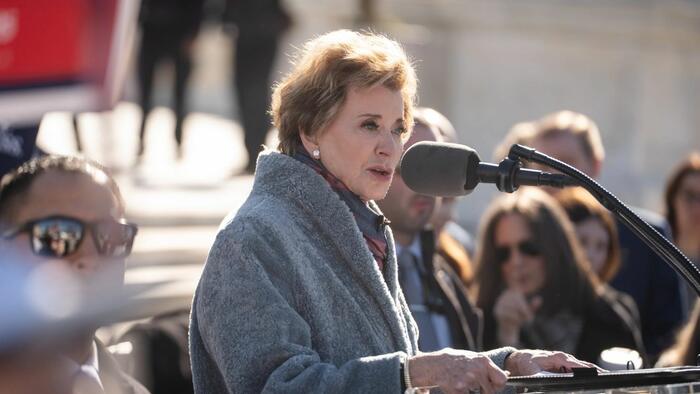
“As student loan debt nears $1.7 Trillion, it’s clear that [the ED] was never intended to serve as our nation’s fifth largest bank,” U.S. Secretary of Education Linda McMahon said in a March 19 post on X. “That’s exactly why we are partnering with [the Treasury] to restore fiscal sanity and better align student aid programs with students, families, and borrowers.”
According to the statement, the Treasury will provide operational support to the ED’s efforts to return borrowers to repayment.
McMahon said that Treasury’s finance expertise will be leveraged to activate “functioning programs” that manage student loan borrowers who are in default.
Treasury has the unique experience, the operational capability, and the financial expertise to bring long overdue financial discipline to the program and be better stewards of taxpayer dollars,” U.S. Secretary of the Treasury Scott Bessent said of the new partnership.
Dismantling Education Department
The latest move by the ED is part of the Trump administration’s efforts to reduce the size of the federal department and return the function of education to the states.
McMahon had previously announced transferring certain key responsibilities to other government departments.
On Nov. 18, McMahon said that federal grant administration for K–12 schools and universities, including workforce development initiatives but not student loans, will be moved to the Department of Labor.
During a White House briefing on Nov. 20, McMahon said that the Labor Department’s system for grant administration is far more efficient than that used by the Education Department and would make the federal grant process more efficient.
The Interior Department will assume responsibilities over education programs that serve tribal schools serving Native American students, and the Health and Human Services Department, headed by Robert F. Kennedy Jr., will head the accreditation process for foreign medical schools and federally funded child programs serving parents enrolled in colleges.
Moreover, the State Department will oversee international education and foreign language programs.
McMahon had also alluded to certain functions related to civil rights to be taken over by the Justice Department, but this has not yet been confirmed.
The National Education Association teachers’ union issued a statement on Nov. 18 calling the departmental moves “illegal, cruel, and shameful.”
“Not only do they want to starve and steal from our students—they want to rob them of their futures,” Becky Pringle, the organization’s president, said. “Nothing is more important than the success of our students, and America’s educators and parents will not be silent as Trump and Linda McMahon turn their backs on our students, families, and communities to pay for billionaire tax cuts.”
Aissa Canchola Bañez, policy director for Protect Borrowers, said in a statement on March 18 regarding the Treasury’s takeover of student loans: “Student loan borrowers are entitled to unique and important rights under the Higher Education Act—which has too often been denied as a result of incompetence and corruption. Policymakers should have major concerns about this transfer and how it will exacerbate borrower confusion and push relief further out of reach.”
“We call on Congress to engage in critical oversight and demand information on how the Trump Administration will guarantee that the Treasury is equipped with the staff and expertise necessary to support our most vulnerable borrowers and ensure they are able to access the rights afforded to them under the Higher Education Act,” she said.
According to the latest statement, the ED’s student loan portfolio stands at nearly $1.7 trillion, with fewer than 40 percent of borrowers in repayment and almost 25 percent of borrowers in default.
The financial debt owed by students is roughly twice the size of all American university endowments combined, which is approximately $927 billion. It also eclipses the nation’s cumulative credit card debt and auto debt.
“The Federal Student Assistance Partnership marks an intentional and historic step toward breaking up the Federal education bureaucracy and dramatically improving the administration of Federal student aid programs that millions of American students, families, and borrowers rely on to access higher education,” said McMahon.
Besides collecting on defaulted student debt, the Treasury will also provide support for non-defaulted debt, as permitted by law.
Read the full article here