

By Charles Kennedy of Oilprice.com
The premiums for U.S. West Texas Intermediate crude have soared in the spot market to a record high of between $30 and $40 per barrel above key regional benchmarks as Asia and Europe scramble for supply amid the de facto closure of the Strait of Hormuz.
WTI Midland is being offered for July delivery in north Asia at premiums of between $30 and $40 per barrel, depending on the benchmark against which they are marked, trading sources told Reuters on Monday.
“Asian refiners, shut out of Middle Eastern supply, are bidding aggressively for every available Atlantic Basin barrel,” said Paola Rodriguez-Masiu, chief oil analyst at Rystad Energy, in a note dated April 3.
With most of the Middle Eastern supply still trapped at Hormuz and all Gulf producers slashing upstream production in response to the closed Strait, competition for barrels from other producers has become fierce and has pushed premiums higher and higher.
WTI Midland is offered to North Asia at a premium of $34 per barrel over the Dubai benchmark, a trader told Reuters. Another trade source said there are also offers of WTI Midland priced $30 per barrel above Dated Brent. There have been offers at nearly $40 a barrel above ICE Brent for August delivery, additional sources told Reuters.
The offers for spot WTI Midland have jumped in recent days from around $20 per barrel premium for cargoes sold at the end of March.
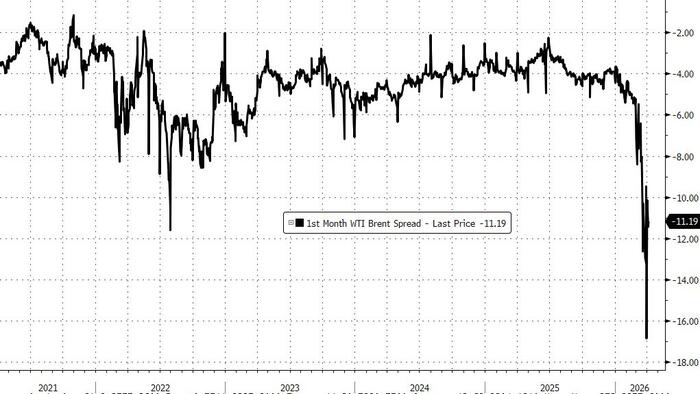
U.S. crude has become prized oil supply in the absence of free flows from the Middle East. As a result, the price of the WTI Crude futures benchmark soared past Brent Crude futures at the end of last week.
WTI Crude rarely trades at a premium to Brent. Brent crude reflects seaborne crude and typically leads during global supply shocks, while WTI crude is usually discounted.
As Julianne Geiger noted, part of the move is technical: WTI’s front-month contract reflects May delivery, while Brent has already rolled to June, skewing the headline spread.
Month-matched spread…
But the deeper driver is extreme prompt pressure – WTI backwardation has surged to record levels – signaling immediate demand for secure, deliverable barrels.
With rising uncertainty around global shipping routes, WTI has effectively gained a “security premium,” narrowing and even reversing its usual discount to Brent.
The current inversion points to a breakdown in normal pricing signals tied to physical flows.
* * *
Read the full article here