

The gunfire, bombardment and the cries of anguished relatives have for days now largely been replaced by the relief and joy of hostages reunited with loved ones and growing diplomatic murmurs of an extended cease-fire.
But while the U.S. and others push for a broader deal, government rhetoric and public opinion in Israel seem unequivocal: Sooner or later the intense military campaign in the Gaza Strip must and will resume.
A four-day pause in Israel’s war against Hamas has been extended by two days. And CIA Director William Burns is in Qatar, which hosts Hamas leaders and has mediated negotiations, focusing on ways to extend this reprieve so more hostages can be released, according to a senior administration official.
This is just one of the many pressures being visited on Israeli Prime Minister Benjamin Netanyahu: from the United States, to moderate his military response; from the families of the hostages, to prolong the pause in fighting; and from members of his hard-right government, who disavow any letup at all, regardless of hostages, in the war against Hamas.
While the past week has seen the military campaign paused to secure the release of dozens of hostages, Netanyahu and his officials have been clear that uprooting Hamas is still very much the plan.
In a speech Sunday, the Israeli prime minister said the pause would be “welcome,” but after that “we will go to realizing our goals with full force: eliminating Hamas, ensuring that Gaza will not go back to being what it was.”
Meanwhile Lt. Gen. Herzi Halevi, the chief of staff of the Israel Defense Forces, told a news briefing Tuesday that his troops were ready to resume fighting “today” if necessary and were using the pause for “learning” and “strengthening readiness” to “dismantle Hamas.”
‘Our eyes are on the prize’
These statements are being made against a backdrop of colossal pressure on the Israeli government being exerted from multiple sides. Following Hamas’ Oct. 7 attack in which 1,200 people were killed and some 240 kidnapped, the vast majority of Israelis support the goals of toppling Hamas and freeing the hostages — more than 90%, according to a poll the Israel Democracy Institute released Friday.
But there is a latent tension within that consensus.
The same survey said 49% of people deemed the hostages most important, while 37% prioritized toppling Hamas. The first group is led by the victims’ family members, who have campaigned tirelessly for a longer cease-fire, partly because they fear their loved ones will be killed in the fighting.
“Our eyes are on the prize and we still have a lot of work ahead of us,” said Zohar Avigdori, whose sister-in-law, Sharon Avigdori, and nephew, Noam, were kidnapped from Kibbutz Be’eri and released Saturday. He spoke in a call with journalists Tuesday of the families’ “determination of the pause not stopping until the last hostage is back.” But he acknowledged there was a “concern” this won’t happen.
In fact, Israel has indicated that it may expand its ground campaign into southern Gaza, where it told northern residents to flee but where it says some Hamas leaders have also taken refuge.
That’s prompting concern in the U.S. government.
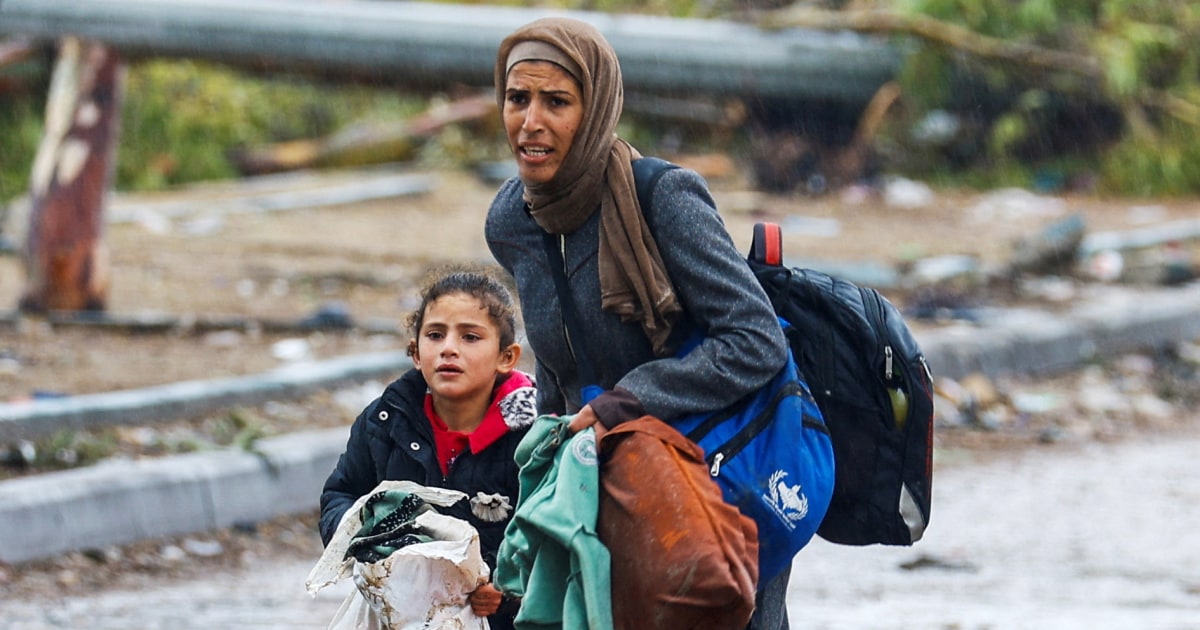
The U.S. has been calling on Israel to do more to protect Palestinian civilians, some 15,000 of whom have been killed in the conflict so far, including more than 5,000 children, according to Palestinian officials. And a senior Biden administration official said the White House does not want to see a repeat once the fighting restarts.
“You cannot have the sort of scale of displacement that took place in the north replicated in the south,” the official said on a call with journalists. “We don’t support them moving in the south unless or until they can demonstrate a plan that accounts for the additional civilian life that is now in south Gaza.”
Read the full article here