

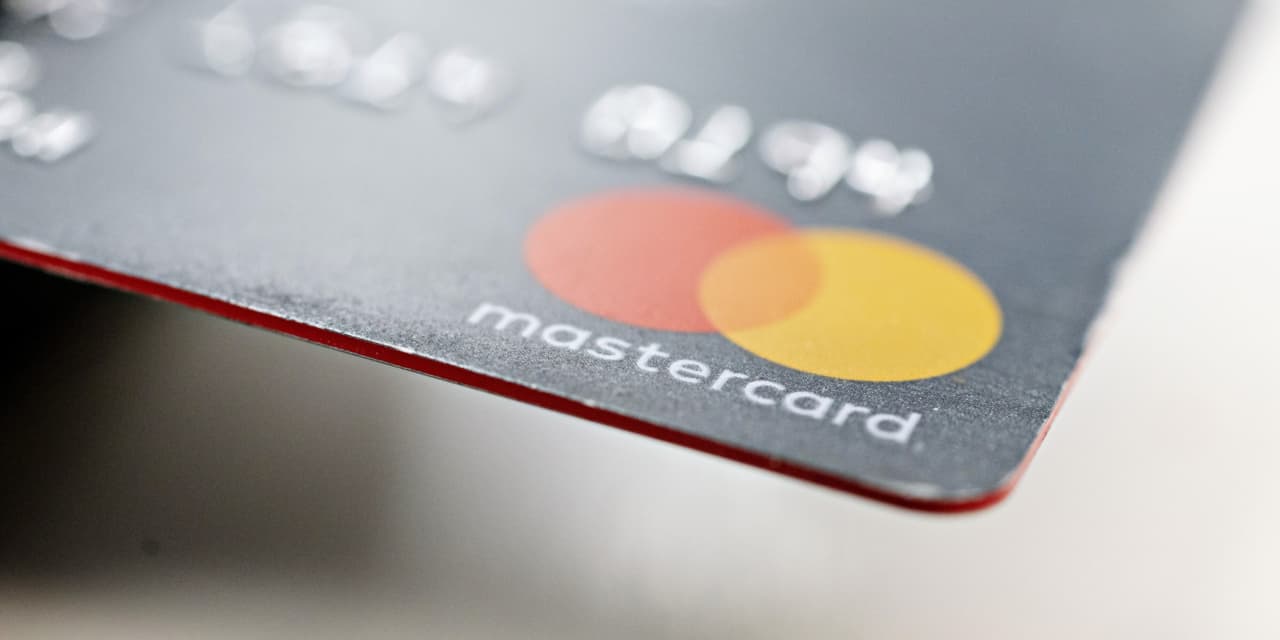
The world is going cashless, and that’s going to be great news for
Visa
and
Mastercard.
As economists and market strategists alike debate the path of the economy next year, analysts at CFRA see nothing but upside for payments companies. That’s because regardless of what consumers spend their money on—whether it be essentials or discretionary goods and services—they are more likely to swipe their cards or use other digital payment means. And that means more revenue for
Visa
and
Mastercard.
CFRA forecasts that revenue at Visa and Mastercard could grow two to three times faster than consumer spending in 2024 and 2025.
There are two reasons for that. For starters, cash still accounts for $7 trillion of global spending, but more of that activity is moving to cards. Second, there are more layers being added to what looks like a single transaction to a consumer. When people use services such as Uber Eats, they’re making one payment, but that payment is then split between the restaurant and driver.
“One transaction has essentially expanded into three, translating into more network fees and revenue for Visa and Mastercard,” Alexander Yokum, analyst at CFRA, wrote Tuesday.
Because the network costs for Visa and Mastercard are largely fixed, much of that revenue will drop down to the bottom line, amounting to profit margin expansion of 10% at Visa and 15% at Mastercard, the analyst said.
Both stocks have already fared well this year, with Visa up 21% and Mastercard gaining 17% as consumers continue to spend even as interest rates remain high and pockets of Wall Street worry about a recession in the next year. Both companies instead appear to be largely immune to problems seen in other parts of the market.
While inflation has dinged household budgets, consumers still have to spend, it’s just that their spending is reallocated. As long as consumers still swipe, it is of little importance to Visa and Mastercard what consumers buy.
“Inflation is also of little concern as revenue are tied to spending (transactions multiplied by cost per transaction) and thus automatically adjusts during inflation spikes,” Yokum wrote, noting that both companies saw revenue grow by more than 15% and earnings per share increase by more than 25% when inflation peaked in 2022.
While consumers may suffer, their plastic appears durable.
Write to Carleton English at [email protected]
Read the full article here