

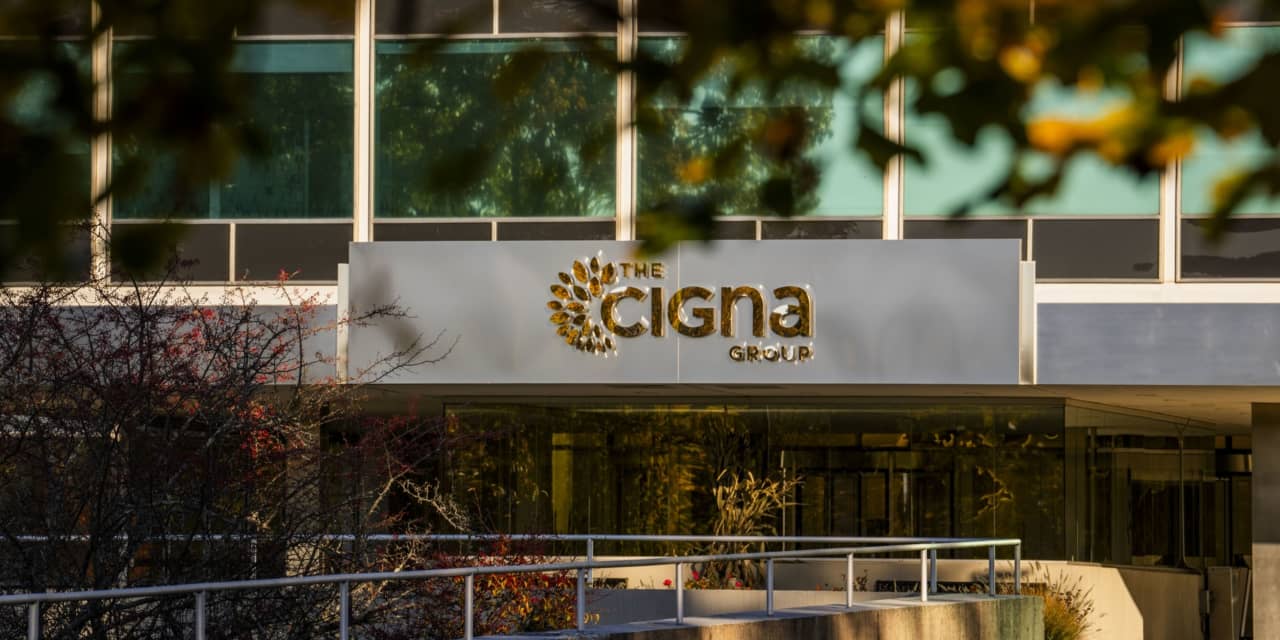
Investors got a glimpse of a potential megamerger between two large health insurers—and they didn’t like what they saw.
After The Wall Street Journal reported Wednesday that
Cigna Group
and
Humana
are in talks about a potential combination, Humana shares fell 5.5%, while Cigna shares dropped 8.8%. Humana told Barron’s it wouldn’t comment on the report, while Cigna didn’t respond to a request for comment. If the companies were looking for feedback from Wall Street before they closed a potential deal, they got a clear answer.
The sharply negative response points to deep skepticism of a deal, despite its apparent logic. Mixing the Medicare Advantage-focused insurance business of Humana with Cigna’s focus on the commercial market and its large pharmacy benefit manager makes some sense on its face.
The selloff suggests that investors anticipate their shares of Cigna will likely be worth less after the dilution required to make the acquisition. It also points to uneasiness about Humana’s willingness to make the deal, and what that says about management’s confidence about Humana’s future growth.
There’s a concern, Miuzho healthcare equity strategist Jared Holz tells Barron’s, that Humana being willing to sell now “could indicate growth could moderate.”
Investors generally have a sunnier view of Humana’s growth prospects than they do of Cigna’s. While Cigna’s market value, at $83.7 billion, is larger than Humana’s, at $62.8 billion, Humana trades at a much richer valuation. Humana shares are priced at 15 times earnings expected over the next 12 months, according to FactSet, while Cigna’s are priced at 9 times earnings.
A deal raises questions about why Humana might want to combine with slower-growing Cigna, and whether it signals uncertainty among management about the Medicare Advantage market.
Humana earlier this year announced it would entirely exit the commercial insurance market, making it even more of a Medicare Advantage pure-play. Medicare Advantage enrollment continues to grow rapidly, but such a bet on a government program, with the political and regulatory risks that entails, carries risk. If Humana is looking to hedge that bet by combining with Cigna, the question that follows is what is Humana worried about?
From Cigna’s perspective, an acquisition of Humana could boost its own valuation. Cigna shares, as Holz pointed out in a note to investors on Wednesday, didn’t reflect that upside.
Further hobbling efforts to analyze the deal are unanswered questions about what form it might take. The Journal report didn’t say whether Humana or Cigna would be the acquirer. In a note late Wednesday, Raymond James analyst John Ransom wrote that the “financial logic” of the deal would be stronger if Humana, the smaller company, were the acquirer, using a mix of cash and its shares.
“It is clear that the deal makes more sense with [Humana] as the currency,” Ransom wrote.
Other analysts disagreed, with Mizuho analyst Ann Hynes writing that she expected Cigna to acquire Humana, or for the companies to merge. The uncertainty muddles the picture, making it harder for investors to take a firm position.
Underlying the debate are serious concerns about whether the deal could possibly close. Antitrust regulators have taken a hard line on managed care combinations and a federal court killed a merger between Humana and Aetna in 2017.
Humana’s sale of its commercial business could help clear the way this time, and Reuters reported earlier this month that Cigna is considering getting rid of its Medicare Advantage business. Both companies own pharmacy-benefit managers, an overlap that could raise regulators’ hackles.
“[Cigna] likely would need to divest its [Medicare Advantage] business to get a deal done,” Bank of America analyst Kevin Fischbeck wrote on Thursday. “We see a number of potentially interested buyers.”
On the other hand, Mizuho’s Holz suggested that regulators might like to see a second managed care company of UnitedHealth Group’s scale. “Perhaps the regulators welcome the emergence of a larger competitor for [UnitedHealth] to contend with,” he wrote.
The Biden administration’s antitrust chiefs have been particularly focused on pharmacy-benefit managers. It seems unlikely a merger of two large pharmacy-benefit managers would be greeted warmly. The approaching presidential election, too, could complicate matters. Such a consequential deal could easily get swept up in election-year politics.
For now, investors will wait to see if the two companies do announce an agreement. Cigna shares continued to drop on Thursday morning, falling 0.2%. Humana shares were down 0.1%.
Write to Josh Nathan-Kazis at [email protected]
Read the full article here