

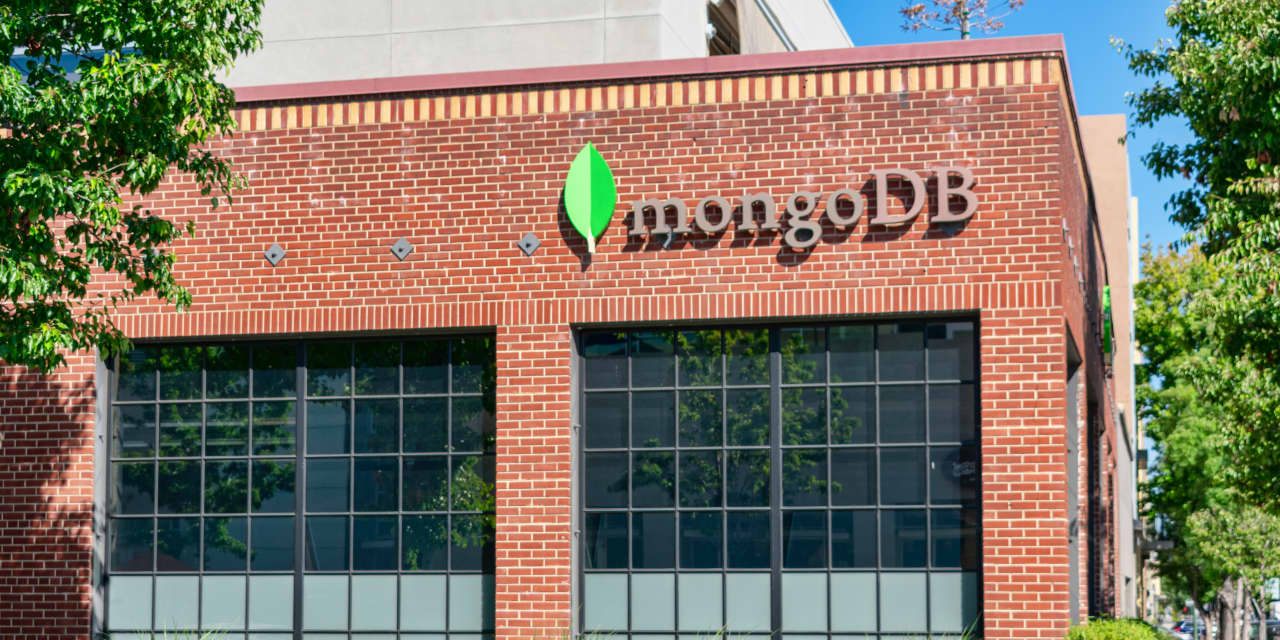
Shares of
MongoDB
shares were falling despite stronger-than-expected October quarter results for the cloud-based database software provider.
Mongo is a highflying bet on the growth of cloud computing, and it seems clear that true Street expectations were well above the stated Street consensus estimates.
Heading into Tuesday’s earnings report, the stock was up more than 120% on the year. Shares were down 5% in premarket trading Wednesday, to $411.99.
For the quarter, Mongo reported revenue of $432.9 million, up 30% from a year earlier, ahead of the company’s guidance range of $400 million to $404 million and the Wall Street consensus of $406 million, as tracked by FactSet.
On an adjusted basis, Mongo posted profits of 96 cents a share, crushing the guidance range of 47 to 50 cents and consensus of 51 cents. Under generally accepted accounting principles, the company lost 41 cents a share in the quarter.
At least on the surface, guidance seemed strong. The company now projects January quarter revenue of $429 million to $433 million, at the middle of the range up 19%, with adjusted profits of 44 to 46 cents a share, above Wall Street’s $418 million and 37 cents.
Mongo lifted its revenue target for the January 2024 fiscal year to between $1.654 billion and $1.658 billion, from a previous range of $1.596 billion to $1.608 billion. The company now sees profits on an adjusted basis for the full year of $2.89 to $2.91 a share, up sharply from the previous forecast of $2.27 to $2.35 a share, and above Wall Street at $2.34.
In a research note ahead of the quarter, Guggenheim analyst Howard Ma had noted that he expected the company would easily beat Street consensus, but he thought fourth-quarter revenue guidance could be as high as 21%-22% growth, which didn’t come through.
Ma pointed out in that note that MongoDB remains one of the world’s most expensive enterprise software stocks. Given the after-hours reaction Tuesday, the earnings beat wasn’t enough to match investors’ highest expectations.
Write to Eric J. Savitz at [email protected]
Read the full article here