

Unlock the Editor’s Digest for free
Roula Khalaf, Editor of the FT, selects her favourite stories in this weekly newsletter.
Airbus faces strikes at its UK factories from next month after thousands of workers voted in favour of industrial action in a dispute over pay.
Unite, the union representing more than 3,000 workers at the planemaker’s sites, said 90 per cent of its members voted in favour of the strike that is due to take place over a three-week period starting September 2.
Sharon Graham, Unite general secretary, said the company was “generating billions in profit; workers deserve a fair deal”.
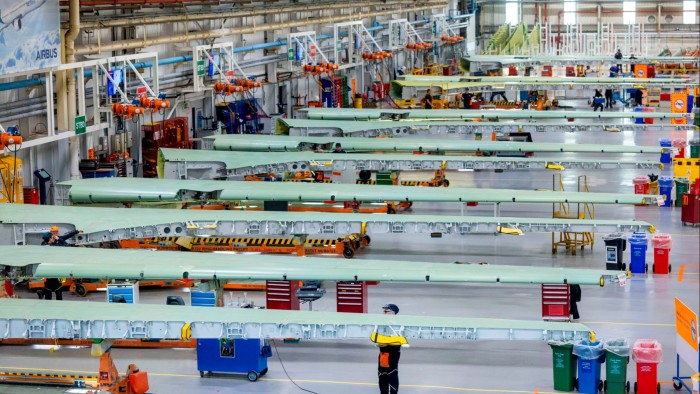
The action would affect Airbus factories at Broughton in Wales and Filton in Gloucestershire, which design and manufacture the wings for its commercial aircraft. A strike would come just as the company is seeking to increase production of its passenger jets to meet strong demand from airlines.
Unite said the strike action would “disrupt production of wings for Airbus’s core commercial and military aircraft programmes”.
Airbus, however, said it was “not concerned about the impact on year-end deliveries”.
The planemaker said it had made a “competitive and fair” pay offer in 2025 following previous increases totalling more than 20 per cent in the past three years, in addition to a £2,644 bonus payment in April.
“Our priority remains to find a resolution together with the trade union that ensures the long-term competitiveness and success of Airbus in the UK,” said Sue Partridge, country manager for commercial aircraft at Airbus UK.
Airbus, like the rest of the aerospace industry, has been dogged by supply chain issues that have hampered plans to increase output and to cement its leadership position against US rival Boeing.
The company said last month that persistent shortages of engines, mainly from CFM International, for its narrow-body A320neo jets, had forced it to build “gliders”, or aircraft without engines. It had 60 gliders at the end of June.
Despite the problems, Airbus said at the time that its production ramp-up remained in place. The company still expects to produce 75 A320 narrow-body planes a month in 2027. It raised its monthly output target for its A330 wide-body planes, from four to five in 2029.
Shares fell 1.6 per cent in Paris but have gained about 30 per cent over the past 12 months, giving Airbus a market cap of €143bn ($166bn) — $4bn less than Boeing.
Read the full article here