

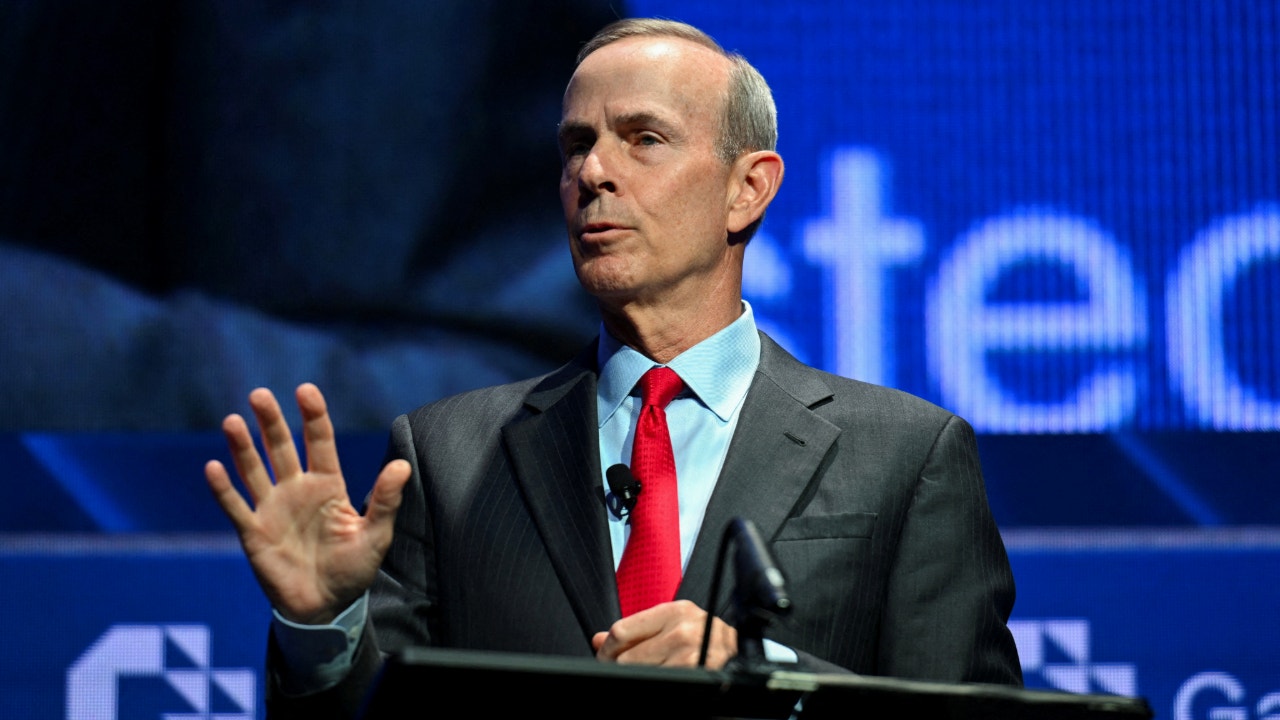
Chevron CEO Mike Wirth detailed the company’s strategy to harness U.S. natural resources to meet soaring artificial intelligence power demand — without passing the cost along to consumers.
“As data centers need more and more electricity, and as we’re seeing pressure on the grid and electricity prices, we’re working to build an energy park that’s not connected to the grid, so the costs don’t flow to all consumers,” Wirth told “Mornings with Maria,” describing the approach as an advantage that allows the company to “convert energy into intelligence.”
Wirth joined FOX Business on Monday to discuss Chevron’s record performance and long-term growth strategy as artificial intelligence drives unprecedented demand for reliable electricity.
CHEVRON CEO APPLAUDS TRUMP ADMINISTRATION’S ENERGY POLICY SHIFT DURING PERMIAN BASIN TOUR
He said the company is leveraging the “tremendous resource” of U.S. natural gas to generate power directly for hyperscale data centers, bypassing the traditional electric grid and insulating the public from higher electricity costs.
“This is another advantage where you can convert energy into intelligence, and the abundance of energy that this country has can translate not only into energy dominance but into AI dominance,” Wirth told Maria Bartiromo.
ENERGY SECRETARY SAYS CHEVRON EXPANSION, US OIL ROLE IN VENEZUELA COULD COME ‘PRETTY QUICKLY’
Chevron revealed plans in 2025 to develop an off-grid natural gas facility in West Texas designed to generate electricity for large-scale data centers without relying on the traditional power grid.
The company previously announced a partnership with activist investment firm Engine No. 1 and GE Vernova to explore natural gas-powered solutions aimed at supporting the rapid expansion of AI and data center infrastructure in the United States.
The discussion comes as Chevron posted a record year of oil production that helped offset the pinch of lower oil prices.
Wirth said the company’s free cash flow rose 35%, along with a series of other financial gains, even as oil prices fell by 15%.
Read the full article here