

Today’s agenda: Liechtenstein’s ‘zombie trusts’; EU-China climate stand-off; tokenised Treasury funds; Bosnia 30 years on; and the Rashomon effect
Good morning. We start the working week with an exclusive story on the Tony Blair Institute participating in a project to develop a postwar Gaza plan.
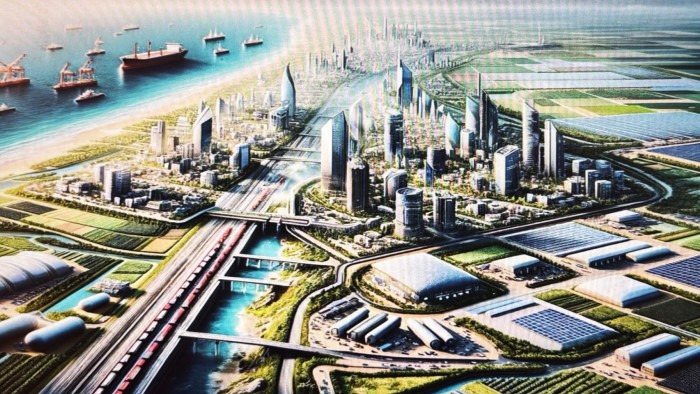
What we know: The plan outlined in a slide deck seen by the Financial Times was led by Israeli businessmen and used financial models developed inside Boston Consulting Group to reimagine Gaza as a thriving trading hub. It envisaged kick-starting the enclave’s economy with a “Trump Riviera” and an “Elon Musk Smart Manufacturing Zone”.
Titled the “Great Trust” and shared with Donald Trump’s administration, it proposed paying half a million Palestinians to leave the area and attracting private investors to develop Gaza.
While the Tony Blair Institute did not author or endorse the final slide deck, two staff members at the former UK prime minister’s think-tank participated in message groups and calls as the project developed, according to people familiar with the work. Read the full story.
Here’s what else I’m keeping tabs on today:
-
Trump-Netanyahu meeting: The Israeli leader meets the US president to discuss a potential ceasefire with Hamas.
-
UK: The country commemorates the 20th anniversary of the 7/7 attacks in London. One survivor reflects on the lasting impact of that day.
-
Brics summit: The gathering of the group of developing countries continues in Rio de Janeiro. Trump threatened an extra 10 per cent tariff on any country that embraces the “anti-American policies” of the bloc.
Five more top stories
1. Liechtenstein has been hit by a wave of resignations by fiduciary and board directors in the past six months as its regulatory system adjusted to US sanctions packages against Russia. This has left hundreds of entities linked to wealthy Russians in legal paralysis. Bankers and lawyers have warned about the contagion risk posed by the “zombie” trusts.
2. The EU is holding back on signing a joint declaration on climate action with China at a leaders’ summit this month, refusing to agree a communiqué unless Beijing pledged greater efforts to cut its greenhouse gas emissions. The latest development is adding to tensions over trade and Russia’s war on Ukraine.
3. Amazon and Walmart will go head to head in an online discount battle this week, after the ecommerce giant moved the start of its annual “Prime Day” digital sales event to July 8, matching the date of the world’s biggest retailer’s sales period last year. Read more on the brewing clash for US consumer dollars.
4. Crypto companies and traders are pouring billions of dollars into tokenised versions of money market and Treasury bond mutual funds, as they look beyond stablecoins for places to park excess cash that can also give them some yield. Total assets held in tokenised Treasury products have jumped 80 per cent so far this year to $7.4bn, data shows.
5. Exclusive: Britain’s financial regulators are failing to push through vital reforms needed to unlock £22bn in trade finance for small businesses, the International Chamber of Commerce has warned, adding that the UK, despite being a global trade finance hub, has fallen behind competitors that “have more agile and responsive regulatory frameworks”.
-
More UK news: Revolut has yet to receive a key credit licence from UK regulators, marking the latest hurdle for the $45bn fintech to become a full-service UK bank.
How can Africa balance growth with the shift to cleaner energy? Register for free to join policymakers, experts and leaders in an online discussion on July 9.
The Big Read
As the world prepares to mark the anniversary of the Srebrenica massacre three decades ago this week, Bosnia and Herzegovina is facing a risky moment of political upheaval. Read why trouble is brewing again in the ethnically riven Balkan state.
We’re also reading . . .
-
Death of the apprenticeship model?: As hybrid working and AI upend on-the-job learning, employers will have to be more deliberate in the training they offer junior staff, writes Emma Jacobs.
-
The Rashomon effect: Today’s global economy is witnessing many potentially market-moving vectors simultaneously in play, writes Rana Foroohar.
-
BlackRock’s HPS takeover: The public markets giant tried private credit once before. Will its latest big foray fare better?
-
‘No honour among thieves’: A clash between rival ransomware groups could result in corporate victims being extorted twice, cyber experts warn.
Chart of the day
The roots of the British malaise lie in a sick economy. According to the IMF, the UK’s trend growth of GDP per head had been 2.5 per cent a year from 1990 to 2007; between 2008 and 2025, it was just 0.7 per cent. All of this is rooted in the collapse of productivity growth, writes Martin Wolf.
Take a break from the news
UK chancellor Rachel Reeves and Prime Minister Sir Keir Starmer put their personal frailties on display last week. Research suggest it pays to impart inner wobbles. Yet if it really were obvious, why does the evidence suggest relatively few leaders are willing to own up to any form of weakness, Pilita Clark asks.
Read the full article here