

Unlock the Editor’s Digest for free
Roula Khalaf, Editor of the FT, selects her favourite stories in this weekly newsletter.
Reaching net zero by 2050 will cost less than the economic hit of a fossil fuel price rise similar to the 2022 energy shock, the UK’s climate adviser said on Wednesday, as the country grapples with higher oil and gas prices.
The Climate Change Committee said modelling showed average household energy bills would jump by 59 per cent in the event of a price rise of the same magnitude as that seen after Russia’s invasion of Ukraine, if fossil fuel reliance remained heavy.
By contrast, bills would rise by only 4 per cent in the “balanced pathway” towards cutting emissions, the committee found. Net zero carbon emissions by the middle of this century was the “more cost-effective path for the UK economy than continued reliance on fossil fuels”, it said.
The report by the CCC comes after days of volatility in global energy markets in the wake of the Iran war, which has led countries across the Middle East to cut oil production and largely closed the Strait of Hormuz.
Although it has since fallen to around $90, the price of a barrel of Brent crude soared to almost $120 on Monday amid concerns that the conflict could trigger prolonged energy disruption and add to cost of living pressures.
The CCC’s advice comes as UK ministers prepare to set out plans for cutting greenhouse gas emissions towards net zero in the seventh “carbon budget”, which must be set in law by the end of June.
Previous carbon budgets have easily passed through parliament. But some Labour figures fear the legally binding limits could meet stiff resistance this time in the House of Lords, where the Conservative Party, which is now opposed to net zero, has the largest group of peers.
CCC chair Nigel Topping said there had been much “public interest in the cost of transitioning to a low-carbon economy” and that the advisory body’s analysis would help ensure that “decision makers and commentators are using accurate information to inform debates”.
“In light of current world events, it’s more important than ever for the UK to move away from being reliant on volatile foreign fossil fuels, to clean, domestic, less wasteful energy,” he added.
The government has maintained it still supports reaching net zero carbon emissions by 2050, even as it backtracked on past investment promises. But both Reform UK and the Tories have said that the legally binding target risks bankrupting the country.
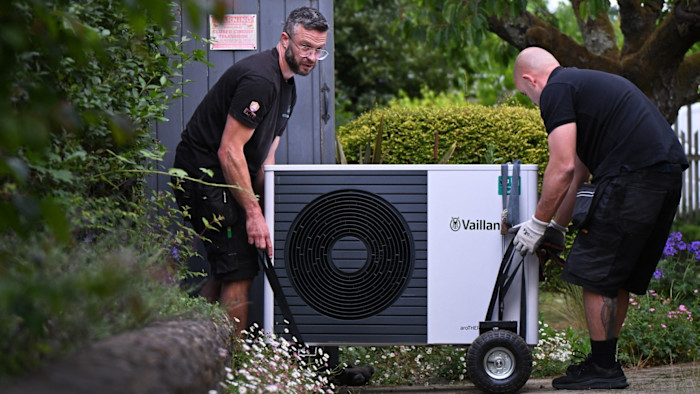
Reform leader Nigel Farage on Tuesday vowed to slash spending on net zero initiatives, including heat pumps and investment in contentious carbon capture technologies, if his populist party won the next election.
The policy would save the government £13.5bn a year, according to Robert Jenrick, Reform’s Treasury spokesperson and a recent Tory defector.
The CCC said reaching net zero would cost about £4bn a year on average between 2025 and 2050, or roughly 0.2 per cent of the annual GDP expected over the same period.
An average investment of £26bn a year would be needed, the committee said, but this would largely be offset by average annual savings of £22bn as buildings became more efficient and the country moved towards renewable energy.
For every pound spent on net zero, the benefits would outweigh the cost by between 2.2 and 4.1 times, the body said.
The most significant contribution of meeting net zero would be money saved from avoiding climate damages, such as the cost of coping with more intense storms or heatwaves, the committee found. It estimated this would save between £40bn and £130bn by 2050.
Climate change damages could cost 2-4 per cent of UK GDP if global temperature rises reached 2C above the pre-industrial level, it said.
But if temperatures were to reach 4C, aggregated climate damages could hit 4-10 per cent of GDP each year by the end of the century, it added.
Under the Paris agreement, countries around the world agreed to limit the global temperature rise to well below 2C and ideally to 1.5C above the pre-industrial level. But the world is on course for a rise of 2.8C based on existing government policies.
Read the full article here