

Stay informed with free updates
Simply sign up to the Energy sector myFT Digest — delivered directly to your inbox.
Octopus Energy has swung back to an annual loss and saw its financial performance sharply deteriorate as it spent heavily on its rapid expansion.
Octopus, which said it is now the UK’s largest household energy supplier and has 10mn customers globally, saw its revenues rise 10 per cent to £13.7bn in the year to April 2025.
But after two years of narrow profitability, the UK energy group posted a pre-tax loss of £254.8mn, according to its full-year results published on Tuesday.
The company — which said on Monday that it had raised $850mn from selling a slice of Kraken, its software business — blamed much of its financial deterioration on exceptional factors.
It said the warmest spring on record had hit its earnings before interest, tax, depreciation and amortisation (ebitda) by £103mn as customers dialled back their consumption of gas.
The company also had to pay £144mn to the government as part of final settlements over its acquisition of Bulb — the collapsed energy supplier it received state support to take over — and for a scheme that capped consumers’ energy bills during the crisis after Russia’s 2022 invasion of Ukraine.
But Octopus also saw its underlying ebitda, which strips out those one-off costs, fall 69 per cent to £90mn. This was prompted by its staff numbers rising 34 per cent to 11,400, its staff and contractor costs increasing 53 per cent to £469mn, its administrative expenses rising 23 per cent to £1.5bn, and its sales and marketing costs more than doubling to £190mn.
Despite its increasing scale, Octopus’s gross margin shrank from 9 per cent to 8.4 per cent.
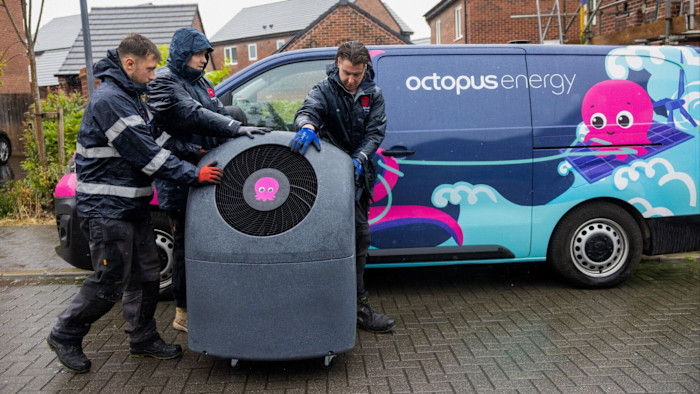
“We are investing at scale in the services that will define this new era of energy [ . . .] we are embedding electrified technology into homes and businesses at an accelerating pace,” said Greg Jackson, Octopus’s founder, pointing to smart meters, solar panels, heat pumps and electric vehicle chargers.
Octopus said it had £1.5bn of cash and £1.5bn in net assets at the year end.
It said an energy trading contract with Shell, which covers the “bulk of group activity”, meant its exposure to any significant price movements was “largely eliminated”.
Octopus added that its UK retail business has enough capital to meet minimum requirements put in place by Ofgem, the UK energy regulator. These are designed to avoid a repetition of 2021 and 2022, when a wave of undercapitalised energy companies went bust. Octopus said it had agreed a path with Ofgem to meet a target that it hold £115 for each of its customers it supplies with both gas and electricity.
Kraken, the software platform built by Octopus to manage its customer accounts that is now being used by several other energy companies, saw its annual recurring revenue double to £422mn.
Octopus is selling about $1bn of Kraken equity to a syndicate of investors including D1 Capital Partners, Fidelity and a unit of the Ontario Teachers’ Pension Plan.
Read the full article here