

Good morning. The biggest story in Westminster at the moment concerns the evolving revelations about Peter Mandelson’s personal and financial dealings with Jeffrey Epstein. The FT was first to reveal that Mandelson received $75,000 from Epstein beginning in 2003, and that Mandelson told Epstein that JPMorgan should “threaten” then cabinet colleague and chancellor Alistair Darling over a tax on bankers’ bonuses.
Among other things, it means that any prospect of a fourth return to frontline politics is off the table, while it does further damage to perceptions of both Keir Starmer (who brought him back as UK ambassador to the US) and his chief aide Morgan McSweeney (who urged Starmer to appoint him and also counselled against sacking him).
But frankly both Starmer and McSweeney’s standing among Labourites is pretty set by now. That’s not to say views of them are universal, it’s just that at this point I don’t think anything is going to materially alter how they are seen. This government is in a sort of “what is dead may never die” state, where because everyone expects it will be replaced at some point there isn’t a particular urgency coming from any one scandal or misstep.
A policy misstep with greater implications in the here and now is the government’s U-turn over business rates, which Jonathan Eley has kindly written about for us.
Sticking plasters
(Eley writes) Another day, another U-turn.
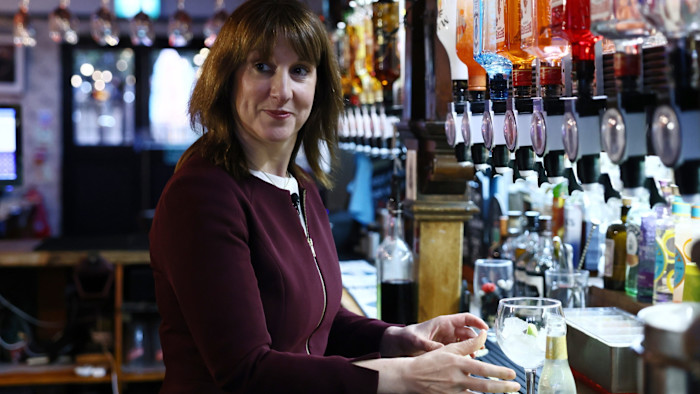
The chancellor’s belated offer to soften the impact of rising business rates on pubs is, depending on your viewpoint, either an overdue course correction to help a sector that has been clobbered by other cost increases, or another capitulation to noisy special pleading.
Either way it is dreadful politics. Many of those up in arms at the increases in rates that they had been facing are still angry about other burdens. Retailers, hoteliers and restaurateurs are asking where their relief is. Labour MPs banned from over 1,000 pubs are surely despairing at the cack-handedness of it all.
Business rates are calculated using “rateable values” based on rents and “multipliers” set by Whitehall in England and the devolved administrations elsewhere. The Treasury loves them, because they are immune to the economic cycle, easy to collect and hard to avoid. But UK plc, and in particular the retail, hospitality and leisure industries hate them — for largely the same reasons.
Successive governments have attempted to square this circle by tinkering with the timing of revaluations, offering discounts and relief schemes (the UK government website currently lists 12 of these in England) and occasionally promising “fundamental reviews” of the system.
Such plate spinning reached new peaks after the pandemic struck. When lockdowns began, all retailers, hospitality and leisure groups were given 100 per cent relief from rates. Five years on that relief still stood at 40 per cent, although by this time it was only available to smaller establishments.
By the time it falls away in April, it will have cost taxpayers more than £24bn in England alone since 2020-21. At that point, many independent shops, pubs and restaurants would have faced full* bills for the first time in half a decade. That is the rarely mentioned context behind some of the headline-grabbing increases for individual businesses.
[*Full in the sense of no relief. However, the multiplier used to calculate bills would still have been 5p below the national rate.]
Offering a 15 per cent cut this year, followed by two years of inflation-only rises, doesn’t fix the fundamental flaw with business rates: the inbuilt indexation that ensures the tax take bears little relation to underlying economic conditions.
The package also continues the long tradition of sticking plasters, in this case an examination of how pubs (and hotels) are valued, promises of looser planning rules and a “high street strategy”.
Hopefully, that will outline why certain sectors should be granted special treatment. Is the societal value of pubs such that taxpayers should shield them from long-term changes in drinking habits? Should independent shops be protected from the big chains and online marketplaces that many shoppers appear to prefer? Rational answers to such questions might just result in a rational business-rate strategy. But I wouldn’t bet on it.
Now try this
Stephen again. Arsenal Women are champions of the world, which I am afraid is cause for me to briefly ignore the “please, Stephen, no football in the newsletter”.
More unifying I think is Nouvelle Vague, Richard Linklater’s charming new film about the making of Jean-Luc Godard’s Breathless, which I saw at the weekend and rather enjoyed. It is slight but fun. Danny Leigh’s review is here.
Top stories today
-
Physicists sound alarm | Leading science groups have warned that the government’s plans to cut funding for physics research and laboratories will damage innovation and hobble Keir Starmer’s efforts to boost growth.
-
£1 pizza | UK restaurants and fast-food chains are resorting to unusually steep discounts and special offers as they try to lure cautious consumers who have shunned splashing out on a meal in favour of building savings.
-
£100k exit package | The Treasury is offering its officials up to £100,000 to leave voluntarily as part of plans to cut hundreds of jobs in the finance ministry. Rachel Reeves wants to slash about 300 of her department’s roughly 2,100 staff by 2030, according to several people familiar with the plan.
-
Fees feud | Caving into EU demands to cut tuition fees for European students under a proposed youth mobility deal could leave the UK’s cash-strapped universities £580mn out of pocket, new modelling by the Russell Group suggests. The i reports that universities are urging Starmer to resist Brussels’ demands for a new “youth experience” scheme to include a discount for EU under-30s studying in the UK and vice versa.
Read the full article here