

One thing to start: Botswana has hired Lazard as it looks to take control of diamond miner De Beers, days after the country received a $12bn investment pledge from Qatar.
In today’s newsletter:
EchoStar cashes in the chips
Charlie Ergen spent 45 years trying to build a mobile network to compete with America’s big three incumbents. In just four months, that plan has come undone.
EchoStar, Ergen’s telecoms group, agreed a $23bn deal to sell its large collection of wireless spectrum licences to AT&T, after coming under intense scrutiny from the Trump administration.
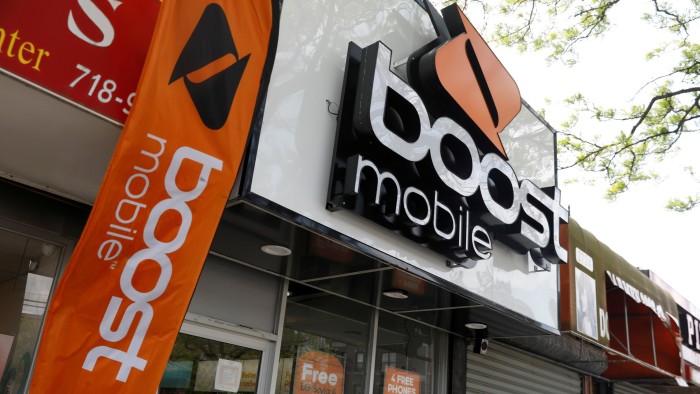
That pretty much ends Ergen’s dreams of a network to rival the triumvirate of AT&T, Verizon and T-Mobile. After those three, EchoStar’s Boost Mobile service is the US’s fourth-largest wireless carrier.
It’s the latest example of a US administration that is far more willing to intervene in corporate America, breaking with decades of Republican orthodoxy.
The licences allowed EchoStar to operate telecoms services at certain electromagnetic frequencies, giving it the base from which to build a 5G network across the US.
But the Federal Communications Commission under Trump had argued that EchoStar had been too slow in its construction effort, failing to meet milestones on which the licences were conditioned.
In a letter to the telecoms group, FCC chair Brendan Carr said the agency planned to review EchoStar’s compliance with the targets, setting the scene for this week’s sale. (Read Lex’s contemporaneous analysis on the letter here).
EchoStar has struggled for several years under a crushing debt burden of more than $30bn and the sale gives it a much-needed injection of cash with which to repay creditors. It also puts the spectrum licences into the hands of a more established steward in AT&T.
Yet for consumers, the transaction means that for the foreseeable future, the list of major 5G operators shrinks back down to just three.
EchoStar’s Boost had only a few million customers compared with its peers, which have over a hundred million each. But it was trying to build a credible rival to an oligopoly that arguably hasn’t served consumers well over the years.
It’s also worth noting that the licences have been sold to AT&T, not Starlink, another spectrum-hungry business owned by Elon Musk’s SpaceX.
SpaceX had lobbied hard for access to EchoStar’s spectrum in the weeks leading up to the FCC letter and the FCC’s Carr has previously attended SpaceX rocket launches and heaped praise on Musk.
But that was all before the billionaire’s now infamous rift with Donald Trump.
Ørsted’s audacious share sale
Pressing ahead with a rights issue almost as big as your entire market capitalisation after the US president takes aim at you is a ballsy move. But that’s just what Danish renewables giant Ørsted has planned, the FT’s Richard Milne reports.
Ørsted is hoping to raise DKr60bn ($9.4bn) in fresh capital, due in large part to the difficulties it had in selling stakes in its big US offshore renewable projects, which have come under fire from Trump.
That compares with its market capitalisation of just DKr75bn at the start of Tuesday, after the Trump administration halted work on the almost complete Revolution Wind project, which Ørsted co-owns with a unit of BlackRock.
The stop-work order came hours after the Danish foreign minister stood beside Gavin Newsom, who has become the US Democratic party’s most prominent critic of Trump. Denmark is Ørsted’s majority shareholder.
Understandably, Trump’s move has sowed doubts in the minds of investors who’d already taken a battering in Ørsted in recent years. Its shares are down almost 90 per cent from their 2021 peak when it was aiming to become a renewable energy super major.
Ørsted has half the rights issue already in the bag because the Danish state is backing the deal. It’s the other 49.9 per cent that’s the problem.
Equinor, the Norwegian oil and gas group, is Ørsted’s second-largest shareholder with 10 per cent and it’s playing its cards close to its chest on the rights issue.
That’s not least because its own investors are still struggling to understand why it bought the stake last October.
Irony of ironies, an Equinor US wind project was the first targeted by Trump and it cost the group hundreds of millions of dollars before the project got restarted.
Calls have quietly started for Ørsted to simply abandon the US, where it owns 100 per cent of Sunrise, another wind project off the coast of Long Island that’s under development.
The populist Denmark Democrats party said that Danish taxpayers should not pay for costly misadventures in the US.
Apollo’s equestrian collateral
Apollo is no stranger to racy debt deals, but lending millions of dollars to a football “super agent”, secured on racehorses and their stables, is something new.
The US firm has lent millions of pounds secured on those very assets, as well as a sports agency platform, to a company owned by Kia Joorabchian, the man who brokered Philippe Coutinho’s £142mn British record transfer from Liverpool to Barcelona in 2018.
The £40mn extended to Sports Invest Holdings, Joorabchian’s holding company, is another example of the private capital group’s push into European sport.
Secured against a number of the agent’s companies including AMO Racing, AMO Stables and Sports Invest UK, the deal comes with an unorthodox array of collateral.
While the debt comes with an expensive 10.25 per cent interest rate, Apollo’s dealings with Joorabchian come with more benefits than that cash.
As well as doing his own business with the private capital group, Joorabchian is actively looking for sports deals to pass on to Apollo, as it continues to expand its presence in European football.
Just last month the FT revealed that Apollo had extended £80mn in expensive debt to Nottingham Forest, secured against assets including the club’s stadium.
And Forest’s owner, Greek shipping magnate Evangelos Marinakis, is an associate of Joorabchian. He accompanied the agent to an auction in October at which Joorabchian splashed £8mn on horses for AMO, adding three offspring of unbeaten champion racehorse Frankel to Apollo’s pool of collateral.
AMO last week broke the record for the most expensive purchase at the Arqana August Yearling Sale in France, one of flat-racing’s premier auctions, when Joorabchian bid €3mn for the filly Night Of Thunder.
“We’re trying to create a dynasty,” AMO’s bloodstock agent Alex Elliott told the Racing Post.
Apollo can look forward to more equestrian collateral in the years to come.
Job moves
-
Citigroup has named Rob Cascarino as co-head of debt capital markets for the UK and Emea. He was previously global co-head of sponsors, private side sales, at JPMorgan.
-
Polymarket has named Donald Trump Jr as an adviser. It comes as 1789 Capital, the investment firm at which Trump Jr is a partner, increases its stake in the betting group.
Smart reads
PE philanthropy Private equity group TPG took over hospitals in Africa, telling investors including Bono that it would improve access to healthcare. Then the complaints started to pile up, Bloomberg reports.
A bitter taste Coffee group KDP’s merger with JDE Peet’s does little to burnish JAB Holding’s lacklustre investment record, Lex writes.
Trouble in paradise DreamWorks co-founder David Geffen is known in Hollywood for his stellar legacy and his ruthlessness. An acrimonious divorce could upend that, The Wall Street Journal writes.
News round-up
Eli Lilly’s weight-loss pill meets target in key diabetes trial (FT)
Trump media group in $6bn deal to buy Crypto.com tokens (FT)
Brevan Howard secures equity investment from Abu Dhabi’s Lunate (FT)
Peter Thiel-backed crypto exchange Bitpanda rules out UK listing (FT)
Japanese media groups sue AI search engine Perplexity over alleged copyright infringement (FT)
Alex Gerko earned £682mn from trading firm XTX in 2024 (FT)
UK asset managers explore ‘master trust’ pension market (FT)
Australia’s biggest pension fund to add 10 more private equity managers (FT)
Read the full article here