

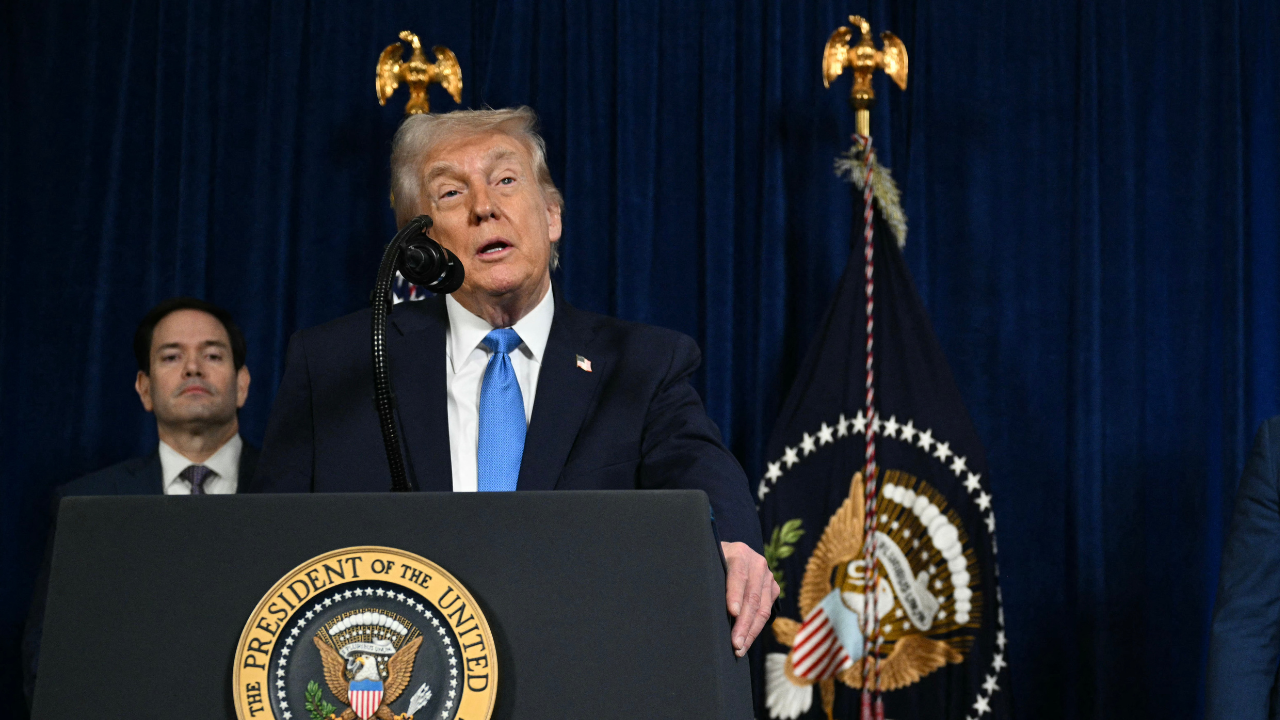
President Donald Trump pledged a U.S. return to Venezuela’s oil industry following the stunning predawn capture of Venezuelan President Nicolás Maduro, accusing the country’s socialist government of seizing American energy assets and dismantling an industry built with U.S. investment.
“We built Venezuela’s oil industry with American talent, drive and skill, and the socialist regime stole it from us,” Trump said during a news conference at Mar-a-Lago in Palm Beach, Florida.
“Venezuela unilaterally seized and sold American oil, American assets and American platforms, costing us billions and billions of dollars,” he added. “They took all of our property.”
FOLLOW FOX NEWS LIVE COVERAGE OF VENEZUELA
Trump said U.S. energy companies could play a central role in rebuilding the country’s oil sector.
“We are going to have our very large United States oil companies go in, spend billions of dollars, fix the badly broken oil infrastructure and start making money for the country,” he said.
Once home to major U.S. energy investments, Venezuela systematically pushed out Western oil companies under a nationalization campaign launched by Maduro’s predecessor, Hugo Chávez. Although Maduro claims to have won re-election to a six-year term in 2024, the U.S. and other international observers say his loyalists stole the election from Edmundo González.
Chevron was among the few energy titans that negotiated to remain, agreeing to operate as a minority partner under joint ventures led by the state-run oil company, Petróleos de Venezuela, S.A. (PDVSA), rather than exiting the country entirely.
Now the only remaining U.S. oil company operating in Venezuela, Chevron finds itself navigating a high-tension space between Washington’s takeover of Caracas and the world’s largest oil reserves.
VENEZUELA HOLDS THE WORLD’S LARGEST OIL RESERVES. HERE’S HOW OTHERS COMPARE
“Chevron remains focused on the safety and wellbeing of our employees, as well as the integrity of our assets,” a Chevron spokesperson wrote in a statement to Fox News Digital.
The company declined to comment on the broader security environment, saying only: “We continue to operate in full compliance with all relevant laws and regulations.”
Chevron has operated in Venezuela for roughly a century, but its ability to produce and export oil has been shaped in recent years by U.S. sanctions and time-limited Treasury licenses that strictly constrain its operations.
Roughly twice the size of California, Venezuela holds the world’s largest proven oil reserves. At an estimated 300 billion barrels — about 20% of the global total and nearly four times U.S. reserves — that endowment dwarfs that of any other nation.
Yet its crisis-stricken economy and persistent political instability have sharply limited its ability to convert those reserves into sustained production, a dynamic also seen in countries such as Iran and Libya, where turmoil, sanctions and deteriorating infrastructure constrain output despite vast resource wealth.
CLICK HERE TO GET FOX BUSINESS ON THE GO
Asked by Fox News’ Lucas Tomlinson in Mar-a-Lago about interest from countries such as Iran, Russia and China in Venezuela’s oil, Trump said the United States would sell Venezuelan crude to a range of countries.
As the United States weighs its next steps, Venezuela’s oil reserves remain both a prize and a paradox — immense in scale, but locked behind years of underinvestment, deteriorating infrastructure and political risk that would require billions of dollars and sustained stability to overcome.
Read the full article here