

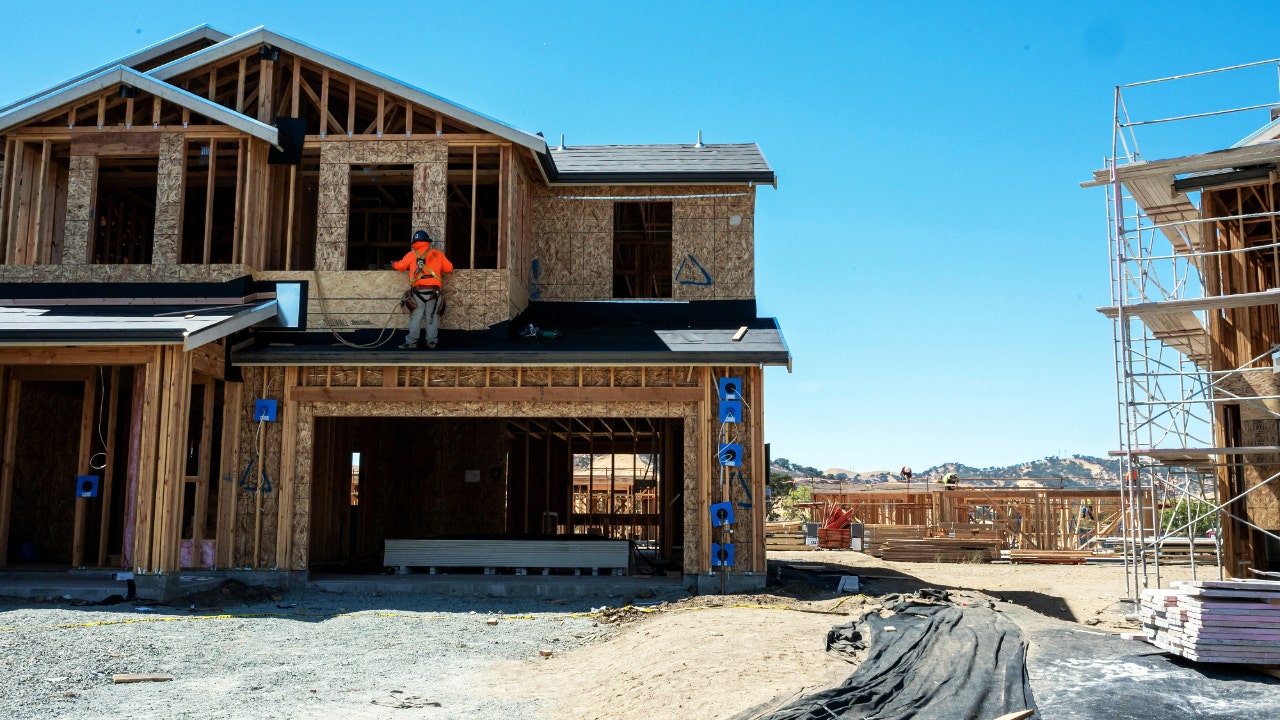
The average time to build a home in the U.S. can stretch to nearly 14 months in some regions, driven by stringent regulations, labor shortages and other construction constraints, according to data from the National Association of Home Builders (NAHB).
The Middle Atlantic faces the longest waiting period, with the average time between when a project is officially approved to when it is completed being 13.7 months. That’s based on the 2024 data from the U.S. Census Bureau’s Survey of Construction (SOC).
New England follows closely behind with the average time of just over 13 months. In the Pacific region, the time it takes for a project to begin until its completed is about 10.8 months, according to the data. In the Mountain region and East North Central region, it takes 10 months and 9.4 months on average, respectively. These regions exceeded the nation’s average of 9.1 months.
The release of the data comes as the housing market is working to boost supply to help ease affordability challenges faced by sellers and prospective homebuyers.
CALIFORNIA RESIDENTS FACE BRUTAL CHOICE ONE YEAR AFTER LOS ANGELES FIRES DESTROYED THEIR LIVES
The shortest construction period is in the South Atlantic region, where it takes an average of 7.8 months to complete a home. The average waiting period from permit to construction start also varies, with the shortest time of 0.9 months in the East North Central to the longest of 2.1 months in the Pacific region.
Realtor.com senior economist Joel Berner told FOX Business that the “regulatory environment is the big story here.” Getting the actual permits to start building in areas like the Northeast, mid-Atlantic and Pacific takes much longer compared to the middle of the country, where it is a lot more permissible.
THESE 10 MARKETS MAY SEE THE BIGGEST HOMEBUYING SURGE AS MORTGAGE RATES FALL
“That really comes down to not only zoning regulations, but environmental regulations,” Berner said. California, according to Berner, is a great example of this. But he further noted that in the Northeast, “zoning is so complicated and so onerous that you know builders just have a much tougher time even getting the idea to start something.”
He laid blame on the “number of pages of legislation about what can be built where” as well as the fact that there is a “lot of overlapping jurisdictions between different counties, municipalities, states, everything else.”
HOUSING AFFORDABILITY CRISIS HAMMERING RURAL AMERICA
Put simply, there are just “more hoops to jump through” compared with regions like the West South Central. For instance, Houston “is kind of the poster child for a lack of zoning,” Berner said.
The complex zoning requirements create a major deterrent for developers, exacerbating challenges in a market already contending with tight supply. Supply has been one of the key factors in making the market more affordable. It reduces competition for a limited number of homes, which eases upward pressure on prices and rents.
The Northeast, which has one of the most complex regulatory environments, is also one of the areas with the largest housing shortages.
If these artifical barriers that are put up by local governments were removed, Berner said builders would want to construct more homes in the Northeast, because it’s more lucrative for builders to build in that region.
Beyond regulatory restrictions, Berner noted that regions like the Northeast and Pacific tend to favor custom construction over standardized, large-scale homebuilding.
“That’s just the kind of inventory that’s being built out there. It just takes a little longer to do that than it does to build a whole bunch of basically the same house in a suburban setting,” he added.
Read the full article here