

Unlock the Editor’s Digest for free
Roula Khalaf, Editor of the FT, selects her favourite stories in this weekly newsletter.
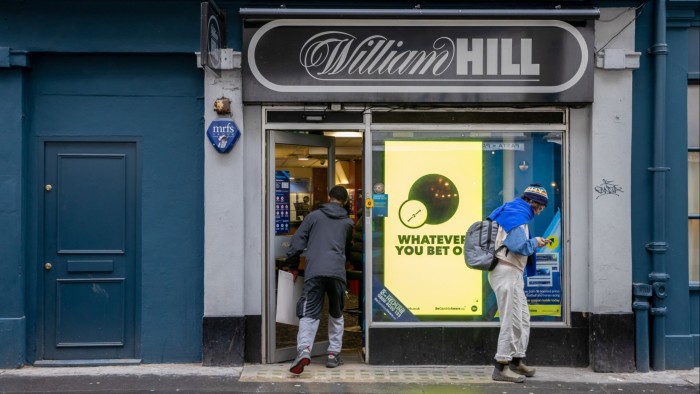
UK gambling company Evoke, the owner of William Hill and 888, has put itself up for sale after being hit hard by the steep tax rises on online betting announced at last month’s Budget.
Evoke’s shares jumped as much as 12.8 per cent after the London-listed gambling company said on Wednesday it was launching “a strategic review” that could include “a potential sale of the group or some of its assets and business units”.
The company has appointed Morgan Stanley and Rothschild & Co as joint financial advisers.
Evoke was one of the biggest losers from chancellor Rachel Reeves’ steep tax rises on the online gambling sector, which included raising the levy for remote betting from 15 per cent to 25 per cent from April 2027. She also increased remote gaming duty, which applies to online casino games, from 21 per cent to 40 per cent, taking effect from April 2026.
In a profit warning released on the evening of the Budget, Evoke said that, without any mitigation measures, these higher taxes would increase its costs by between roughly £125mn and £135mn from 2027.
It ditched its financial targets and warned it could cut thousands of jobs, as chief executive Per Widerström attacked the policies as “counter-productive and highly damaging”.
Shares in Evoke have more than halved since the chancellor’s plans to raise taxes on the UK gambling sector were first reported in August. The company’s market capitalisation has sunk to just £94.3mn, down from a peak of about £1.7bn in 2021.
Evoke, which makes two-thirds of its revenues from the UK, was hit harder than its larger and more geographically diversified peers, such as Flutter and Entain, as investors judged that those companies could more easily absorb the new taxes — and ultimately increase their market dominance.
The company was already struggling ahead of the Budget and reported a pre-tax loss of £168.8mn in 2024. Jack Cummings, an analyst at Berenberg, warned last month that the company’s higher leverage position would “come under scrutiny” in the wake of the additional tax pressures.
Read the full article here