


Ethereum co-founder Vitalik Buterin posted a proposal, or a pull request, on Saturday that would merge the backend programs used by nodes to interact with Ethereum’s Beacon Chain, which handles consensus and staking, and the protocol’s execution layer into one unified code structure to simplify node setup.
Ethereum node runners, also called validators, currently have to run two separate programs, which each require setup and synchronization to coordinate and communicate the data produced by Ethereum’s consensus and execution layers.
This raises the technical complexity of running a node or providing validation services for the Ethereum network, preventing ordinary users from running their own infrastructure and forcing reliance on third-party service providers.
“I feel like at every level, we have implicitly made this decision that running a node is this oh so scary DevOps task that it is ok to leave to professionals,” Buterin said in a post on X. He continued:
“It is not. We need to reverse this. Running your own Ethereum infrastructure should be the basic right of every individual and household. ‘The hardware requirement is high, therefore it’s okay for the DevOps skill and time requirements to also be high,’ is not an excuse.”
Even those who can afford the high-end computing hardware to set up an Ethereum node and have the technical expertise typically lack the time to set them up, Buterin said, adding that “nodes should be easy.”
The Ethereum network and other smart contract blockchains have faced criticism for the technical complexity and hardware requirements to run a node, which has also raised centralization concerns about those networks.
Related: Ethereum Foundation publishes mandate clarifying role and goals
Buterin proposes partially stateless nodes to further decentralize the network
In May 2025, Buterin proposed partially stateless nodes, which do not maintain the full block history and only keep data that the node runner requires.
This reduces the hardware costs and data storage requirements for users running nodes for personal purposes, like sending transactions and verifying the blockchain.
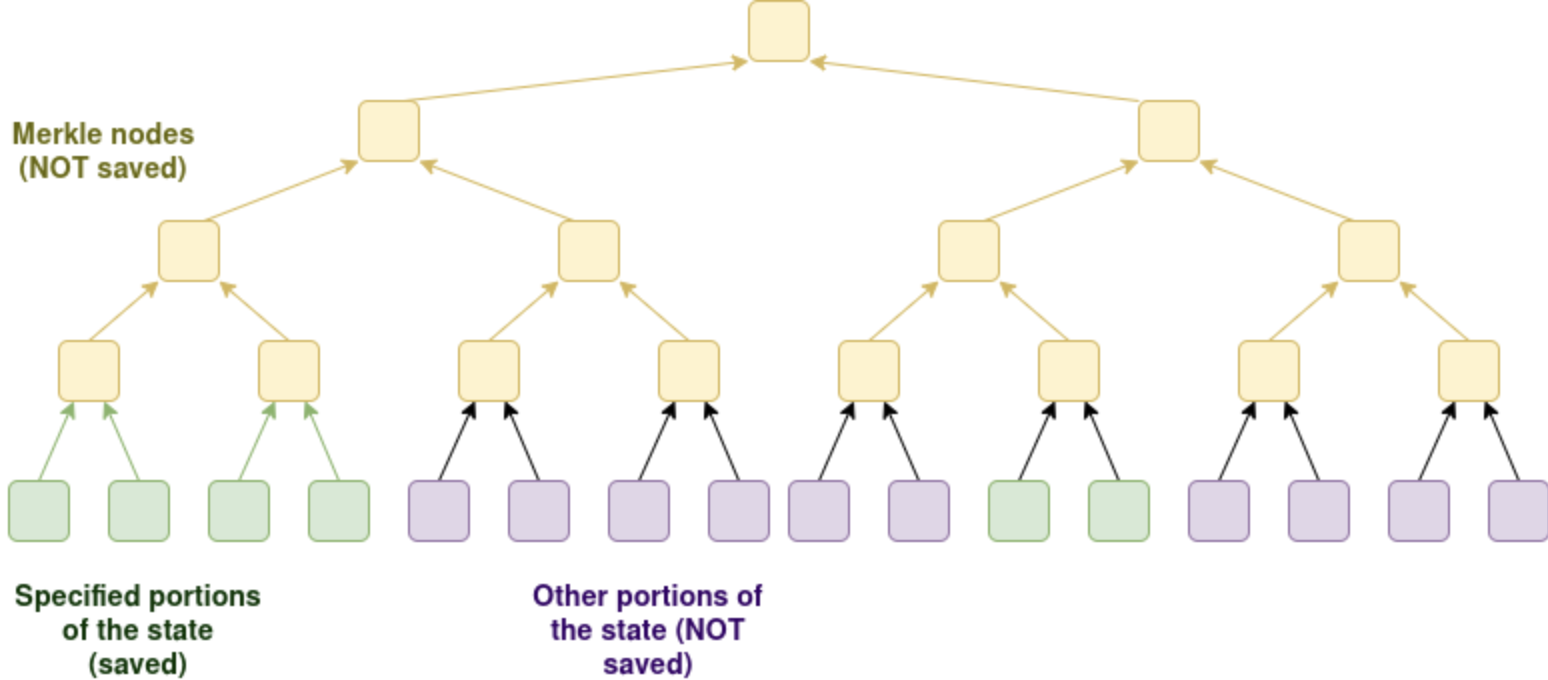
Disk space is usually the primary bottleneck for node operators, according to Go-Ethereum (GETH). Smart contract blockchain networks, like Ethereum, generate significant quantities of data that require ever-increasing storage space, making specialized node hardware a necessity.
“A market structure dominated by a few remote procedure call (RPC) providers is one that will face strong pressure to deplatform or censor users. Many RPC providers already exclude entire countries,” Buterin wrote.
In late January, Buterin said he had set aside 16,384 Ether, worth about $45 million, from his personal holdings to support privacy-preserving technologies, open hardware and secure, verifiable software. He added that the funds would be deployed gradually over the coming years as the Ethereum Foundation enters a period of what he described as “mild austerity,” while continuing to pursue its technical roadmap.
Magazine: Ethereum’s Fusaka fork explained for dummies: What the hell is PeerDAS?
Read the full article here