

About the author: Leslie Palti-Guzman is head of Research and Market Intelligence at SynMax, and nonresident senior fellow at CSIS and NYU’s Center for Global Affairs. Opinions reflected in this article are her own.
Since the Israel-Hamas war started on Oct. 7, the small, gas-rich Gulf state of Qatar has made a series of sensitive geopolitical moves. It exercised its ties to Hamas, which has a political office in the Qatari capital Doha, to mediate in the Gaza hostage crisis. And it announced the signing of lucrative gas deals with major energy firms.
Doha’s multifaceted role in global affairs raises difficult questions. As energy transitions unfold, the world will continue to require a stable gas supply. Western nations therefore face a choice: supply gas themselves or cede the market to Qatar. U.S. allies have questioned Qatar’s loyalties, and ceding the market to it would only concentrate energy wealth further. This decision will be crucial for the U.S. as it balances climate concerns with other geopolitical interests.
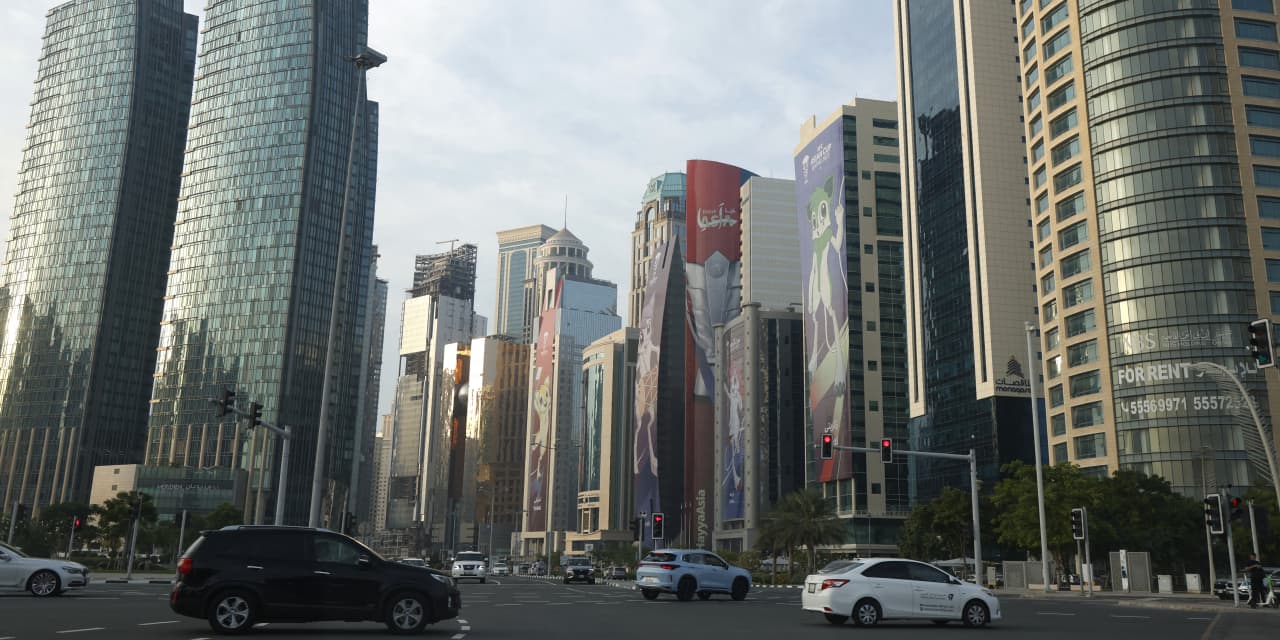
Qatar is embarking on a significant expansion of its gas export capacity that will enhance its energy wealth and soft power. Qatar, one of the world’s top LNG producers, saw its profits from state-owned QatarEnergy surge to $42.5 billion in 2022, amid the Russia-Ukraine conflict and the need to stabilize global gas markets.
This economic clout is likely to bring increased scrutiny, especially from Western nations like the U.S., which are likely to seek clarifications from Qatar on two fronts: the diplomatic leverage gained through its gas deals and the depth of its strategic relationship with Iran. These concerns are particularly sensitive given the U.S. military presence in Qatar, Qatari investments in Western entities, and its funding of U.S. higher education institutions.
Qatar says its relationships with regional groups are benign. It hosts Hamas not because it endorses the group, but because the U.S. asked Qatar to facilitate indirect talks, Qatar’s ambassador to the U.S. has said. “The foundation of our success has been our ability to engage with all sides,” the ambassador wrote in the Wall Street Journal recently.
Qatar has excelled at opportunistic government-to-government deal making, including deals signed with Pakistan, Egypt, and more recently Bangladesh. The next place to watch is Thailand. QatarEnergy has emerged as one of Thailand’s largest suppliers. In July, Reuters reported that PTT, a Thai state-owned energy company, is in negotiations for a 15-year deal with QatarEnergy. Then, in November, Qatari diplomats facilitated the release of 23 Thai hostages held by Hamas after its raid on Israel. That should raise questions about whether Qatar’s relationship with Hamas may help it secure a deal in Asia’s fast-growing energy market.
Qatar has picked the partners for its joint ventures wisely. U.S. companies
ExxonMobil
and
ConocoPhillips
are involved in its expansion projects. QatarEnergy announced multi-decade, multi-billion-dollar gas agreements with TotalEnergy,
Shell,
and Eni, all European companies, in the days after the Hamas attack.
Those companies make their own decisions about the economic projects they pursue, but for Qatar they also likely represent security leverage with Western governments as well as access to gas-hungry markets.
More evidence for Qatar’s strategic decision-making comes from the energy shock that followed Russia’s attack on Ukraine. After Russia cut supply to Europe over the war, Qatar did not rush to redirect flexible volumes to Europe. Instead, Qatar bargained hard and held back supply to Europe until new long-term contracts were signed. Meanwhile, Qatar has been strengthening its relationship with China, with more than 79% of current Qatari supply heading to Asia, including about 22% to China. That represents a hedge against dependence on the U.S.
Qatar’s political maneuverings are risky. Some of its potential energy partners have objected to its ties to Hamas. Mike Kruse, energy spokesperson for one of the parties that governs Germany, said after the Hamas attacks that “future energy partnerships should only take place with partners who recognize Israel’s right to exist and do not fight it,” which is a clear reference to Qatar. Germany’s historical gas deal with Norway and continued search for alternative gas sources, including from the U.S., highlights this hesitance.
Other countries are reluctant to put their eggs in the Middle East basket because of the risk of conflict. Japanese utilities, wary of Middle East disruptions, are cautious about additional Qatari LNG. The safety of shipping routes through the Strait of Hormuz, is a critical factor for Asian buyers, especially after Iran-backed Houthi attacks in the Red Sea. Any shift in European and Asian preferences away from Gulf sources could significantly impact Qatar’s LNG expansion plans.
Over the years, a tacit alliance has deepened between Qatar and Iran, transcending financial and technological collaborations. Doha lifted a self-imposed moratorium on new gas developments in 2017, and saw the end of a blockade by other Gulf states in 2021. Since then, Doha has grown even closer to Tehran. The two countries are now cooperating to become gas and energy hubs. Their shared gas fields—the South Pars (Iranian side) and the North Dome (Qatari side)—collectively form the world’s largest gas field. Exploiting those resources requires joint strategic planning, since natural gas can migrate from one side to the other. Qatar is also dependent on the Strait of Hormuz for LNG exports, a waterway significantly influenced by Iran. That gives Qatar reason to be sensitive to Iran’s interests. Closer cooperation could give Iran the opportunity to generate sizable gas-export revenue without risking further Western sanctions.
The stakes are high in the LNG market. Gas investments made today will determine the origin of tomorrow’s supply and associated wealth. Concentrating production in less-stable jurisdictions is risky. North America and the Middle East are rapidly expanding their export capacities, while Qatar and U.S. companies are racing to sign new long-term contracts. Qatar has historically shielded its market dominance from U.S. competition by continually announcing future export plans, thereby deterring investments in alternative regions.
Doha has correctly bet that delayed or canceled LNG projects in the U.S. will be an opportunity to market its expansion. But the diversification of supply is a key concern for buyers. This is why European and Asian buyers keep lobbying Washington to permit additional LNG export infrastructure. Upcoming LNG contracting and final investment decisions will be decisive in shaping the global supply landscape.
The Israel-Hamas war is only the latest indication that Qatar has emerged as a winner in a multipolar world. Unless Western powers start looking more carefully at its geopolitical influence, its role is only likely to grow.
Guest commentaries like this one are written by authors outside the Barron’s and MarketWatch newsroom. They reflect the perspective and opinions of the authors. Submit commentary proposals and other feedback to [email protected].
Read the full article here