

About the author: Borys Dodonov is head of the Center for Energy and Climate Studies at the KSE Institute.
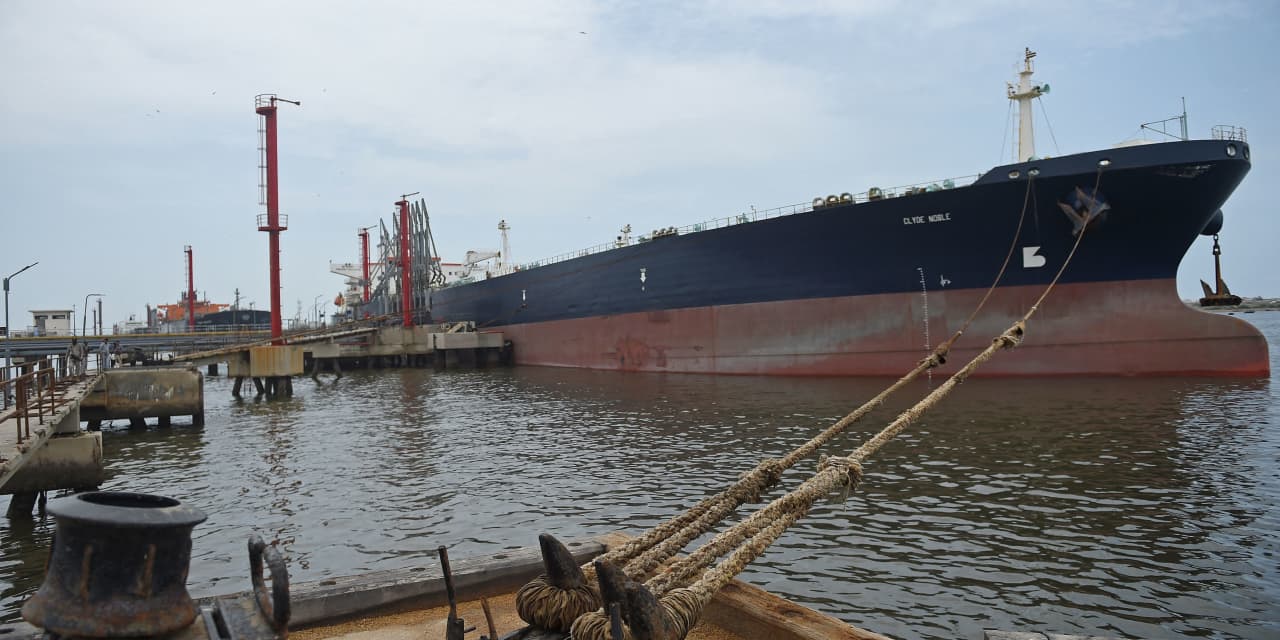
While a considerable focus of media has been on the efficacy of price caps on Russian crude and oil products, another critical facet of Russia’s war effort often remains obscured. A significant and underreported channel used by the Russian Federation to bypass prevailing sanctions is its so-called shadow fleet, hundreds of aging, poorly insured tankers with unclear ownership.
These vessels play a pivotal role in the Kremlin’s endeavors to circumvent international sanctions. But they pose dangers beyond the funding they provide for an aggressive campaign against Ukraine. The use of the shadow fleet poses a substantial environmental hazard, with the potential for significant—and very costly—accidents.
Russian oil export earnings reached $18.3 billion in October, a decrease of $0.5 billion over the month before. However, this marked the second highest revenue level since July 2022, according to the November issue of the KSE Institute’s “Russian Oil Tracker.” That increase occurred as Russia reduced its dependence on Western maritime services, such as the insurance provided by mostly London-based Property and Indemnity Clubs. Access to those Western services was banned for ships carrying oil above the price cap. Only 26% of Russian seaborne oil exports relied on tankers with P&I Club insurance in October 2023.
In other words, Russia continues to extensively use the shadow fleet. Approximately 185 loaded tankers departed from Russian ports in September. Notably, 72% of these tankers were 15 or more years old. These ships tend to be near the end of their service life and are registered in flag states with poor reputations for enforcing international maintenance and safety requirements. In total, 336 unique tankers without P&I insurance were involved in oil exports from July to September 2023.
That said, the shadow fleet is less than half the size it would need to be to ensure Russia stable seaborne exports. And the number of tankers in a given month may overstate the fleet’s value to Russia, since some tankers may only be used once. KSE Institute believes some of the 336 tankers may not return to Russian for another loading. In the 100 days since March 31, for instance, 208 shadow tankers returned to Russia ports for a second loading.
Russia’s efforts to build up a sanctions-proof fleet of tankers pose a significant threat not only to the sanctions regime itself, but also to the environment of coastal states around the world. The environmental threat from the widespread use of aging, poorly insured tankers is especially acute in the European Union countries, through whose territorial waters more than 80% of Russian seaborne exports routinely pass.
Europe has witnessed harrowing episodes of catastrophic oil spills, resulting in the decimation of vast marine populations. The 2002 Aframax Prestige disaster off the coasts of France and Spain released approximately 67 thousand tons of crude oil, nearly twice the volume of the infamous Exxon Valdez supertanker accident. The aftermath of the oil spill required several years of remediation efforts and incurred a staggering cost of around €2.8 billion, roughly $5.05 billion today.
The Prestige incident serves as a direct parallel to potential mishaps involving vessels from the Russian shadow fleet. At the time of the catastrophe, the ship was 26 years old, and investigations failed to ascertain the ultimate beneficiaries of either the vessel or the transported oil. Moreover, the vessel had evaded critical inspections at the departure port, namely the Russian city of Saint Petersburg.
Consequently, all legal penalties and liabilities were borne by the French and Spanish governments. The absence of adequate insurance and the elusive nature of prosecuting the true owners of these vessels and cargoes places an added burden on the European nations.
The Russian government’s disregard for environmental safety protocols continues to this day, underscored by a series of incidents at Russian oil production and refining facilities. In 2020, Norilsk-Taimyr Energy’s Thermal Power Plant three spilled of 21,000 tons of diesel fuel, much of it into rivers that flow into the Arctic Ocean.
As cited by Russian-oil expert Craig Kennedy in his report “Measuring the Shadows,” in recent months, we have seen a near-catastrophic accident in the Danish Straits involving a shadow fleet tanker laden with Russian oil. It came close to causing ecological catastrophe. A new tanker accident would reverberate through the deltas of major rivers like the Rhine, Elbe, Vistula, Thames, Daugava, and Nieman. This could trigger substantial contamination of vital nature preserves, and disturbance to the delicate ecological equilibrium across numerous EU nations.
Russia must be held accountable for its actions and their repercussions. One potent measure to address this is the imposition of further sanctions targeting the Russian oil and gas industry.
In the recent paper by the International Working Group on Russian Sanctions, we recommend several policy strategies. These include performing attestations, bolstering certification processes, creating a list of authorized brokers/traders, imposing fines for price cap breaches, and sanctioning third-party entities aiding in violations. Importantly, there’s an emphasis on mandating adequate spill insurance for tankers navigating G7/EU territorial waters and prohibiting G7/EU entities from participating in the sale or financing of vessels.
European coastal states should follow the lead Turkey set last December when it required verification of adequate spill insurance as a condition of passage through its territorial waters. This reflects a growing trend among coastal states to assert their rights to protect their territorial waters from environmental risk when flag states have failed properly to enforce safety and environmental standards for the tankers they oversee.
Some 95% of the global fleet already provides adequate verification of insurance. Requiring all tankers to do so could sharply reduce Russia’s ability to utilize the shadow fleet. This would make Russia even more heavily reliant on price-cap compliant tankers and further constrain its ability to capture windfall margins above the price cap. It would also significantly reduce the environmental threat Russia’s growing shadow fleet poses to coastal states around the world.
Guest commentaries like this one are written by authors outside the Barron’s and MarketWatch newsroom. They reflect the perspective and opinions of the authors. Submit commentary proposals and other feedback to [email protected].
Read the full article here