

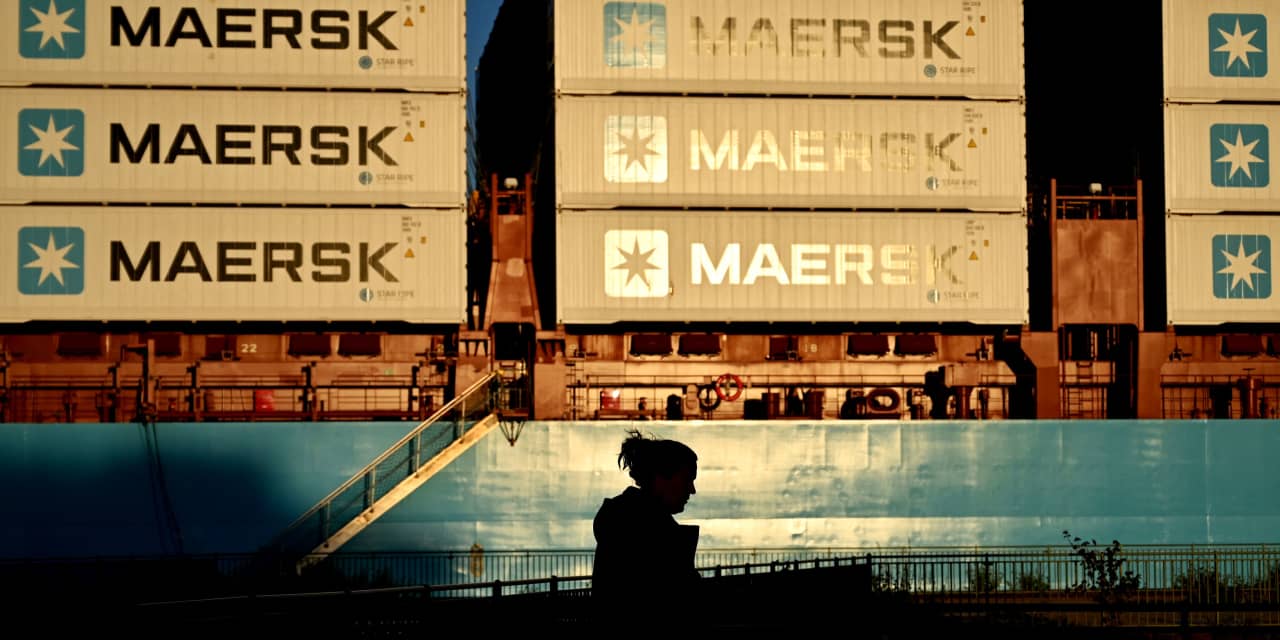
Companies transporting goods have to pay a new risk premium because of violence in the Middle East and a drought in the Panama Canal. Higher rates could stick around, lifting some shipping stocks for a longer period.
Shipping stocks have soared as attacks by Yemen’s Houthi faction on ships in the Red Sea have forced companies to avoid using the Suez Canal, lengthening their trips and causing shipping rates to rise. The average rate to ship containers between Asia and Europe has more than doubled in the past month. There has been a spill-on effect on other routes too, as container ships are forced to make longer journeys, cutting the overall availability of ships. Rates to ship goods between Asia and the U.S. East Coast have risen 40% since mid-December, according to Jefferies.
The big question is how long the disruption lasts. The U.S. is attempting to put together a coalition that can protect ships moving through the Red Sea, where several have been attached by the Houthis. But so far, the coalition has not been able to stop the attacks, which the Houthis say are designed to force Israel to stop attacking the Palestinian territories. Companies also face delays and rate-hikes in the Panama Canal, which has been forced to cut capacity due to a drought that’s unlikely to abate anytime soon.
The stock of
A.P. Moeller Maersk,
one of the world’s largest shipping companies, has risen 33% in the past month. Other shipping stocks are up too. Major shipping companies include
Hapag-Lloyd,
ZIM,
Star Bulk Carriers,
Golden Ocean Group,
and
Genco Shipping & Trading.
The latest spike in rates will likely fade somewhat in the months ahead, absent a much broader conflict in the Middle East. Still, the disruptions could last for several more weeks, and end up forcing companies to pay a higher risk premium to ship goods on a longer-term basis.
To understand why, it helps to calculate just how inconvenient it is to avoid the Suez Canal. Shipping companies looking to avoid the canal have been rerouting shipments from Asia to Europe around Africa’s Cape of Good Hope. That journey is about twice as long for a ship traveling from Singapore to the Mediterranean: 92 days round trip on the new route, up from 48 days on the old, according to Jefferies.
Ships traveling for that long will also be delayed in picking up their next loads.
“We expect spot rates will continue to rise in the coming weeks as container vessels that have been re-routed via the Cape return late for loading in Asia, meaning there will be a shortage of vessel space available for export in the busy pre-Chinese New Year period,” wrote Goldman analyst Patrick Creuset. Maersk is the dominant player on the Asia to Europe route, meaning it should see the largest benefit from the current increase in rates.
Creuset upgraded Maersk stock to Neutral from Sell. He’s still relatively cautious on the stock because shipping companies are expected to add 11% more shipping capacity this year, outpacing demand growth.
Jefferies analyst Omar Nokta also thinks that the increase in shipping capacity is a negative for shipping stocks. But it’s likely that rates will settle at higher levels. He expects ”the ongoing squeeze to abate as schedules are adjusted and more ships become available,” he wrote. “However, we believe freight rates will likely establish a higher floor than previously expected given the overall disruptions.”
Nokta upgraded Maersk stock to Buy from Hold with a price target of 16,500 Danish Krone, or $2,421. That represents an 18% premium to current prices of 13,975 Krone. Investors can also buy Maersk’s American depositary receipts, which trade under the ticker AMKBY.
Write to Avi Salzman at [email protected]
Read the full article here