

About the author: Ellen R. Wald is a nonresident senior fellow with the Atlantic Council Global Energy Center and the president of Transversal Consulting. She is the author of Saudi, Inc.: The Arabian Kingdom’s Pursuit of Profit and Power.
Since the Obama administration, the U.S. economy has benefited from a fast-growing trajectory of exports of liquefied natural gas. A plentiful domestic natural resource is helping to power the world. Yet now the White House and Department of Energy are considering adding an additional “climate review” to the regulatory approval process for LNG export terminals, according to reports by the New York Times, Bloomberg, and others. That result could at worst halt future LNG exports that can strengthen our domestic economy and help our allies in Europe and Asia. At best it will add unnecessary delays to America’s LNG export growth.
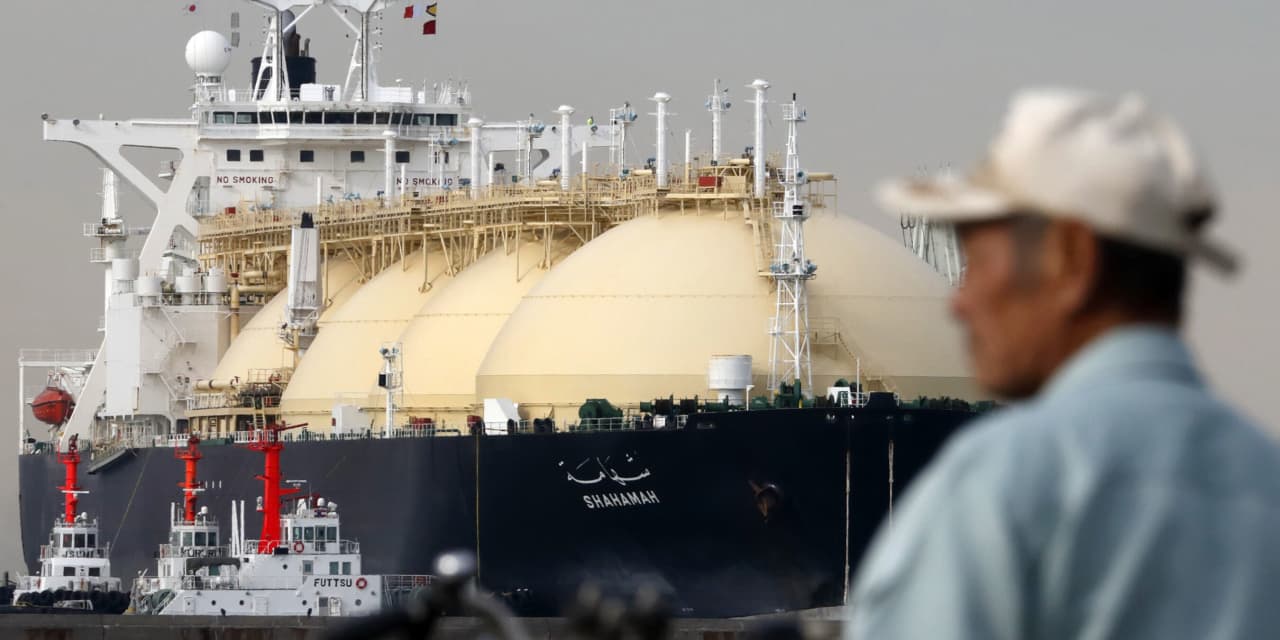
Since U.S. LNG exports began in 2016, they have grown by an average of more than four billion cubic feet each month, according to the U.S. Energy Information Administration. No other LNG exporter in the world has experienced such exponential growth since the technology to liquefy and ship gas was developed. Even more exceptional is that this growth continued unhindered even when the price of natural gas more than quadrupled at one point during that period. The U.S. became the world’s largest exporter of LNG in 2023, surpassing both Qatar and Australia. With five more export terminals under construction on the Gulf Coast, the U.S. could double its LNG exports by 2026. Several more export facilities are awaiting permits.
LNG exports are part of a bigger story of growth in U.S. natural gas production. Not long ago, U.S. companies were building terminals on the Gulf Coast to regasify LNG they expected to import. Then the fracking revolution allowed companies to economically access stores of natural gas locked in shale rock formations. U.S. oil and natural gas production took off, and companies pivoted to export terminals. We could supply the world instead of buying from the world.
As more domestic natural gas became available, U.S. power plants stopped burning coal and switched to natural gas, cutting carbon dioxide emissions in the process. As of 2022, 40% of all electricity in the U.S. comes from burning natural gas.
Still, domestic energy companies produce more natural gas than our energy infrastructure can use. Excess gas is typically flared, or burned off at the wellhead, a wasteful process that also pollutes the atmosphere. Only with liquefaction technology can U.S. natural gas be exported to countries overseas that need it.
The innovation and prevalence of LNG facilities has allowed the U.S. economy to benefit from this plentiful natural resource and the world’s desire for it. During the Obama administration, there was a concern that expanding U.S. LNG exports would result in higher energy prices at home. Instead, natural gas has remained plentiful and cheap for most Americans even as LNG production has grown.
Now, the Biden administration may direct regulators at the Department of Energy to consider the climate impacts of all new LNG plants. The Energy Department already reviews all LNG export permit requests to determine if the terminal is “not inconsistent with the public interest.” The Environmental Protection Agency already requires environmental impact statements. Forcing regulators to consider whether the potential climate impacts of a new terminal are in the public interest would extend an already bloated approval process that has gone from 155 days under the Obama administration to over 330 days under Biden.
Climate activists oppose U.S. LNG exports on the theory that they prevent the proliferation of renewable energy. In fact, LNG displaces coal use, and this transition has had measurable climate benefits. Since 2005, the transition from coal to natural gas in the power sector has led to 35% decline in emissions in the U.S. When LNG is too expensive or unavailable, countries switch to burning coal, which causes significantly higher carbon emission levels than natural gas. When Europe stopped importing Russian natural gas in 2022 following the invasion of Ukraine, countries such as Pakistan were priced out of the LNG spot market and reverted to burning coal. This is a net-negative for the environment. Natural gas’s superior reliability and scalability makes it impossible to replace with solar and wind power.
LNG exports could add as much to $73 billion to the U.S. economy by 2040, according to estimates by the American Petroleum Institute. According to Wood MacKenzie, at the beginning of 2023, proposed LNG projects with $100 billion in investment were awaiting final government approval. A mere $34 billion has been approved since then. Further delays, or a halt, in permitting for new LNG projects could result in a drop-off in new investment or could even see commitments for capital withdrawn as private equity groups pivot to infrastructure investments that can offer returns in a less delayed time frame.
LNG is already playing a key role in the transition away from coal. But the world needs more natural gas, not less, to cut carbon emissions and boost the economy.
Guest commentaries like this one are written by authors outside the Barron’s and MarketWatch newsroom. They reflect the perspective and opinions of the authors. Submit commentary proposals and other feedback to [email protected].
Read the full article here