


By Francesca Peacock
When artist Teresa Hastings first walked into her Notting Hill maisonette in 2002 the place was in “a really sad condition”, she says. After being damaged in a fire some years previously, it had been decorated eccentrically and was now a mess, with dirty carpets, low ceilings and lurid walls in “shocking pink, gold and lime green”.
Many would have walked away, but having worked as an interior and architectural designer, Hastings could see the potential. Located on a no through road and spread across three floors of the building, it could be restructured to work for family life, making an adaptable home for her and her three children. She set about doing some exploratory detective work — cutting a small hole in the ceiling and discovering a void above. The ceilings, it turned out, had been lowered after the fire.
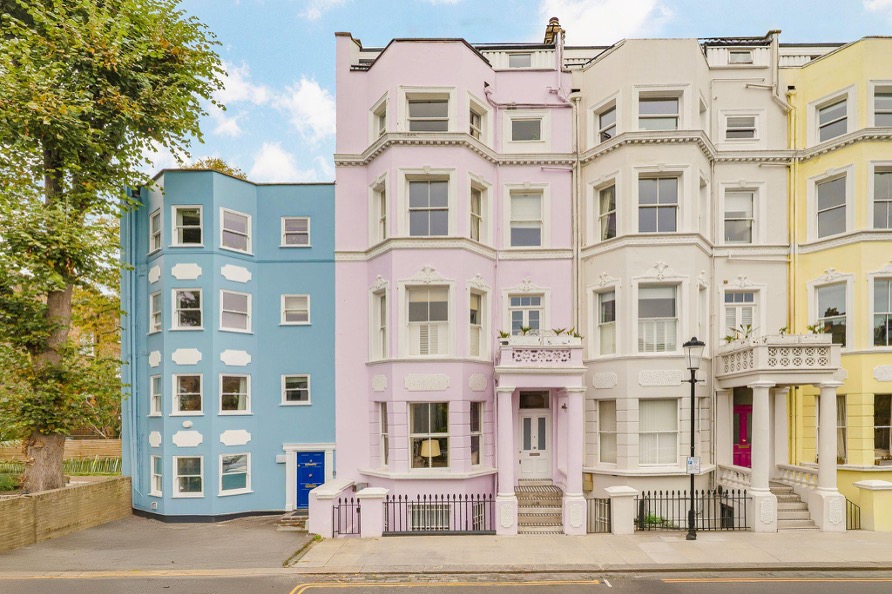
She bought the pink-fronted flat and lived around the corner for a year while undertaking the sizeable project of transforming it. In addition to the structural repairs needed, Hastings also reconfigured the rooms, extending the basement bedroom out into the garden, reconstructing the entrance on the ground floor and replacing long-lost original features. She took a wax cast of the cornicing in the neighbours first-floor flat and had it replicated for her own space.
The four-bedroom home, on the market for £3.1mn, now bears little resemblance to its initial state. With uninterrupted views from the bay windows at the front through to the garden at the back, the living areas are filled with light.
At the back of the ground floor, Hastings created space by removing the underside of the Victorian staircase that leads down to the basement, and taking out the wall and door leading on to a small rear bedroom. The result — with the original Victorian joists on show — is a large study space, with windows on two aspects looking on to greenery outside.
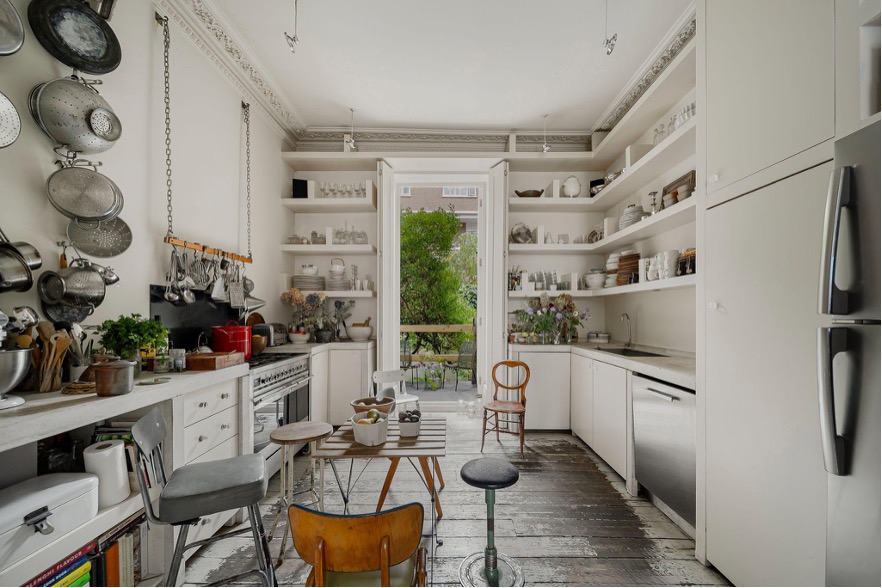
On the lower-ground floor, the main bedroom has another large bay window and is decorated in the house’s airy, whitewashed colour scheme, complete with a tin-lined copper bath in the en suite. One of the other two bedrooms on the lower-ground floor has access through to the secluded garden — now with the Victorian outhouse removed.
Hastings uses the light-filled spaces to display her large textile works. On one side of the living room is “Two Sides”, a landscape tapestry held within a scaffold frame (main image, top).
Hastings weaves her tapestries with yarn she dyes by hand — in the sink, in the garden, or on her travels in the Himalayas, where she has found inspiration for her own work from the indigenous textile heritage. Whether sketching at her desk or dyeing yarns, she prefers to live and work in a single place — somewhere that now unites the artistic and the domestic.
Photography: Sarah Myerscough Gallery; United Kingdom Sotheby’s International Realty
Read the full article here