

This article is part of FT Globetrotter’s new guide to Istanbul
The Emperor Constantine, Sultan Mehmet II and millions of tourists each year can’t be wrong: the charms of Istanbul’s old city are undeniable.
This is the New Rome that Constantine chose as his capital in 330AD from domains that stretched from Aleppo to York, the prize that Mehmet II and the Turks claimed 11 centuries later and ground zero for travellers from across the world.
That translates into vast crowds in Sultanahmet, the historic peninsula that encompasses Istanbul’s most famous sites. It means enormous queues in front of monuments such as the 17th-century Blue Mosque and the sixth-century Ayasofya, built as a church by the Emperor Justinian to outdo the Temple of Solomon and reclaimed as a mosque by President Recep Tayyip Erdoğan after decades as a museum.
There are other consequences of the combination of the eternal attractions of Istanbul and the post-pandemic surge in tourism: online tickets touts, a feeling of being swamped by the holidaying mass of a humankind, a sensation of being locked into an algorithm-designed itinerary. And inexcusably mediocre food in what can often be a culinary paradise.
But in Istanbul there are always other things to do, other places to go, alternatives away from the hordes.
Here is a far from complete list of ways to avoid the tourist traps — recommendations I’ve given friends and family who have visited this incomparable city.
Instead of a fancy meal, go on a food tour
For more than a decade, the Culinary Backstreets team has been organising trips in Istanbul. One of the most delicious is the tour around the Grand Bazaar area, which starts off in the Art Deco back rooms of Sirkeci train station, once the terminus for the Orient Express (of Hercule Poirot fame).
Gonca Karakoç, the guide on a recent trip, sets out an array of early-morning-bought delights on a table in the otherwise deserted hall.
Among them are wild thyme, herbal cheese, red pepper paste with crushed walnuts and tiny olives from Antakya, the biblical town of Antioch. But what Karakoç calls “the queen of the breakfast table” is the combination of honey and sinfully tasty clotted cream.
Over the next five to six hours, participants will eat at eight or nine stops, sampling food ranging from çiğ köfte — traditionally raw meatballs but nowadays almost always a bulgar-based vegan dish — to horizontally-cooked kebabs (a delicious alternative to döner) and goat-milk ice cream made with salep, a starch derived from wild orchid tubers.
The tours are generally kept to at most seven people so they can find space in the modest but expert establishments they visit, generally stalls, tradespeople’s eateries and a pide (Turkish pizza) joint.
Karakoç, who was born in Germany but has lived in Istanbul for over four decades, also dispenses advice on how to detect a good simit bagel (it should emit an audible crack when you snap it in two) and takes visitors to extraordinary places in and among the district’s great 16th- and 17th-century hans (trading centres), from serene courtyards to silversmiths’ workshops.
Many of the quietest and most enchanting places — such as a secluded spot where you can munch kebabs underneath a chestnut tree and beside a well — are just steps away from the throngs of tourists in the Bazaar and the surrounding district. But most visitors would never find the doorway, staircase or side street that leads to them.
One stop takes you to the market porters’ association; another to a tea-sellers’ centre of operations with nine dedicated phone lines to neighbouring shops that are frequent customers.The tour includes places many locals have never seen and dishes many would adore.
I went on the tour 10 years ago and loved it; a courtesy revisit this year proved just as exceptional.
“It’s a way of sharing culture through food,” Karakoç says. “It’s a trip through time.”
Instead of the Blue Mosque, go to the Süleymaniye
-
Where: Sultanahmet, on the crest of a hill looking over the city
-
When to go: Tourists should avoid visiting during prayer times
-
Cost: Free
A perennial Istanbul experience is negotiating the crowd in the courtyard of the Blue Mosque as you try to make your way to see the exquisite tile-work within.
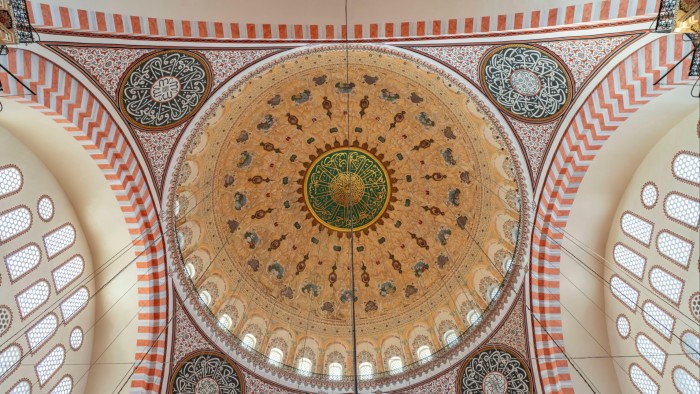
But it is far less frantic to experience another architectural jewel — perhaps Istanbul’s finest mosque, the Süleymaniye, which is a gentle climb away from many of the most-visited historical sites. This 16th-century masterwork, built by the great architect Sinan for his patron Sultan Süleyman, sits on the third of the old city’s seven hills at the heart of a complex the centuries have barely touched.
Süleyman, whose name is the Turkish cognate of Solomon, is always referred to as The Magnificent. His mosque is part of the reason why.
Its granite, porphyry and marble columns, taken from earlier monuments from as far as Lebanon and Egypt, are testimony to the range of his power. His giant tomb and that of his wife, known variously as Roxelana or Hürrem Sultan, are in the mosque’s extensive grounds.
Walking through Sinan’s streets, past the hospital, soup kitchen and madrassas that he built, evokes memories of other immaculately preserved religious precincts, such as those of Avignon and Salamanca.
After all the splendour, the garden outside provides a priceless view of the Bosphorus, the Marmara Sea and the rest of the old city.
The jewel-box Rüstem Pasha mosque, for many people the city’s most exquisite, is a shortish walk downhill.
See the harem — and more
Some wheezes no longer work. Time was when visiting the harem, the most splendid part of the unmissable Topkapı Palace, cost a little extra — which meant fewer tourists in a place of jaw-dropping beauty, with its exquisite courtyards, kiosks and 16th and 17th century tiles.
This is no longer the case.
The complete TL2,400 (£43/$58) ticket to Topkapı, including the harem and the sixth-century Hagia Irene, is now standard for non-Turkish nationals. (Unless you have the relevant passport, it’s better not to ask how much Turkish citizens have to pay.)
It gives you the full run of Topkapı, from the massive outer courtyards to the very tip of the old city, with its commanding view of the surrounding waters. The harem remains the highlight.
The sultans’ wives and concubines have long gone, as have the attendant eunuchs. But has there ever been more elegant opulence than this exquisite run of more than 300 rooms, nine baths and two mosques? For magnificence, it is hard to match the 16th-century privy chamber of Sultan Murad III, with its blue-white Iznik tiles and a two-tier fountain intended to frustrate would-be eavesdroppers with the sound of flowing water.
One tactic to save some time getting into the complex — so that you queue only for entry, not for tickets as well — is to buy the five-day museum pass Istanbul e-card from the official site. This is good for 13 museums, including the harem and the rest of the Topkapı Palace, as well as sites such as the sensational (and rather less visited) Archeological and Great Palace Mosaics Museums.
It is far from cheap at €105. But if you are visiting Istanbul for the first time, it may well be worth it.
Instead of a tourist boat, take a regular ferry
The best views of Istanbul are from the sea. But there’s no reason to be restricted to the lumbering tour boats with their loud-speakered commentary.
Making use of the network of iskeles, or ferry stops, along the coastline is often the best way to get from one part of the city to another. You just need to get a TL130 (£2.30/$3.15) Istanbulkart — usually on sale beside the bigger iskeles — and load up enough money for a few trips, which often work out at around £1 each or less. (The same card can be used for several people.)
When leaving the old city for the Beşiktaş district, I have often avoided the traffic jam and the crush of people on the trams by catching a boat to Üsküdar on the Asian side and then popping back across the Bosphorus.
Spending five minutes — or more — on the Asian continent makes it all the more of an attraction.
Though there is usually a smattering of tourists on board, most are Istanbulites: commuters, students or just people who have a task to do or a meal to eat on the other side of the water. No matter how short the crossing, tea, coffee, orange juice and snacks are usually available.
Hang out beside the Valens Aqueduct
The Emperor Valens, who died in the late fourth century fighting the Goths, left one great monument to his name: an aqueduct that looms over the old city when you’re coming across the Golden Horn.
Many tourists just get that far-off glimpse. But if you can make it to the neighbouring Itfaiye Caddesi, a street that runs through a tranquil plaza and under the aqueduct, you experience a slice of old Istanbul. Old men sip tea under the ancient arches. Butchers and dried fruit and nuts shops do business nearby, as do kebab restaurants. If fatty lamb is to your taste, this is an ideal place to try büryan, a slow-cooked delicacy from the south-east. Order the boneless variety, which is rather more trimmed.
Sample underground Istanbul
Istanbul is renowned for the Basilica Cistern just beside the Ayasofya — a sixth-century complex that shows that the Byzantines of the Emperor Justinian’s era rivalled the Victorians in erecting magnificent architecture for the most mundane and municipal of purposes. There’s a repurposed upside-down Medusa head and the locale was used in From Russia with Love with Sean Connery.
But the queues to go inside are long, and there are other sites that are also atmospheric and far less frequented.
The even older Cistern of Theodosius — which boasts an 11-metre high ceiling supported by 32 marble columns — was only rediscovered this century. It remains more or less under most tourists’ radar but is just around the corner from the Column of Constantine, the city’s oldest monument, erected to mark its inauguration as the capital of the Roman empire in 330AD.
A TL990 (£18/$24) entrance ticket includes a sound and light show that rushes through a version of the city’s history from Byzantium to Atatürk, the founder of modern Turkey.
For those who can’t see a Byzantine arch without wanting to dine under it, both the nearby Sarnıç and the Sultan Sarnıç restaurants have been installed amid late-antique cisterns.
Such places are part of a tour of Underground Istanbul offered by Antonina Tourism that also takes in the remnants of Byzantine palaces and churches, and the fourth-century Martyrion, which, tradition has it, was built by the Empress Helena, mother of Constantine. It now lies inconspicuously beside — and beneath — a car wash and a church.
The seven-hour tour may be for the intrepid. The booking site is in Turkish, although English-speaking guides are available — the company asks for 48 hours’ notice if that’s what you need. Prices can vary for non-Turks, depending on how many are on the trip — for 10 people it can work out at around €270 each, so do try to swing a better deal. The places the tour visits are not so much off the beaten track as under it.
Drink the right kind of tea
When visiting the old city, you may well be offered apple tea. This is a drink for tourists, generally as part of the preliminaries for the sale of a carpet. Turks don’t touch it. Have black tea or a Turkish coffee instead.
Share your tips for Istanbul sights that are away from the tourist trail in the comments below. And follow us on Instagram at @ftglobetrotter
Read the full article here