

Unlock the Editor’s Digest for free
Roula Khalaf, Editor of the FT, selects her favourite stories in this weekly newsletter.
It’s a Friday evening. The restaurant is packed, filled with chatter, laughter and the clatter of the open kitchen. There I am, in my apron and chef clogs, towel tucked in at my waist, focused and in my element: the sauce reducing in the background, the soup nearing a simmer, the starter marinating to my right, and the head chef’s voice calling out checks to my left. All is well. Then —
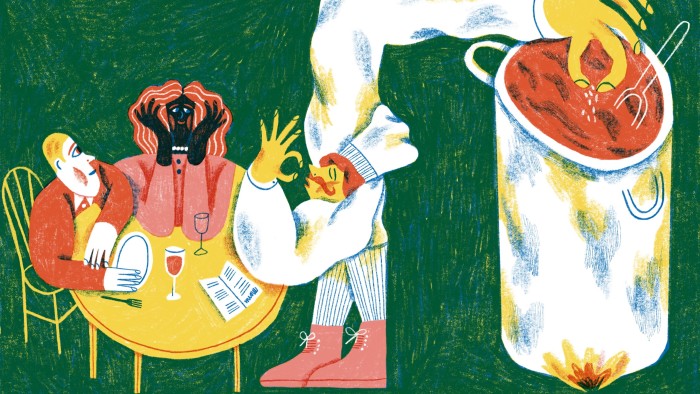
“Excuse me?” Two diners at the bar stare at me expectantly, before asking, “Do you have any recommendations?” I paste on my “customer friendly” smile and suggest three of our bestsellers. One nods. They’ve tried those already. The other mentions a shellfish allergy. I should have asked that first.
The soup boils over as I half-listen to their next question. New checks are being called out, but I miss my orders as I explain processes and ingredients. My focus slips from what I’m here to do: cook.
As kitchen culture has gained popularity and visibility, so too have chefs. We are no longer hidden somewhere in the back. Suddenly, we are facing out into the dining area from our open kitchens, interacting with customers now the daily norm. Whether it’s a chef’s recommendation, a personally delivered dish or a peek into the kitchen, diners seem to increasingly crave contact with the people cooking their food. But in that pursuit, they are cutting out the essential middleman, undervaluing the role of front-of-house teams whose expertise ensures the best possible dining experience — and who are, honestly, infinitely better at it than we chefs are.
I see the work our servers, hosts and managers put in every day, always asking questions at menu briefings, memorising ingredients, learning the right pairings. They can explain the menu clearly and succinctly, tailoring their service to your personal tastes with an intuitive effortlessness and patience that I simply don’t possess.
This isn’t luck, it’s professionalism. Their artful service is informed by years of experience, courses and certificates. They anticipate your needs and handle concerns with ease. With them, you’re in good hands. This is hospitality. So it’s frustrating when guests turn to the sweaty, flustered chef, assuming they know best. I have seen diners ignore waiting staff serving food, yet gush away when a chef in a stained apron drops off a plate with a mumble.
I’m not saying that chefs shouldn’t be valued. We, too, have trained hard. Through tough apprenticeships, low-paid jobs or expensive culinary courses, chefs dedicate themselves to honing their craft.
We spend years building our technical knowledge, mastering time management and developing the ability to thrive under pressure and as part of a team. Note that I made no mention of customer service.
Don’t get me wrong — I would love to be good at customer service. But I’m not. Nor should I need to be as a chef. This is why, when I see a customer with a menu looking around expectantly, I will probably nudge the nearest server, knowing they will provide genuinely great hospitality. Leaving me free to focus on what I do best.
Find out about our latest stories first — follow FT Weekend Magazine on X and FT Weekend on Instagram
Read the full article here