

By Emma Bird
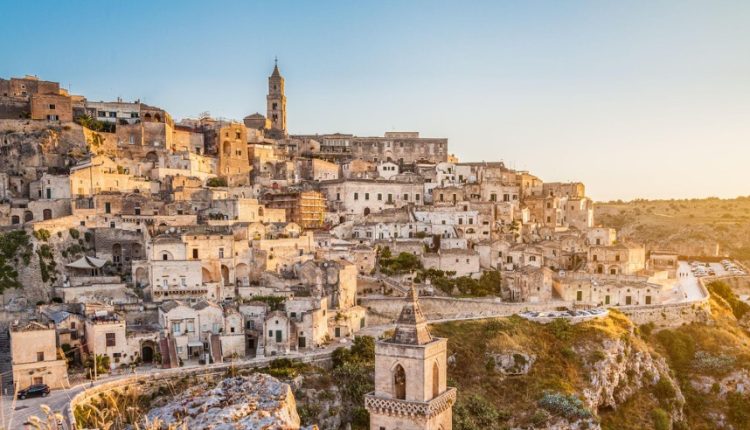
Once dubbed la città della vergogna — the city of shame — Matera, in southern Italy’s Basilicata region, has undergone a metamorphosis. In the mid-20th century, its ancient cave dwellings, the sassi, were a symbol of extreme poverty. Today, they are emblems of forward-thinking design, sustainability and understated luxury.
And they’re not alone: other cave homes can be found in China’s Loess Plateau, where millions of people still live in yaodong — homes excavated into compacted soil. In Guadix, in Spain’s province of Granada, more than 2,000 cave houses are still in use and in Cappadocia, Turkey, inhabited caves include both multilevel dwellings carved into rock faces and the “fairy chimney” homes of cities such as Ortahisar and Uçhisar.
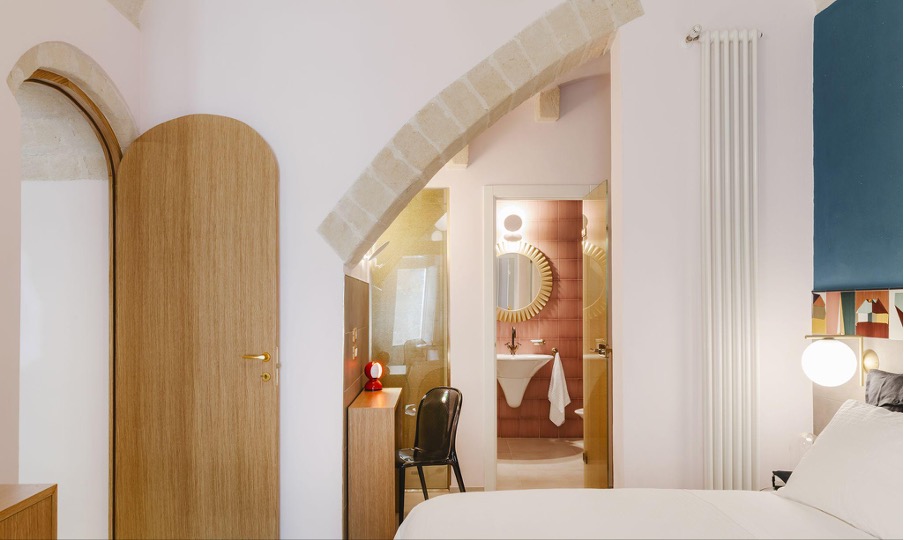
The ancient caves of Matera were considered uninhabitable after the second world war, but bold renovations such as this at Casa di Mimì are giving them a new lease of life
Carved into limestone cliffs, the sassi are among the world’s oldest continuously-inhabited settlements, with origins dating back to the paleolithic period. Yet in postwar Italy, living conditions here were dire: families of up to 20 people, plus animals, crammed into dank, dark spaces of 50 sq metres, often without plumbing, ventilation or electricity.
“There was absolute poverty and no hygiene,” says Antonio Giulio Loforese, co-founder of Lomo Architecture, which has helped lead the transformation of these cave sites and is now based in a sasso they converted. “These spaces were humid and unhealthy. The streets were open-air sewers.”
In 1950, a visit from Italy’s then-prime minister Alcide De Gasperi brought national attention to the crisis. He described the conditions in Matera as “a national disgrace” and ordered the evacuation of the sassi, moving residents to new housing on the city’s outskirts. The caves became state property, with control later handed over to the municipality. Over time, the local authority allocated them to new owners through public tenders and restoration agreements.
The city’s fortunes began to shift after its Unesco World Heritage listing in 1993. In 2004, actor and director Mel Gibson used Matera to depict ancient Jerusalem in his film The Passion of the Christ and in 2019 it was named European Capital of Culture. “That triggered serious private investment,” says Loforese. “The majority of Matera’s rebirth has come from individuals restoring these spaces.”
Renovating a sasso can take more than twice as long and cost twice as much as a conventional project. Because cranes cannot reach the homes at the heart of the city, transporting materials and tools often has to be done manually.
Instead of cement-based plaster or synthetic paints, the architects only use expensive breathable materials, such as lime-based mortar — combined with ventilation systems, they help prevent the build up of humidity and radon gas, keeping the interiors healthy. Thanks to the caves’ natural insulation, interior temperatures tend to remain between 16C and 20C all year round, meaning minimal heating is required.
The need to maximise natural light sees internal walls replaced with shelving, glass or plants, while sopraluce — glazed panels placed above doorways — help draw light further inside. Lomo Architecture applies these principles across its projects.
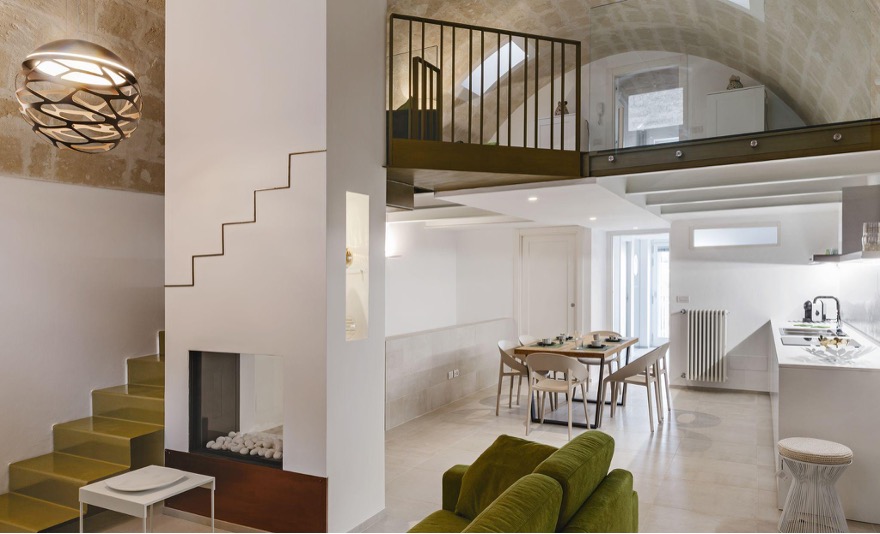
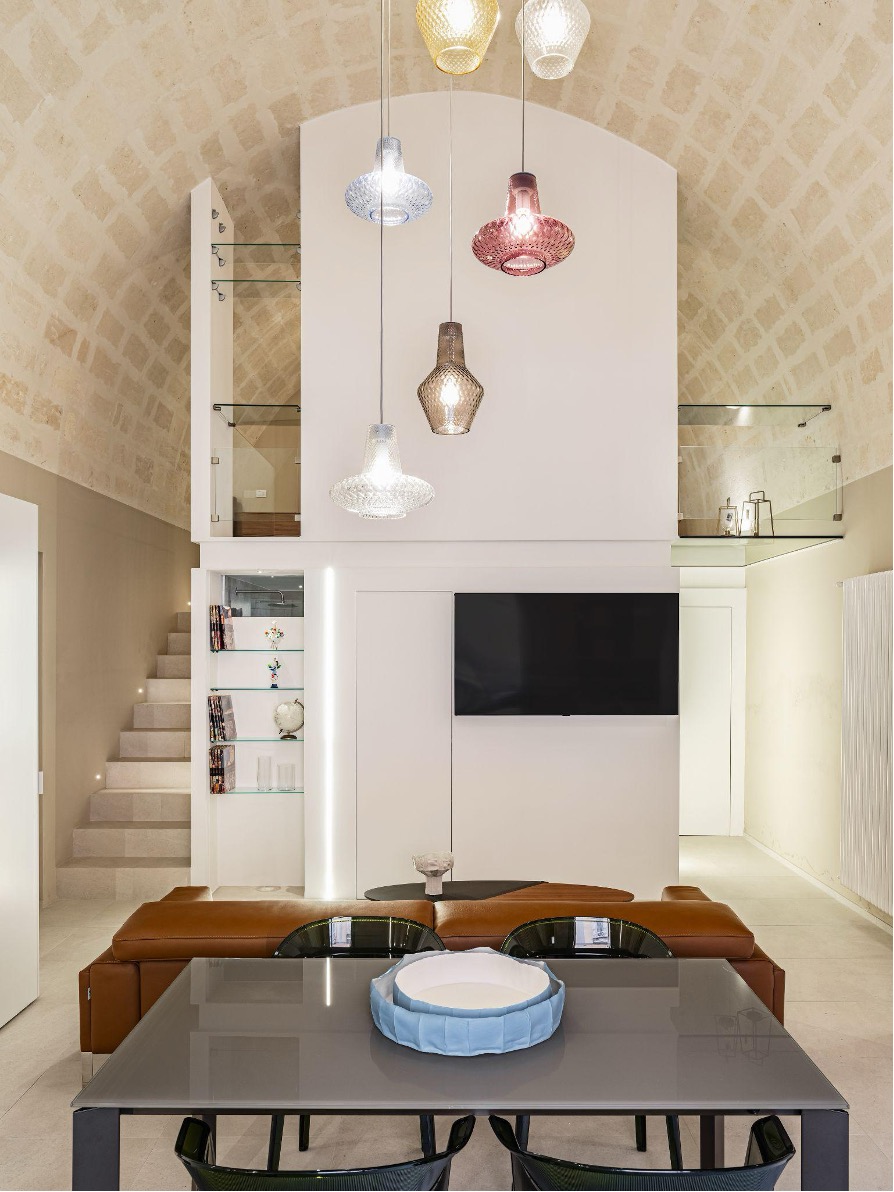
In House M, owned by a local couple who run a visual design agency, a crisp white block contrasts with the exposed rock and steel beam above. At Lamia Matera 11 the double-height living space is animated by a golden staircase and central fireplace.
Casa di Mimì, meanwhile, has gone for bold, expressive interiors with bespoke furniture and Bardelli tiles, while a cistern uncovered during renovation has been left visible beneath a glass floor — a quiet reminder of how the city once functioned.
Yet the path to restoration is not always smooth. Although there are still investment opportunities, some investors, especially foreign ones, are put off by the cost and time involved, despite the fact that the returns can be striking. Casa di Mimì was bought for €50,000 and renovated for €65,000. Last year it sold for €250,000.
Loforese believes successful sassi renovations are those that don’t bow to current trends but lean in to the history of the place. “If a project within Italy’s cultural heritage goes out of fashion,” he says, “it means it wasn’t well done.” Having cast off the deprivation of the last century, Matera’s traditional homes no longer feel behind the times but ahead of them.
Photography: Alamy; Pierangelo Laterza
Read the full article here