


By James Greig
Wimbledon is now the only major tennis tournament played on a grass court, which up until the 1970s and 1980s was the norm. This isn’t surprising since clay and acrylic courts are cheaper and more straightforward to maintain and provide more consistent playing conditions.
But what grass courts lack in practicality, they make up for in charm. They evoke an eternal and idyllic English summertime: weeping willows, jugs of Pimm’s and EM Forster novels. As a feature in a private home, a grass court offers timeless elegance over hard-edged functionality.
But ask anyone responsible for looking after one and they’ll tell you: it can be a Sisyphean task. Catherine Sylvester’s family has lived at Braithwaite Hall, a country estate in North Yorkshire, for multiple generations, and their court was installed at some point in the early 1970s. “The maintenance is high-end,” she admits. “It’s quite a bit like Wimbledon, but we don’t have the same facilities.”
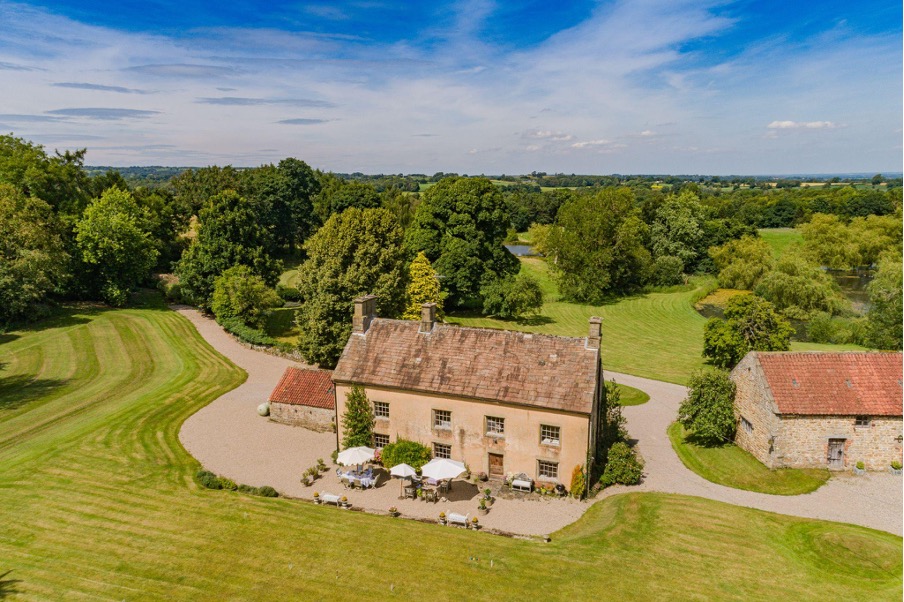
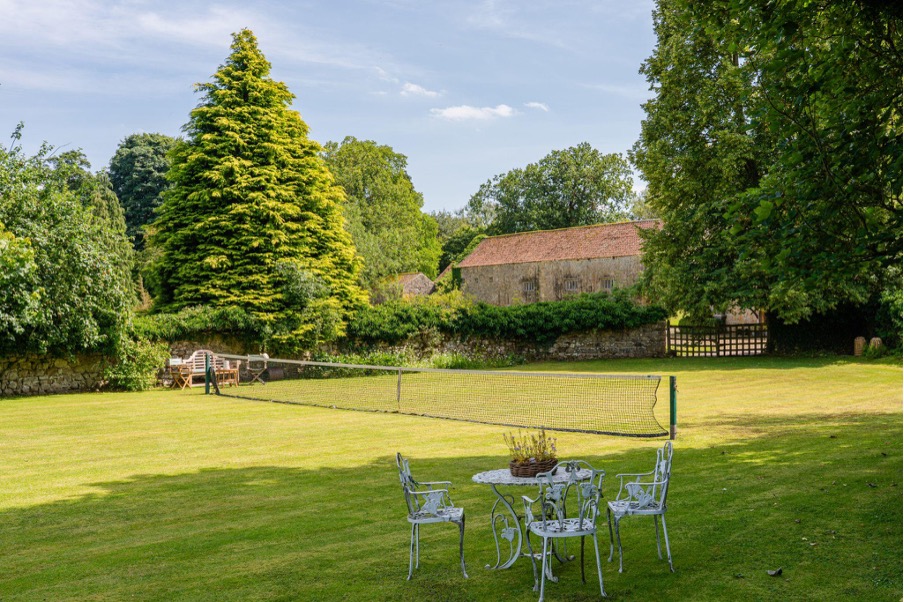
In order to maintain the court, she and her family have to regularly mow it, scarify it (a process which involves removing moss and weeds), and mark out the lines using an old-fashioned chalk roller. “If it rains or you mow again, the white lines disappear and you have to do it all over again,” she says.
Without a cover, the playability of the court is weather-dependent, and particularly so in rain-lashed Yorkshire. “When we’ve had a downpour and we play the next day, the ball won’t bounce very high,” Sylvester says. “But when the court is solid, it’s just so beautiful. We thoroughly enjoy it. It’s a lot of work, but it’s worth it.”
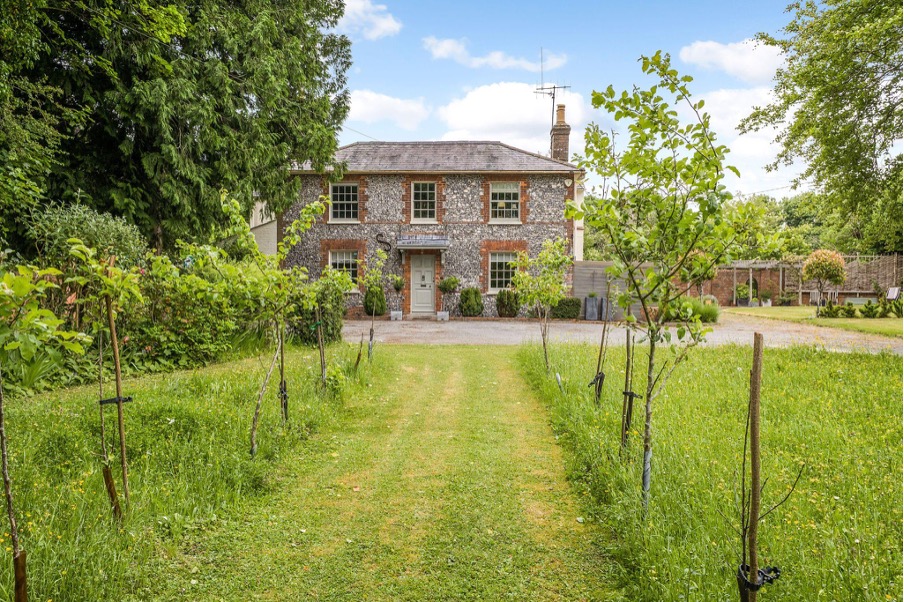
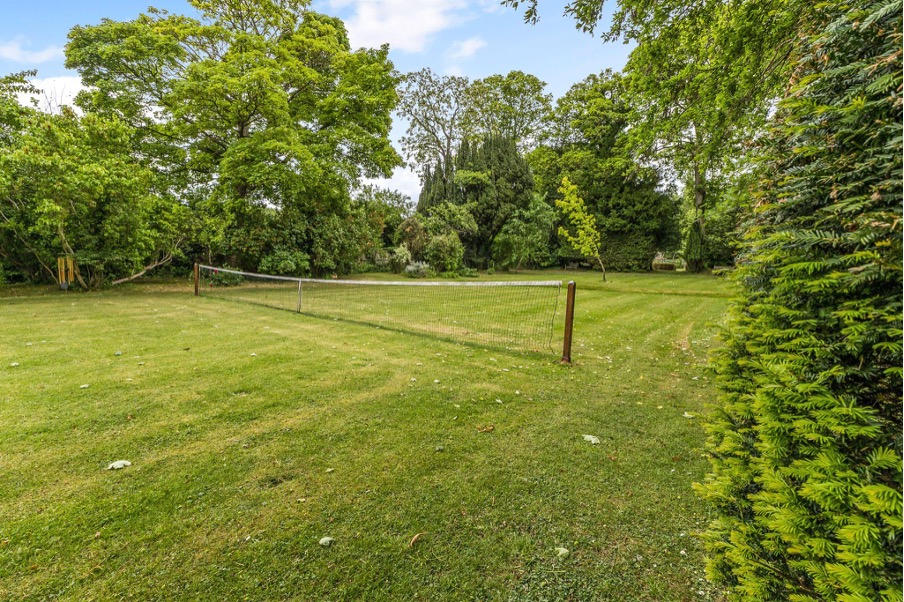
Likewise, Benjamin Cotton’s family home — Askett Lodge, a historic country house in Aylesbury, Buckinghamshire — has boasted a grass tennis court for decades, and he has fond memories of playing on it every weekend as a child. Now that he’s an adult, the intensity of maintaining it seems to have increased. “There’s always a lot to do,” he says.
“There’s a lot of scraping the moss out, and ideally you want to aerate the lawn so that you’ve got air going down and drainage around the roots,” says Cotton. He tends not to cut the grass too short and has found that, counterintuitively, this approach assures a more predictable bounce and a faster recovery time when it rains.
As Cotton sees it, grass doesn’t offer as consistent a playing experience as asphalt or rubber, but it’s the perfect court for socialising. “You can sit around and everyone can watch. It’s more of a fun and informal court, and that’s where it thrives,” he says. “If you’re a deadly serious tennis player, then you’re probably going to want a rubber court with covering over it, but if you just want to have a lovely knock around with your friends and your kids, then I couldn’t recommend it highly enough.”
For those that haven’t inherited a property with a pre-existing grass court, then having one installed can be complicated and expensive. Anyone with a large enough patch of flat grass can throw up a net, but there’s a lot more to consider if you want something more professional. “The last one we did was in excess of £150,000,” says Paul Cowell, an expert landscape designer and founder of PC Landscapes, adding that this might be a fairly typical cost if you are starting from scratch.
“There’s a lot of work to do. Most soils generally don’t have the requirements it takes for a tennis ball to bounce adequately, so if you’re a serious player and you want a grass court, you need to have the right surfaces and sub-bases below,” he continues. “You’ll also need the drainage, so you’re going to have to make sure that your surrounding area can cope with everything that the court requires.” His advice for anyone who isn’t an aspiring Wimbledon champion? Consider sticking to synthetics.
Photography: Fred Morley/Fox Photos/Hulton Archive/Getty Images; Strutt & Parker; Savills
Read the full article here