

Unlock the Editor’s Digest for free
Roula Khalaf, Editor of the FT, selects her favourite stories in this weekly newsletter.
One of my earliest motoring memories is of being shoehorned into the back of a third-generation BMW 3 Series in the mid-1990s. I was more than a decade away from getting behind the wheel myself, but the orange glow of the neatly numbered dials and buttons on the dashboard was mesmerising; the soft, cushioned, wraparound leather in the back seats comforting. On the outside, its crisp, chiselled lines exuded sporty sophistication. It was an experience that crystallised my love of cars.
Since the 3 Series first came about in 1975, it’s gone on to sell more than 20 million models, dominating the premium, mid-size car market in China, Europe and the USA. It’s been the backbone of middle-class motoring for half a century, appealing to everyone from performance car fanatics to families, while living by the strapline “sheer driving pleasure”. In the words of BMW’s former board member, Dr Ian Robertson, it’s “the benchmark for dynamics, efficiency and design – a true legend”.
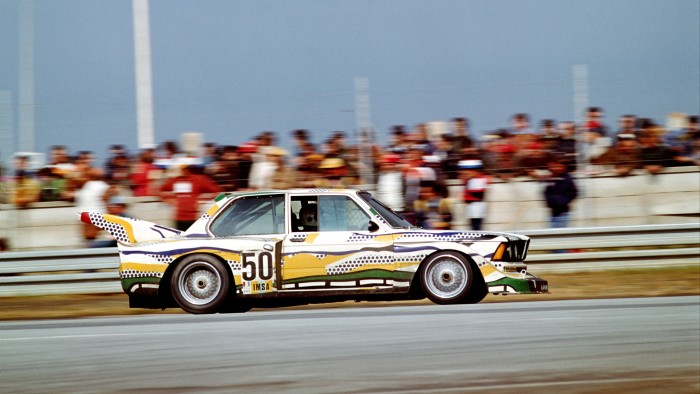
“It’s a chameleon,” says Steve Saxty, author of BMW by Design. “Although it’s a classic four-door saloon for the aspiring middle class to many, it has also been a full-on race car, an entry-level BMW hatchback, and one of the first premium estate cars.” When the first generation E21 rolled off the production line in 1975, the two-door saloon replaced the much-loved 1602 and 2002 models. The E21 was a peppy – and preppy – rear-wheel-drive saloon with a choice of four- or six-cylinder engines, clean lines designed by Paul Bracq and a dashboard angled towards the driver, a hallmark feature that remains to this day. “It didn’t look like a revolutionary car, but in reality, it was a revolution,” says Frank Sytner, founder of a BMW dealership empire and 1988 British Touring Car Champion, which he won behind the wheel of a BMW M3. “It was a super-clean design – nothing controversial about it. It was just the perfect coupé saloon car; the shape and the interior set the standard for everything. You could go anywhere in it. If you arrived in a 3 Series, you arrived in the right car.”
It was quick to carve out a reputation with its combination of rear-wheel drive, power and precise steering. “It was the ultimate driving machine,” says Sytner, and today it’s still engaging to drive. The model might have moved on from the loveable lightweight feel and agility of the older cars but it now blends sporty dynamics with a more refined ride and quiet cabin. It can do the daily duties, hunker down on a long motorway drive or come alive on a B-road blast. Few cars can match up to its breadth of abilities.
By the 1980s, the 3 Series had ticked past one million sales, making it the most successful series in BMW history, but this also marked the arrival of the follow-up act: the second-generation, or E30 model, was wider, bolder, more aerodynamic and more versatile. It became the transport of choice for yuppies, with a convertible model for those wanting to showcase their newfound wealth. “There’s just something about driving an old E30,” says London restaurateur Dominic Hamdy, a two-time 3 Series owner who caught the bug for BMWs from his parents. “Cars from the ’80s are small, and small things are charming and understated. My little 316i was transportive.” BMW even experimented with an electric 3 Series in 1987, which could travel up to 93 miles on a single charge, but it was never offered for sale.
Then came the M3 in 1986. Despite channelling the classic E30 3 Series aesthetic, the M3 was “more than just a redesigned 3 Series”, insists Sytner. “It was a very special car, designed to meet track regulations, primarily for touring car racing, which it dominated.” The 1990s and 2000s brought about the third and fourth generations, and the 3 Series – particularly the more frugal diesel models – became the car of choice for aspiring sales executives. “They were everywhere and seemingly outselling the Ford Mondeo as the rep-car of choice,” says Saxty.
But as the world has tilted away from company cars, the 3 Series must now fight for its dominance. The future of the model will be seen in BMW’s bold Neue Klasse generation 3 Series, arriving in 2026 with both electric and combustion power, which channels charming design cues from the 3’s past, such as the trademark narrow kidney grille and chiselled, clean surfaces. “Now that so many SUVs look the same, the 3 Series of the future doesn’t need to try so hard,” says Saxty. “It can go back to doing what it does best: looking smart without being flash, with a more intense M3 alter ego waiting in the wings.”
Read the full article here