

Unlock the Editor’s Digest for free
Roula Khalaf, Editor of the FT, selects her favourite stories in this weekly newsletter.
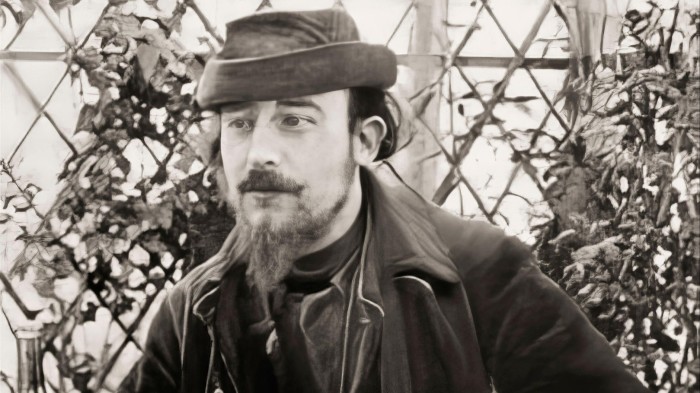
On the centenary of Erik Satie’s death, music critic Ian Penman wants to downplay the few garish facts people might have picked up about the subject of his new book. It takes 37 pages, for instance, before he mentions the identical suits and hats the French composer wore every day. At no point does he claim these suits were yellow or that he ate only white food . . . titbits that have contributed to Satie’s reputation as a charming curiosity.
Instead, Erik Satie Three Piece Suite shows how unjust it is for someone who spent their life destroying clichés and opening up new artistic avenues to be known only by a set of received ideas. Satie (1866-1925) rubbed shoulders with innovators like Debussy, Duchamp and Picasso. For Penman, he was always a step ahead. The first true musical impressionist; “naturally” a surrealist. His avant-garde ideas predate minimalism and conceptual art by decades. He was an “ambient pioneer”.
Satie’s musical ideas are incredibly clear. Most of his works are the length of pop songs, their form close to the verse-chorus set-up most familiar to modern listeners and full of earworms. Today, he dominates easy listening compilations and playlists called things like “Peaceful Classical Vibes”. This fate may have terrified many radicals of his time but Penman imagines that it comes weirdly close to his ambitions. In 1918, Satie put forward the idea of “furniture music”; to be played in the background during dinner, meetings, civic functions or office work.
Penman’s books tend to star revolutionary insider-outsiders. Fassbinder Thousands of Mirrors, which won the RSL Ondaatje Prize last year, was a fragmentary study of the self-destructive, ridiculously productive German filmmaker Rainer Werner Fassbinder. The musicians in It Gets Me Home, This Curving Track, a 2019 essay collection, exploded received forms from out of nowhere. For many writers, Penman is considered the music critic’s music critic. He started out writing for the NME in the late 1970s while his recent long-form pieces, whether about David Bowie or Walter Benjamin, are entertaining and enriching. He brings this same quality to his exploration of Satie.
The first section of Erik Satie Three Piece Suite is a continuous biographical narrative. The second is, like Satie’s music, lapidary and melancholy: a series of prose miniatures. Entries touch on various Belle Époque, fin-de-siècle and 20th-century figures, tracing the musical afterlives of Satie into Penman’s own life and times. The threads can end up in startling places. Bill Evans, Burt Bacharach — of course. Les Dawson? Penman makes it fit.
Satie liked to group his pieces in threes. Within this, he liked the tripartite fugue structure: a musical theme is stated, developed dizzyingly, and finally comes back home. But the third part of Erik Satie Three Piece Suite represents further diffusion. It is a free-form “diary” of Penman’s experience listening to Satie over time: dated entries starting in 2022, recounting dreams, associations, stray thoughts.
But is it Satie-like to show us these odds and ends? Or is it contrary to the music’s spirit? Despite Satie’s suits and meticulous self-presentation, the alcoholic composer lived in a small room full of unplayable pianos and years’ worth of unopened letters. Penman tells us that every day Satie made notes, collecting them in a hat: “this, too, is a kind of hoarding”. But we get none of this from the music. Indeed, a preoccupation for Penman is “the contrast between the spare, crystalline economy of his music, and the squalor of how he lived”. I wondered whether Penman’s approach here was more like Satie’s hat of notes than the uncluttered experience of listening to him.
It was only after dipping into other biographies that I understood quite how much excess Penman had stripped away. The figure emerges whole, despite or perhaps because of this. Without the burden of too much straightforward biographical inventory, this impressionistic work of criticism is nimble, dwelling in or creating poignant moods. I came away without much idea of, say, what Satie got up to as a young man, or how he landed a job playing piano in the boho bars of Belle Époque Paris. But I had a strong feel for his sensibility, and now find myself revisiting his music obsessively.
Erik Satie Three Piece Suite by Ian Penman Fitzcarraldo Editions £12.99, 224 pages
Join our online book group on Facebook at FT Books Café and follow FT Weekend on Instagram and X
Read the full article here