

By Megan Murray
If you can’t quite put your finger on the enduring, offbeat allure of Wes Anderson’s films, I think it might be this: a feeling of half-forgotten familiarity, always tinted in faded pastels. This is the kind of thing I think about, you see, so I’ll get it out in the open now — I’m a bit of a Wes Anderson nut.
Obviously, I’ve watched the films. I’ve also bought the books, queued for the exhibitions, sought out Wes-related travel spots and, most importantly for present purposes, styled my apartment in a way that is — almost shamelessly — inspired by his aesthetic.
Twelve feature films in and Anderson’s name is shorthand for retro colours and storybook panache. The Grand Budapest Hotel captures the magic of Mitteleuropa’s café culture, while Moonrise Kingdom is a 1960s postcard — all record players and Peter Pan collars.
But for a writer, the most seductive nostalgia lies in The French Dispatch, which opens a portal to journalism’s golden age. Amid today’s constant content churn, the notion of carefully crafting a single article over days, if not weeks, feels bemusingly romantic.
Set in the fictional French town of Ennui-sur-Blasé in 1975, the film stars Bill Murray as eccentric editor Arthur Howitzer Jr, a man who gives his writers unheard-of freedoms. He refuses to cut copy, instead scrapping ad pages when word counts overspill. One writer, we are told, “never completed a single article but haunted the halls cheerily for three decades”. It’s all so indulgent, you find yourself wondering: did, or could, editors such as this ever exist? It’s part of the fantasy.
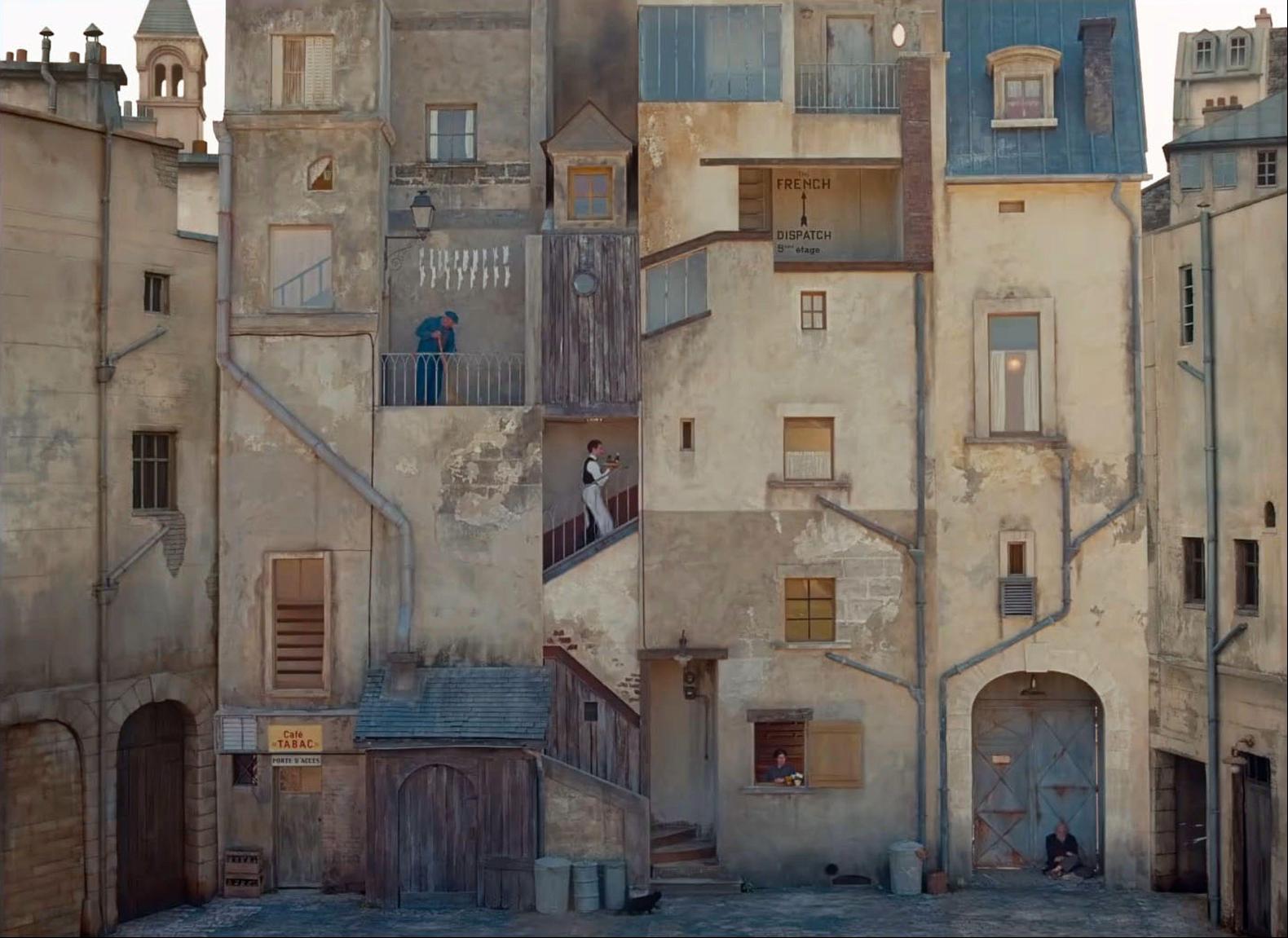
The film brings to life the magazine’s final issue, with stories ranging from travelogues to the profile of a convict who is also an artist — but it’s where the writer’s write that I’m most interested in. The French Dispatch offices are introduced to us in the opening scene via a soot-streaked Haussmannian rooftop, where a moustachioed waiter delivers an elaborate drinks order, another nod to the director’s café culture fascination.
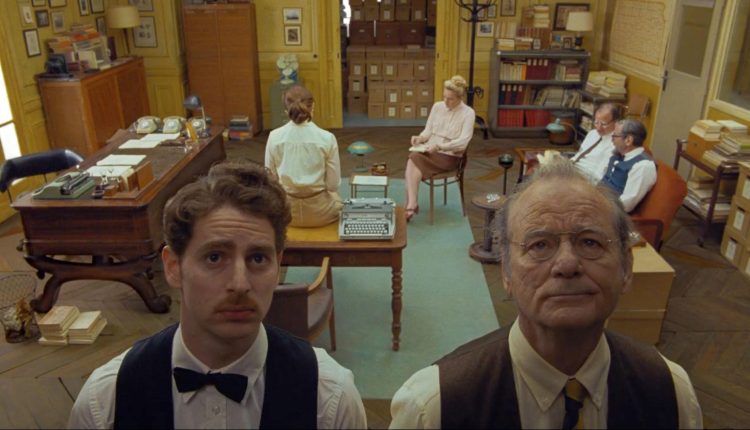
Inside, the offices adhere to a monocolour scheme: marigold walls lined with yellowed artworks, the backdrop to a tonally dressed Murray in a buttery shirt and tawny tie. It’s classic Anderson, layering shade upon shade to dreamlike effect.
I loved this technique and felt compelled to try it myself when I moved to Hamburg from London and landed my first apartment in Germany. In my living room, clay-toned walls sit behind a rose-tinted sofa decorated with deep pink cushions. The dining room is painted a rich green, echoed in sage-upholstered chairs, a pea-green storage locker, matching artworks and framed botanicals. I’ve nodded to Anderson’s fondness for barware, too — with silver cocktail shakers, Venetian shot glasses and dainty chocolate boxes artfully arranged throughout, in a kind of cinematic tableau.
Howitzer’s office hums with 20th-century design references, some of which I couldn’t resist recreating. Utilitarian desks inspired a flurry of mid-century eBay searches. His are cheerfully cluttered with typewriters and rotary dial phones and, given my own wistfulness for print’s glory days, I’ve now acquired more than one typewriter myself. Across the offices, lamps are mismatched, walls are collaged with framed letters and keepsakes. The chaos is charming.
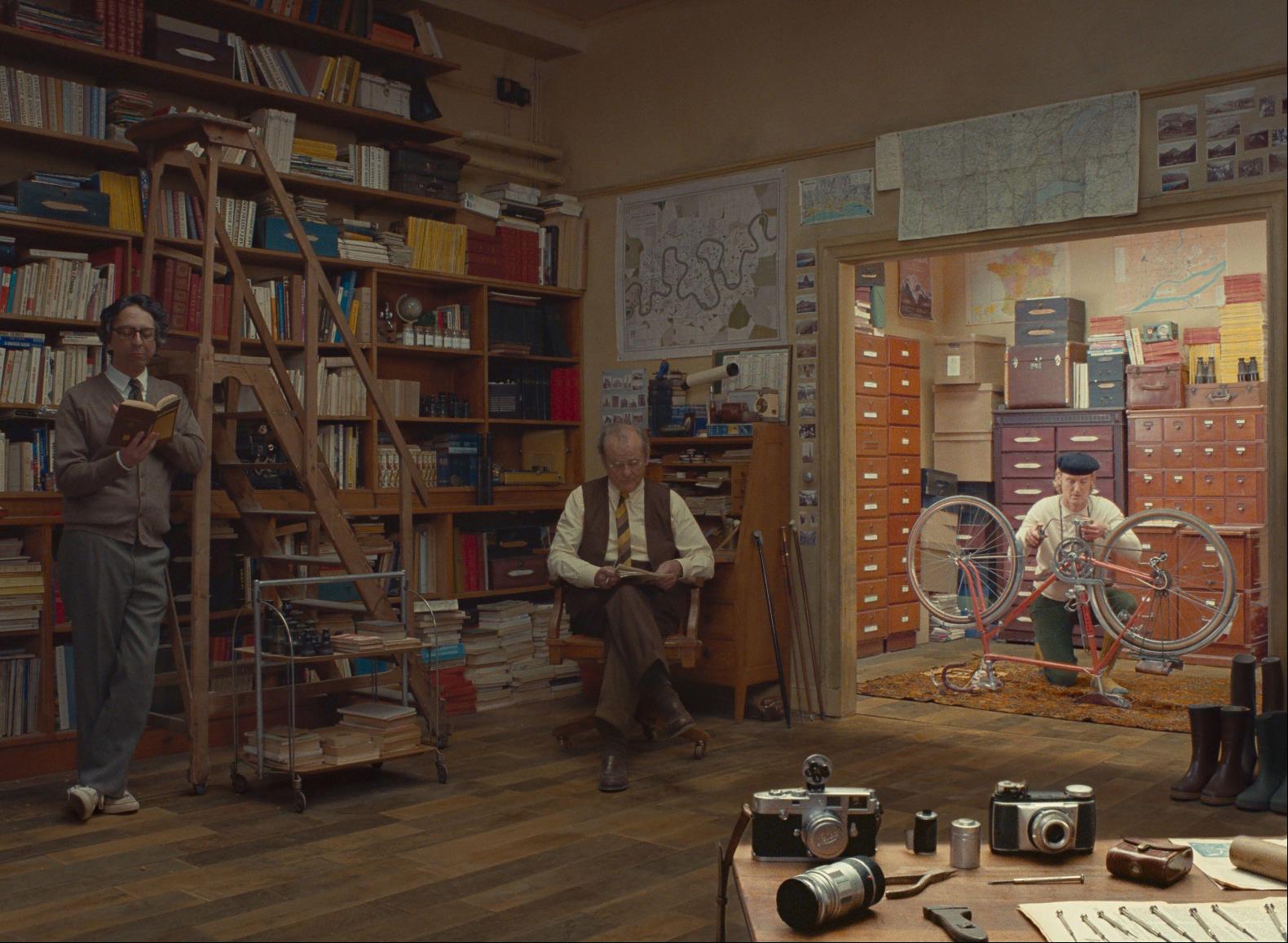
And then there are the books: stacks upon stacks of them, teetering on corners, tucked under tables, spilling from shelves. This, for me, is heaven and my own home follows suit, with magazine-lined windowsills and coffee-table tomes piled high, each one too beautiful to file away.
It isn’t just an aesthetic thing, though. Like Howitzer, I’m inclined to hold on to work — whether my own or by a writer I know, or admire. My 1950s side table displays a glossy Soho House magazine from my time there; my first print piece for The Times stays firmly on the coffee table; The Gleneagle (a magazine produced by a friend and featuring one of my own bylines) has long outstayed the reading pile, gathering dust in the magazine rack. And that’s exactly how I like it.
Which brings me full circle. In some small way, I’ve created my own version of The French Dispatch offices: a lived-in museum of memories from my writing career so far, my life back home — and maybe even a few clues about what’s next.
Photography: Searchlight Pictures/American Empirical Pictures/Indian Paintbrush/Studio Babelsberg
Read the full article here