

Unlock the Editor’s Digest for free
Roula Khalaf, Editor of the FT, selects her favourite stories in this weekly newsletter.
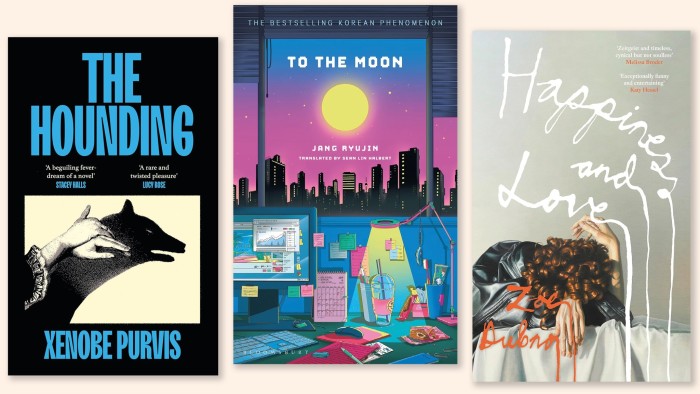
If having one unmarried daughter is a misfortune, having five is a catastrophe for Joseph Mansfield in The Hounding by Xenobe Purvis (Hutchinson Heinemann £16.99). Almost blind, having lost the rest of his family, Joseph is saddled with five beloved but wayward granddaughters. The year is 1700, but apart from a stray reference to the English civil war it could be 1400 in the Thameside village of Little Nettlebed, so limited are characters’ lives and outlook. There’s surly Pete, the ferryman; Temperance, the watchful landlady of the inn; local lad Robin and his younger brother Richard; and casual labourer Thomas, helping Joseph with the haymaking and keen to make a different sort of hay with Anne, the eldest Mansfield girl.
The seed of misogyny, growing apace in Pete even as his wedding approaches, mixed with a grandiosity that has him believing he is chosen by God, leads him to spread a tale he half believes: that he saw the Mansfield daughters turn into dogs. Soon, natural phenomena such as fox predation are being blamed on the supposedly demonic siblings. Just as with the white-hot internet theories of today, some people are more resistant than others to fantasies. A taut, tense tale, impeccably told.
The Devil Three Times by Rickey Fayne (Fleet £20) follows a mixed-race family in Mississippi, all descended from an enslaved African woman impregnated by her overseer. He fathered children on so many of his slaves that the Laurent family — white, Black and passing — are so numerous they hardly themselves know who is a half-sibling. The Devil, who, in a dream, has been ordered by Jesus to watch over Black people, visits different generations at critical times to intervene in their fates. Fayne follows Percival Everett and Andrea Levy in stressing the rich emotional lives of their characters and the wide streak of subversion running through every plantation. In this exuberant slice of Southern gothic, where ghosts roam and magic shimmers, slavery is a sticky web trapping and entangling everyone it touches.
The three female colleagues of Jang Ryujin’s To the Moon (translated by Sean Lin Halbert, Bloomsbury £14.99) become entangled in the web of crypto as they bid to free themselves from the rigid hierarchical structure of the Seoul confectionery company where they work. Male bosses take all the credit and there is little possibility of promotion. Dahae is desperate to move from her grim and tiny apartment, but all seems hopeless until the endlessly entrepreneurial Eun-sang discovers Ethereum (the novel is set in 2017). Dreamy, romantic Jisong remains sceptical until it’s almost too late to step on to the rollercoaster. Whether riches will really prove transformational remains the question. While there are specifically Korean aspects of their dilemma, their wild ride through financial turmoil demonstrates that the hopes, anxieties and issues of millennials are universal.
Another wild ride — and a thunderingly exciting depiction of what it’s like to join the crowds at the Cheltenham Gold Cup — comes in the form of Dead Lucky by Connor Hutchinson (Corsair £20). Jamie, “Fletch” to his mates, is busy embalming the latest corpse to be wheeled into the funeral home where he works. As fate would have it, it’s his old school dinner lady. The description of the prepping for her cremation is graphic, but Jamie loves his job: he chats to the bodies — who are usually familiar locals — plays them music, tends to them gently and sends them into the afterlife looking splendid.
Jamie has a terrible secret he reveals to the corpses, but conceals from his girlfriend and drinking mates: the gambling addiction that is taking over his life. He checks his phone as obsessively as any crypto follower, churning through the apps and rolling any winnings back into the pot. Because, as he explains to the next body on the tray, gambling is never about the money. It’s a story of booze, banter, lairy nights out with the lads and increasingly dangerous stakes.
The narrator of the zingy Happiness and Love by Zoe Dubno (Doubleday £16.99) is also silent, trapped in a swanky Lower East Side dinner party hosted by an obnoxious artist-and-curator couple she has come to despise. She rails against the insincerity of the guests, the inanity of the chatter, the pretentiousness of the decor, and curses herself for being seduced by luxury. Underneath the bile runs a tender thread of remorse for a dead artist friend, whose memorial service that morning has already been forgotten by the fatuous party guests. Will she ever escape this nightmare? Told in a single long, savage and hilarious paragraph, Happiness and Love can be gulped in one delicious go.
Join our online book group on Facebook at FT Books Café
Read the full article here