

Unlock the Editor’s Digest for free
Roula Khalaf, Editor of the FT, selects her favourite stories in this weekly newsletter.
Mention the name of Gustavo Dudamel in the UK and the connection that immediately comes to mind is with Venezuela’s Simón Bolívar Symphony Orchestra. That is where Dudamel began his conducting career and their concerts together at the BBC Proms have been joyous showpieces of Latin American energy.
Apart from that, Dudamel has been a sporadic visitor. He appeared early on with the Philharmonia, not with huge success, and otherwise his London concerts have tended to be with orchestras on tour, notably the Los Angeles Philharmonic, where he has been music and artistic director since 2009.
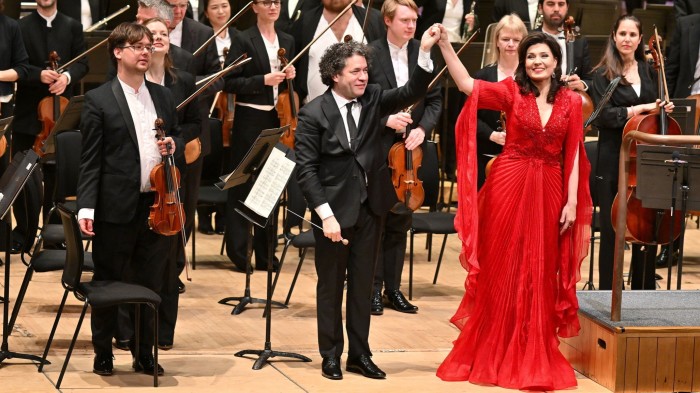
All that changed in the past week, when Dudamel made his debut with the London Symphony Orchestra, first with concerts in Madrid and Barcelona, and then at the Barbican. He says this is the first time that he has stood in front of a new orchestra for 10 years, which shows how committed he has been to Los Angeles through that period.
He had chosen his programme carefully. A mix of Strauss and Ravel, it was neither the boldly coloured razzmatazz that has been his calling card with the Venezuelans, nor the solid classics of the German repertoire in which he might not shine so brightly.
Both these composers were masters of how to write for an orchestra, ensuring that the LSO could show its virtuoso side. The sound Dudamel drew from the players was more lush than usual, a widescreen orchestral picture, though at the biggest moments in the Strauss pieces the volume tested the Barbican’s congested acoustics. If Dudamel is to conduct the LSO here again, he might try turning the volume down a notch.
There are few better openers for a concert than Strauss’s swashbuckling Don Juan. The fuse was lit from the off and Don Juan’s portrait was painted in equal shades of heated libido, caressing tenderness and unstoppable energy, so the performance covered all the bases.
In Ravel’s Shéhérazade (the song cycle, not the earlier overture) the orchestral glamour captures the exotic locale in a very French way, with glinting, impressionist light and a suffusion of perfumes. Marina Rebeka, a soprano rather than mezzo soloist, took care to make the French words audible and has the right vocal weight and projection, though the voice lacks a certain warmth and allure.
Ravel’s Rapsodie espagnole and the suite from Strauss’s Der Rosenkavalier shared the second half. Dudamel is at his best in flamboyant orchestral scores like these and each came with a vivid palette of colours, the Ravel sultry in the heat of the Spanish sun, the Strauss glorying in Viennese opulence. Next week sees Dudamel conducting the New York Philharmonic, where he takes over as artistic director in 2026. Will that position be occupying most of his time in future, or will he have space in his diary to develop this new relationship in London?
★★★★☆
gustavodudamel.com
Read the full article here