

By Niloufar Haidari
Modern life is not without its challenges: digital distraction, information fatigue, increasingly expensive coffee, to name a few. To beat the stress, some have turned to a regular dose of nature as an antidote, via activities such as wild swimming. Now many are enjoying a wild dip in the comfort of their own garden, thanks to idyllic natural swimming ponds.
One of the main selling points is the feel of the water, commonly described as akin to swimming through silk or the softest rainwater. It’s “the nearest I’m ever going to get to swimming through a Monet painting,” a prospective client told Paul Mercer, owner of The Swimming Pond Company, after a swim in their Norfolk show pond. “I’ve been told many times by clients that if they move house they would have to have a swimming pond again, because it just gets into your blood. There’s nothing else quite like it,” says Mercer.
Where conventional pools rely on chlorine and other chemicals to maintain water quality, swimming ponds emulate natural ecosystems with the use of self-sustaining “regeneration zones,” where plants, gravel and beneficial microorganisms work together to filter and purify the water. Not only does this mean they require minimal maintenance, but swimming in them is also better for your hair and skin.
“We have noticed a general trend in the buying public demanding more amenity from country houses since the pandemic,” says Russell Grieve, head of sales at Knight Frank in Haslemere. “While natural pools were very much a rarity 10 years ago, the meteoric rise in the popularity of wild swimming coupled with the health benefits advocated by Wim Hof and the wider community of sports therapists have led to natural pools being much in demand.”
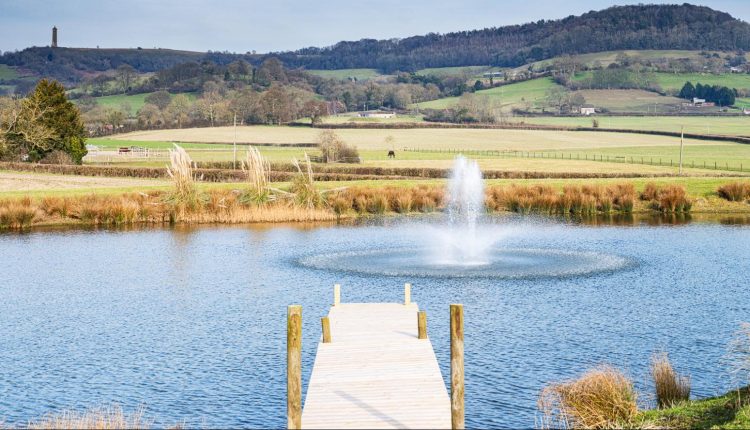
Aside from the alleged health benefits, natural swimming pools are a wonderful way to introduce biodiversity into your garden, providing a habitat for a wide range of wildlife from newts to kingfishers. The decision to build a natural pond was “initially more for the benefit of the wildlife than ourselves”, says the owner of Kite’s Nest House in Gloucestershire (main picture, top), on the market for £1.95mn with Knight Frank. “We have invested a lot in the lakes and the ecosystem that they provide.”
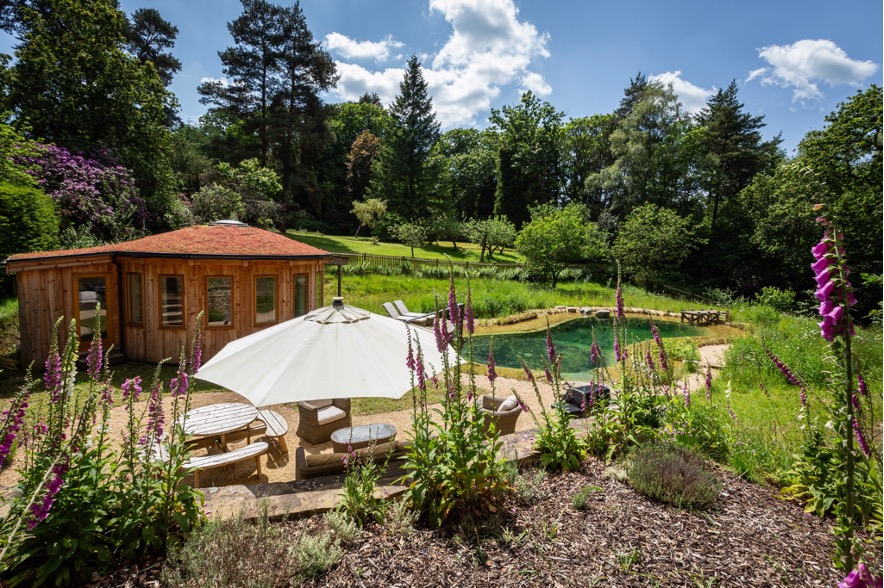
It’s a sentiment echoed by the owner of Ashby House in Surrey: “We feel that we’re giving something back to nature, but we’re also getting a real luxury space with clean, crystal-clear waters to swim in and enjoy. It’s a beautiful living thing that changes over the course of the seasons.” The seven-bedroom house is for sale with Savills at £3.5mn.
Although the pools are more often found in rural areas due to the amount of space they require — typically twice that of a conventional pool — Gartenart, the construction company behind the natural pool at Ashby House, also offers bespoke “formal pools” for urban gardens.
“We built a project in Hampstead, we’re currently working on one in Richmond and even did one in Hackney,” says Melinda La Mantia, the company’s head of design. “The problem in London is always access, so we work with small machines, which takes a little bit longer, but it’s still possible.”
For those looking to invest, the price of installation usually begins at around £130,000 plus VAT, depending on the size and the number of features you’re looking for. Although you’ll need planning permission if your property is listed or in an area of outstanding natural beauty, Mercer tells me he has yet to have a planning application turned down.
“Natural swimming ponds are increasingly popular among buyers as they offer much more than traditional pools,” says Rory McKenzie at Savills Farnham. “They promote healthy living, generally have lower running costs and typically require minimal maintenance.”
Natural pools can be heated, but both Mercer and La Mantia advise clients against it to avoid putting unnecessary stress on the plants and wildlife. Cutting-edge filtration systems combined with tactical positioning — away from mature trees and shaded areas — help keep things warm.
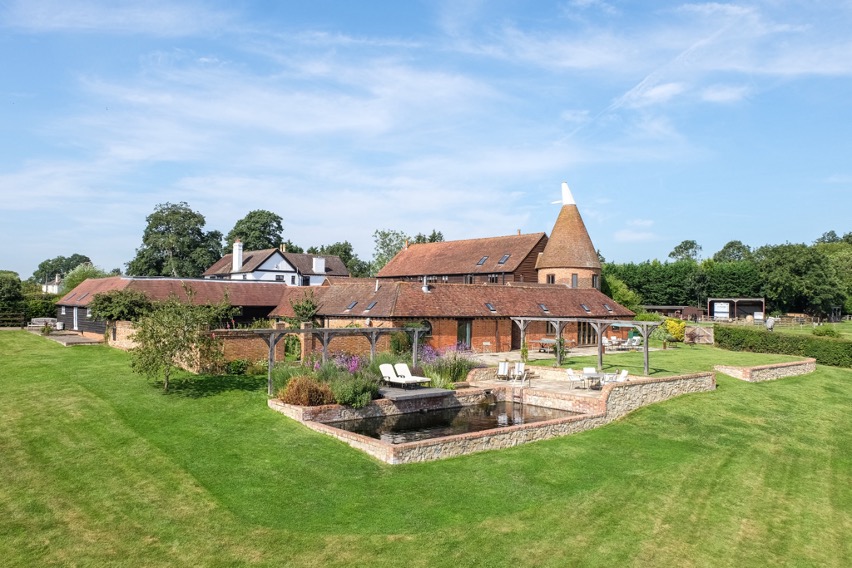
At Coldharbour Farm in Kent, currently on the market with Savills for £4.35mn, the pool is sheltered by the house but away from shade. Increasing temperatures in the UK mean that the shallower parts can reach up to 27C in the summer, the same as a conventional swimming pool, though most clients end up using them all year round.
Photography: Knight Frank; Savills
Read the full article here