

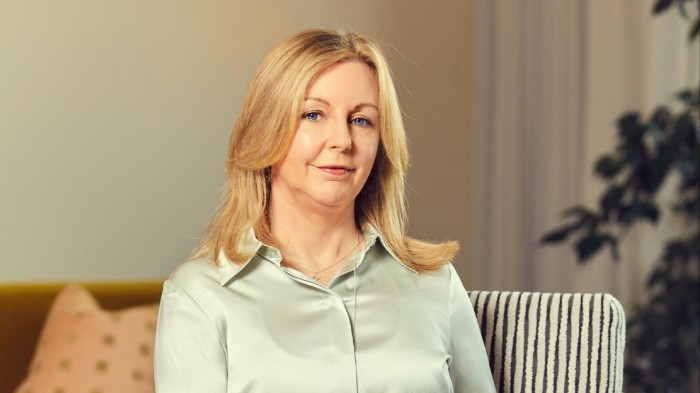
A near-fatal car accident in 2017 triggered a complete career change for Sarah Morrissey. She was driving home from her job as an investment banking project manager in London, when a large lorry slammed into her car.
“All I remember is hearing the crunch of metal and then everything went white,” she recalls. “Half my car was under the truck.” When the driver hit his brakes, Morrissey’s vehicle spun along the motorway and crashed into the central reservation.
Emergency services told her it was a miracle she had survived. She lost feeling in the left side of her body and six weeks of memory. “It’s a coping mechanism, they said. My brain wiped it out,” she recalls. The physical trauma healed slowly, but the real rupture was deeper: a reckoning with the pace and pressure of the life she had built in the capital’s financial sector.
Originally from Ireland, Morrissey had moved to the UK in 2005, pounding the pavements of the City of London with her CV until she landed a role in banking. “I was eager to get ahead and take on new opportunities so I’d walk up to heads of department and ask, ‘Can I shadow you?’” she says.
Specialising in risk and regulation, she rose up the ranks, but her success came at a cost. A mother of three, she had a long commute and ran her life “like a military operation”: school uniforms laid out at night, bags by the door, up at 6am, out by 6.45am. “My schedule was relentless, with back-to-back meetings. I was constantly exhausted. Sometimes I’d shut the bathroom door at work, sit on the toilet seat and set a timer for a 10-minute nap.”
The accident forced more than a pause; it prompted a rethink of how she wanted to live and work. “That was the moment my story changed,” she says. “I realised that putting yourself first — your health, your time — shouldn’t be a luxury.”
She quietly began retraining and during Covid she completed a two-year diploma in health coaching before starting a masters in psychology and neuroscience at King’s College London.
In 2022, Morrissey launched Cocoon Mode de Vie, designing bespoke, clinically informed wellness and longevity programmes. The aim: to offer holistic, high-end support for clients under pressure, many of whom are still living the life she left behind.
“My body doesn’t allow me to get stressed anymore,” she says. “I meditate. I eat properly,” she adds. “I’ve stopped saying ‘yes’ to everything and being constantly available.”
Today, her world still moves fast but on her terms.
According to health psychologist Ravi Gill, experiences such as Morrissey’s can lead to profound transformation. “Trauma often acts as a catalyst for growth. Many people, particularly women, discover new purpose and direction as they rebuild their lives,” Gill says. “There’s a powerful psychological drive to make meaning of suffering and a desire to restore agency after a loss of control. What we often see is a heightened sense of empathy, resilience and a commitment to work that feels socially meaningful and personally authentic.”
While trauma does not always result in a new career, it can often reshape how people lead.
Caroline Gowing was on holiday in Spain with her best friend and business partner, Vicky Matthews, when she noticed something was wrong. “Vicky started to slur her words. At first, I figured she was dehydrated, then I thought she might be having a stroke,” Gowing recalls. By the time they got to A&E, her friend was having a seizure.
What followed was a blur: scans, a harrowing diagnosis and medical repatriation back to the UK.
Matthews had glioblastoma, an aggressive brain tumour with a bleak prognosis. She died less than a year later, in April 2023.
The loss left Gowing reeling, not just personally but professionally too. The pair had co-founded Pink Spaghetti, a virtual assistant franchise business, in 2009 after bonding at their daughters’ baby swimming class. “We started out helping parents with admin, then switched to supporting microbusinesses,” she says.
In their partnership, Matthews had been the face of the business, while Gowing focused on operations and finance. “She was the extrovert, the optimist, the one who built relationships. I was the planner in the background,” says Gowing. “Suddenly, I had to find a voice I didn’t know I had.”
That shift was as terrifying as it was transformative. “Speaking at conferences, giving interviews, all of that is way outside my comfort zone. But every time I do it, I think of Vicky. I do it for her.”
Navigating grief while holding the company steady was its own challenge. “The anticipatory grief was brutal. You’re grieving the loss before it happens but there’s no space to stop,” she says. “After she passed, I finally had that certainty to start grieving properly and leading differently.”
Gowing is not the same entrepreneur. “I’ve had to get tougher,” she says. “Vicky used to send the difficult emails. Now that’s me. But I’ve also learnt to lean on the team more. I bring them into decisions now because I don’t have Vicky to bounce off. That’s made us stronger as a unit.”
For additional support, she brought in a business coach and joined the British Franchise Association. “Having an external sounding board has been vital,” she says. Pink Spaghetti continues to thrive, with turnover of £2.9mn, Gowing says, and more than 50 franchises.
Gowing remains close to Matthews’ family and has launched a Vicky Matthews Award to honour the top-performing franchisee each year. “She’ll always be a part of the business,” says Gowing. “I feel guilty that it’s growing without her. But I know she’d be proud.”
Read the full article here