
Intimate Apparel theatre review: a gorgeously fine study of early-20th-century New York lives

Unlock the Editor’s Digest for free
Roula Khalaf, Editor of the FT, selects her favourite stories in this weekly newsletter.
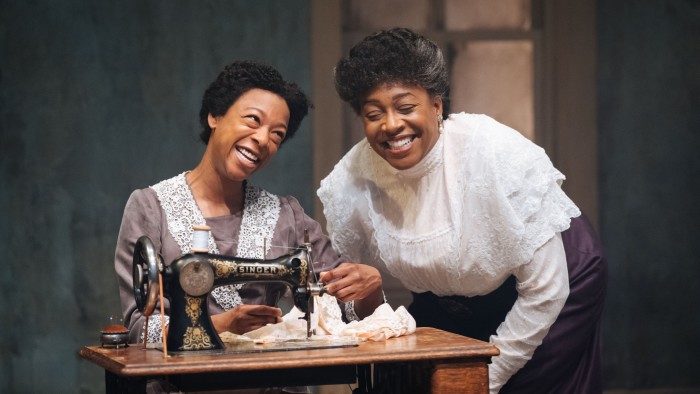
As Samira Wiley’s Esther walks onto the Donmar stage in Intimate Apparel, Jai Morjaria’s lighting gently shifts from black and white to bright, warm colours. It’s as if she had stepped out of an old photograph and into life — which is precisely the path of Lynn Nottage’s gorgeous, vibrant play.
First staged in the US in 2003, it’s inspired by a photo of the playwright’s own great-grandmother Ethel, a Black seamstress living in New York City in the early 1900s. Nottage takes the scraps of information she could find about Ethel and stitches them into a vivid quilt. In her hands a lost world leaps into being, peopled with rich, loveable characters, all beautifully played in Lynette Linton’s glowing production.
Here Ethel becomes Esther, a shy 35-year-old Black corset-maker, whose skill with a needle and thread has earned her a living and an enviable reputation. But while she fashions intricate, sensual undergarments for wealthy women to wear on their wedding day, she remains unmarried with little prospect of love — until she acquires an unexpected pen-pal in the shape of George, a Barbadian labourer on the Panama Canal.
A romance blossoms between them, woven from fine phrases and confessions — a thing almost as delicate as the lace and beading with which Esther fringes her exquisite lingerie. Wiley is superb: quite marvellous at conveying the hopes surging beneath Esther’s modest grey dress each time a letter arrives, feelings scudding across her face as she smooths her skirt or twists her hands together.
But Esther’s landlady — the wonderfully warm and commanding Nicola Hughes — harbours concerns about George’s “sugared words”. Esther’s smart, spirited sex worker friend, Mayme (Faith Omole), and her unhappily married rich white client, Mrs Van Buren (Claudia Jolly) — both of whom know what men can be — likewise worry for her welfare, particularly when George (Kadiff Kirwan) proposes marriage and sets out for New York. Meanwhile Mr Marks, the Jewish salesman who provides Esther with fabric, quietly carries a torch for her.
Nottage’s script shimmers with affection and respect for her characters: for their tenacity, ingenuity and rich inner lives in the face of inequity. We see the painstaking skill and imagination Esther brings to her work; we hear the detailed knowledge with which Mr Marks speaks of a skein of Japanese silk. The sad irony is that these two should be together. Instead it’s through their shared love of beautiful material and fine craftsmanship that they express their unspoken feelings. The moment when Alex Waldmann’s diffident Mr Marks tenderly drapes a length of Valenciennes lace around Esther’s shoulders is so highly charged it has you holding your breath.
Not all Nottage’s seams are straight: there are a couple of less plausible plot twists and predictable revelations in the second act and George’s character is more bluntly drawn than the others. But like the garments Esther creates, it’s a lovely, caring piece of work. Linton trims her staging with snatches of ragtime music and outbursts of song from the women, celebrating their spirit and reaching beyond the confines into which society has pushed them.
★★★★☆
To August 9, donmarwarehouse.com
Read the full article here