

The sound of the rave fills the Moroccan desert. Between rugged, tawny mountains, a throng of dancers shuffles to the hypnotic throb of a techno beat. Massive black speakers jut from the sand like alien monoliths.
Into this crowd threads an unlikely figure: middle-aged, with a paunch and a worried expression. The man is handing out flyers, looking for his missing daughter. He has come from Spain because he heard she might be here. Behind him trips his pre-teen son, who, in the face of the deafening beat, the sweaty ravers, the vast wilderness and an unspecified apocalypse looming in the background, looks utterly overstimulated.
Those who go to see Sirāt in cinemas will relate to the boy’s sensory overwhelm. This isn’t a film you watch leaning back, popcorn in hand. It’s a visceral audiovisual spectacle that lifts you by the collar and shakes you, not letting go until the credits roll.
“The film is about crisis,” director Oliver Laxe tells me on a video call from New York, “for the characters, but also for the viewer. It’s conceived as a kind of shock therapy.” He talks about urging the viewer to confront death, to experience the film less in their brain, and more in their body. “You feel the images on your skin. We wanted viewers to watch the film with their ears, stomach and guts.”
Despite such extremes, Sirāt has resonated with audiences and critics, attracting 1.3mn viewers on its initial run in France and Spain (the dialogue is mostly in French and Spanish), and receiving the Jury Prize at last year’s Cannes Film Festival. It has also been nominated for two Academy Awards, for Best International Feature and Best Sound.
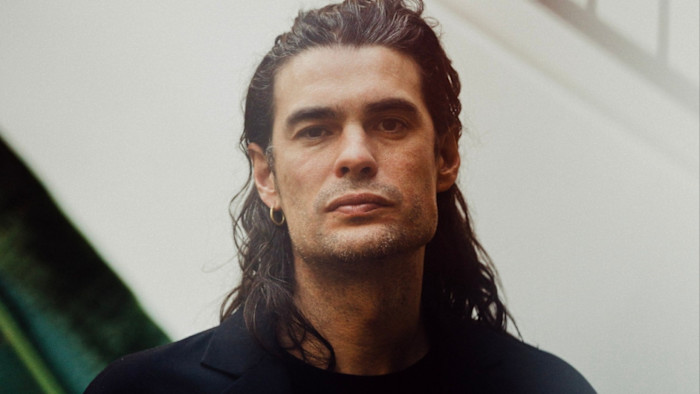
You might expect the creator of such an intense work to have a manic energy, but the French-born Galician Laxe, 43, comes across more as mystical guru than jumpy visionary. He looks the part: toweringly tall, with dark hair cascading down his back and deeply serious eyebrows.
He is also given to lengthy philosophical digressions. When I ask about the film’s plot, which follows the father and son as they join a small band of ravers on a road trip across the desert, he gives a winding response that quotes St Francis of Assisi, the Sufi poet Rumi and the Koran, without ever quite answering my question.
Sirāt is a confluence of Laxe’s influences. The Moroccan setting is inspired by the 12 years he spent living in Tangier (two of his three previous features, You All Are Captains and Mimosas were also filmed there, while Fire Will Come was shot near his home in Galicia, northern Spain). The rave scenes were inspired by his own time delving into free parties.
And the film’s demented intensity? That was largely inspired by Laxe’s interest in faith, ritual and psychotherapy. Because while its first hour offers warmth and humour as the ragtag group turns into a found family, the latter half goes to dark, gruesome places that will shock many viewers.
The film industry was, unsurprisingly, resistant to Laxe’s uncompromising vision. “We were afraid of being misunderstood, of being considered sadistic or cruel,” he says. “It was really difficult to finance the film. You can’t imagine the feedback we had from sales agents and distributors. They were saying they didn’t want the viewers to suffer. They felt the film was too dark.”
It is dark, I point out. “Yes, but to look inside is dark!” he blazes back. “It’s something that society has to do. We often don’t look inside because it’s painful, but it’s also necessary. Shadows are necessary to achieve the light.” The film’s success, Laxe says, “proves that people are tired of watching the same films. If we want cinemas to survive, we need to show viewers that they’re going to the cinema to transform themselves. That the cinema is a place for catharsis. A film can change you.”
He is dismissive of much contemporary cinema, which he says has largely abandoned visual artistry. “Most of the images in cinema are dead,” he says. “Filmmakers are working with their heads and not their guts, trying to put too much weight and rhetoric into their images. When you want to say too many things, you don’t evoke anything at all.”
Sirāt aims to redress this, containing a series of striking, ambiguous tableaux that linger long in the memory: two women tenderly offering water to a parched man in the desert; a truck’s weak headlights seeking a path through a sandstorm at night.
The other component of Sirāt’s power is its soundtrack, which hits you on a physical level. The throbbing bass of the rave shakes your seat. The desert wind whips 360 degrees around your head. The superb score by French electronic musician Kangding Ray starts with deep, psychedelic techno but gradually sheds its drums as it goes along, leaving audiences with yawning ambience and ominous washes of distortion. Laxe says his team spent nine months just refining the sound. The reward was a Cannes Soundtrack Award, as well as Golden Globe and Oscar nominations.
Less time was spent on building the characters’ backstories. “Sometimes orthodox scriptwriters tell me my characters are under-developed,” says Laxe. “My answer is always: is there anything more rich you can develop from a human being than a sense of their fragility? No. There is nothing else to develop.”
He trusts that the cast’s faces are more eloquent than any artificial backstory. Most of them are non-professional actors — one was scouted at an actual rave, out of a crowd of 10,000. The most arresting is Stefania Gadda, who speaks little but has a lifetime of hardship and tenderness etched into her face. In real life, she’s an Italian rancher who lives off-grid in Spain without electricity or running water.
While Laxe and his cast contended with sandstorms, illness and broken equipment during their seven-week shoot in the deserts of Spain and Morocco, he says the greatest challenge he faced was existential: a confrontation with the self. The film opens with an explanation that the Arabic word sirāt refers to a thin, perilous bridge dividing heaven from hell. In order to make his viewers and characters walk this treacherous path, Laxe first had to walk it himself.
“When you’re a filmmaker organising a rave in the desert, bringing all these people along . . . ” he lets out a long sigh. “I mean, there are other, more healthy ways to look for love, you know.” He laughs. “When I’m shooting, I’m seeing my own neurosis, that I’m asking for love by making films. But at the same time, life is telling me there is meaning. This is a film that people are feeling spiritually. They’re connecting with something deep inside themselves.”
This time at least, he got the love he was seeking. He smiles. “I’m happy that it seems life wants me to make films.”
In UK cinemas from February 27 and in US cinemas now
Find out about our latest stories first — follow FT Weekend on Instagram, Bluesky and X, and sign up to receive the FT Weekend newsletter every Saturday morning
Read the full article here