

Hello and welcome to Working It.
It’s South by Southwest week in London, as the giant US tech, film and music conference makes it to Europe for the first time. It’s busy, buzzy and there are a lot of people in Hoka and On trainers 👟. I’m moderating a SXSW panel on Friday that includes British Airways CEO, Sean Doyle. We’ll be talking about reverse mentoring in workplaces (Sean’s a fan). Say hello 👋 if you come along.
Old Street, the London underground station nearest the conference, is plastered with provocative ads for agentic AI start-ups. (“Stop hiring humans” is on the escalators, but I couldn’t get a photo in time 🙀).
Read on for more on why visual communication may be the most important language at work (or will be, once Generation Alpha, raised on social media, get into office jobs).
As always, do email me about anything work-y on your mind: [email protected]. Book giveaways 📚 and Office Therapy both return next week.
Can you add a picture to that 🌆?
Remember what internal workplace communications used to look like? Duncan Clark does. He reminded me by showing a slide of some dull black and white emails, of the sort that nobody would now read, usually with ‘ALL CAPS’ subject lines.
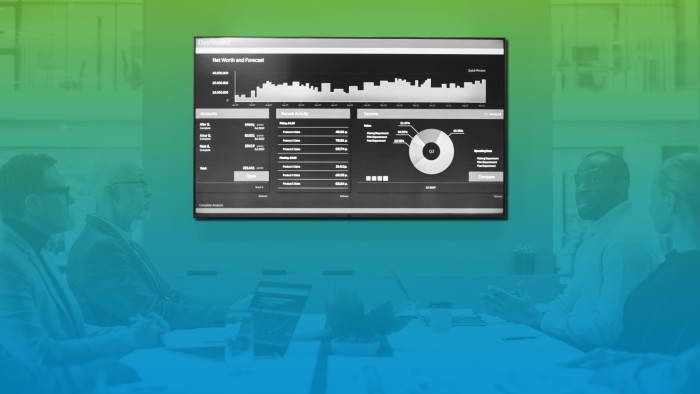
I was talking to Duncan (in an off-stage moment at SXSW London) about the importance of better visual communication at work. Rather belatedly, it seems, workplaces are catching up with the rest of the visual-first world. Duncan is a former journalist, who founded and runs Flourish, a chart and visual storytelling tool (we use it at the FT). When the company was bought by Canva, the Australia-based visual communication platform, he also became Canva’s CEO for Europe.
“If you go back a century, everything is just printed text,” Duncan told me. “The first printing press leads to graphic design, leads to pop art, leads to desktop publishing 🖥️. But until the end of the 20th century, the tools we used to make visual content were still exclusive, complicated and expensive. It was really only 15 years ago, in about 2010, that Instagram appears and social media starts to become so dominant and so visual.”
At the same time, tech tools started to improve and access to better design and visuals got much easier, and cheaper. Now AI is allowing us to make real what’s in our heads (not least via Canva, which has 230mn monthly active users and employs 5,000 people globally). Duncan believes, however, that the “human editor” will endure, as he thinks we will use AI as co-creator, not a replacement for our creativity💡.
Instagram 📲 aesthetics have raised our collective visual bar (and, ideally, overlaid it with a flattering filter). And that percolates through to the workplace, even if we aren’t aware of the shift. In order to best capture people’s attention, we now need visuals — charts, images, good graphic design and much more. Duncan gave me the potted history: “Visual communication in the workplace was principally owned by the marketing department because it was about external communication. What we’ve seen happen is a horizontal expansion away from just the marketing team, to every team.”
In HR, for example, “a black and white email is going to be ignored, because we’re now so primed to do what our brain is fundamentally wired to do, which is to interpret things visually.” (All HR people reading this: 👀.)
Looking ahead, Duncan believes the next big shift in workplace communication and design will be driven by the habits of our youngest colleagues. Even more than Generation Z, members of Generation Alpha [born 2010-2024] are “screen first”. As their parents and teachers will already know, video and visual content is how Gen Alpha interacts with the world. (Often at 2x speed 🏎️.)
The future is . . . a movie🍿.
Five top stories from the world of work
-
Class is the missing link in employers’ diversity drives: New research highlights what works in terms of socio-economic inclusion at work. Emma Jacobs talks to experts and to first-generation graduates.
-
Ask a stylist: what to wear to a job interview: Becky Malinsky suggests younger workers wear a suit, even to informal interviews. Her featured outfits are very expensive: you could buy second-hand. (Or many FT commenters recommend M&S suits.)
-
“No timewasters please.” Is setting boundaries necessary or plain rude? Miranda Green writes on overwhelm, which especially affects women dealing with admin for family members, and offers advice on how to deal with it.
-
The View From Ninety by Charles Handy: Final words from management’s social philosopher. Andrew Hill reviews Charles Handy’s last book, collected from his magazine columns. Good management and leadership, Handy says, are all about “finding the gift in others and getting them to use it”.
-
The pleasures and pitfalls of retirement: Andrew Jones retired from a 30-year career in the City and now writes books and articles. His column covers the loss of status that transition entails — and what comes instead.
One more thing . . .
A Substack newsletter from Rachel Lawlan, a “reinvention coach”, may strike a chord: “Your entire life has become a workplace and nobody talks about it”. Rachel writes: “For most women, burnout doesn’t stem from one job or office. It’s the cumulative toll of a thousand invisible workplaces where we’ve been taught to labour without rest: the kitchen, the inbox, the WhatsApp group, our businesses, our relationships, our own bodies. We don’t clock off because there’s no off switch.” Sound familiar 😓? Solutions include learning lessons from the very successful, and self-governing, Buurtzorg nursing organisation in the Netherlands.
US workplace news from Charter: Why an ‘employer brand’ is the new must-have
The concept of the “employer brand” is not new (although it’s been more prevalent in the US than the UK and elsewhere). The term refers to how employees feel about their experience working at a business and how potential job candidates and the public view it as an employer. Leaders will aim to have a strong employer brand. Ratings on a review site like Glassdoor are one way to gauge that sentiment. (We’ve all read some shockers on there 🤯.)
Not surprisingly, more organisations are becoming proactive about building their employer brand. Kevin Delaney, editor-in-chief of Charter, the future-of-work media and research company, says one of the companies investing in this area is Cisco, which is rolling out a new employer brand strategy designed to help attract tech talent for its AI projects.
Charter has some new research exploring the correlation between employer brand and business performance. Surveys of workers and financial data suggest there is a link, which makes sense, as workers who view their employer as a desirable place to work are more likely to be productive and deliver better customer service.
*Charter is running a live employer brand summit tomorrow, with executives from companies such as LinkedIn, Spotify, McKinsey and Dropbox. Register to attend for free online here.
A view from the Working It community 📷
Abbie Powell works at Saïd Business School’s Egrove Park campus, just outside Oxford city centre. “All the seasons are gorgeous here,” she writes. “We even have our own vegetable patch that colleagues can enjoy for some much-needed R&R. I’m on the right with shades on.”
The view is indeed lovely, see below . . . but that office veg patch is a first for Working It 🫛. Abbie will receive a “lucky dip” of work-adjacent books. Do share your views of fields, shops, veg patches or world-famous castles: [email protected].
And finally . . .
The FT’s flagship annual Women in Business summit takes place in London on June 17. This year’s theme is “reinforcing the push for parity”, against a backdrop of anti-DEI measures. You’ll hear from speakers such as Malala Yousafzai, Katie Piper and a host of business leaders. If you haven’t yet got your ticket 🎫, the code WORKINGIT will get you 10 per cent off.
I hope to see some of you there. It’s always an inspiring — and also fun — event 🤩.
Read the full article here