

By Emma Bird
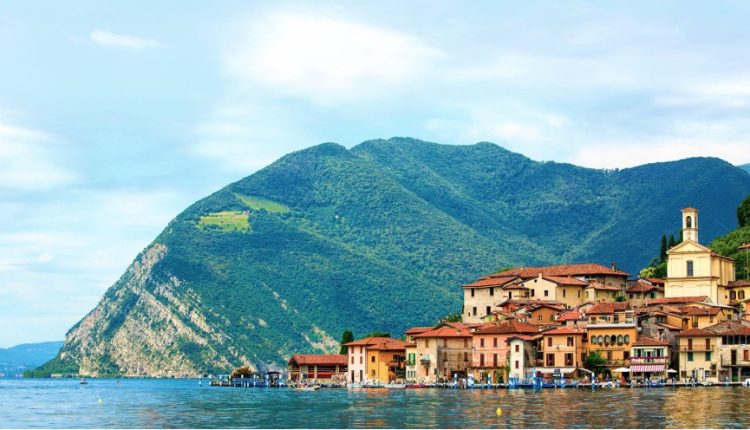
Monte Isola rises sharply from the middle of Lake Iseo in Lombardy, its medieval hamlets strung around the shore and climbing the wooded slopes. Car-free and officially recognised as one of Italy’s most beautiful small towns, it has preserved an atmosphere of seclusion even as neighbouring lakes have become playgrounds for the international jet set.
Although tiny, covering an area of just 4 sq kms, it is the largest lake island in Europe and climbs to an altitude of 600 metres. From the top, visitors are rewarded with 360-degree views across Lake Iseo and the surrounding Franciacorta wine hills.
Daily life on Monte Isola remains largely traditional. Within easy reach of Milan, Bergamo and Verona, the island is car-free — residents get around by bicycle or moped. Sardines are still dried on wooden racks by the shore, while olive groves on the slopes produce a delicate oil.
“Lake Iseo is a jewel in the heart of Lombardy,” says Gabriella Martinotta of Engel & Völkers. “Its strategic location makes it an ideal base for exploring Italy, yet life here remains immersed in nature and far removed from the chaos of the big cities.”
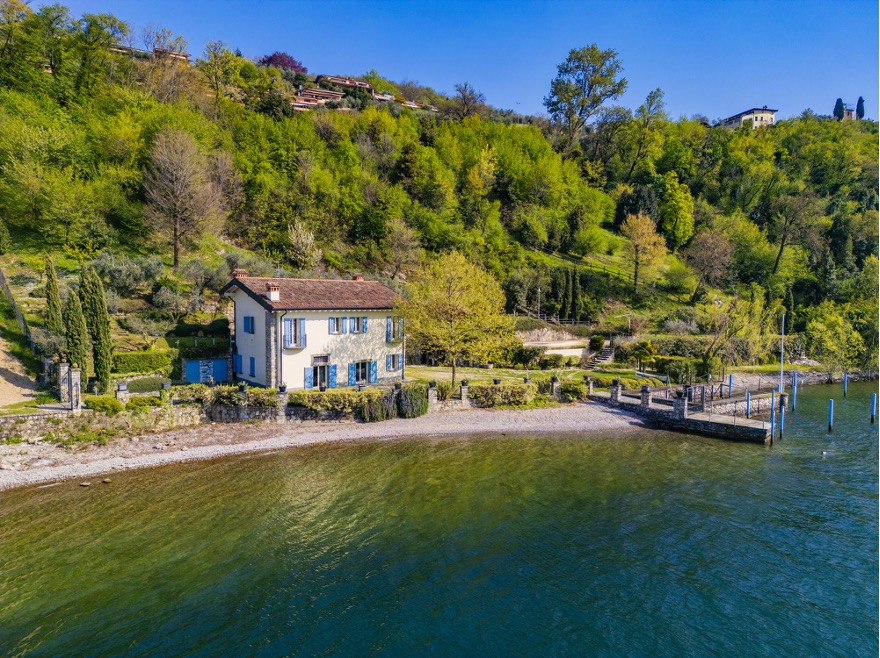
Luxury property, however, is in short supply. Ordinary village houses come up for sale, but villas with direct access to the water are rare. One example is this three-bedroom villa in the Baia del Silenzio (Bay of Silence) on sale at €2.45mn. Built in 1865 and fully renovated in 2010, it has served many roles — kiln, laundry, stable and even bar — before its conversion into a private home.
Inside there are vaulted ceilings, exposed beams and walls of Sarnico stone, a local sandstone quarried for centuries on the southern shore of Lake Iseo and often used in classical architecture and sculpture. Underfloor heating and double glazing are among the many modern upgrades.
Extensive grounds lead down to the water, and it has its own private beach, a dock for two boats and a saltwater pool with open views across the lake. There is also an orchard of pear trees, cherries, figs and grapes. An apartment, currently linked to the main house, could be given its own access for guests or used as a rental property.
“It is very rare to find properties of this kind on Monte Isola, notwithstanding a fair number of historic pieds dans l’eau,” says Martinotta. “Across the water, alternatives exist for those who prefer the view of Monte Isola to the reality of living on it.”
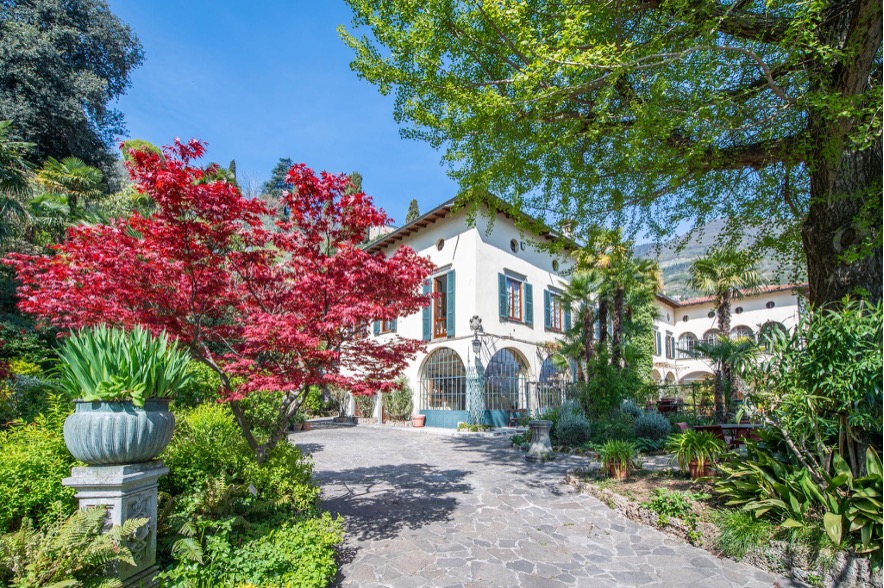
In Tavernola Bergamasca, a mid 16th-century lakeside manor with waterfalls and cliffs is on the market for €2.8mn — and comes with a certain academic pedigree as well as beauty.
The huge botanic garden behind the house stretches to more than two acres and was designed by agronomist and botanist Luigi Fenaroli, who used it as a living laboratory. It was here in the 1960s that he experimented with cultivating kiwifruit in Italy, the first successful attempt to grow it in the country. The industry flourished from these early experiments — Italy is now the third-largest producer of the fruit in the world after China and, of course, New Zealand.
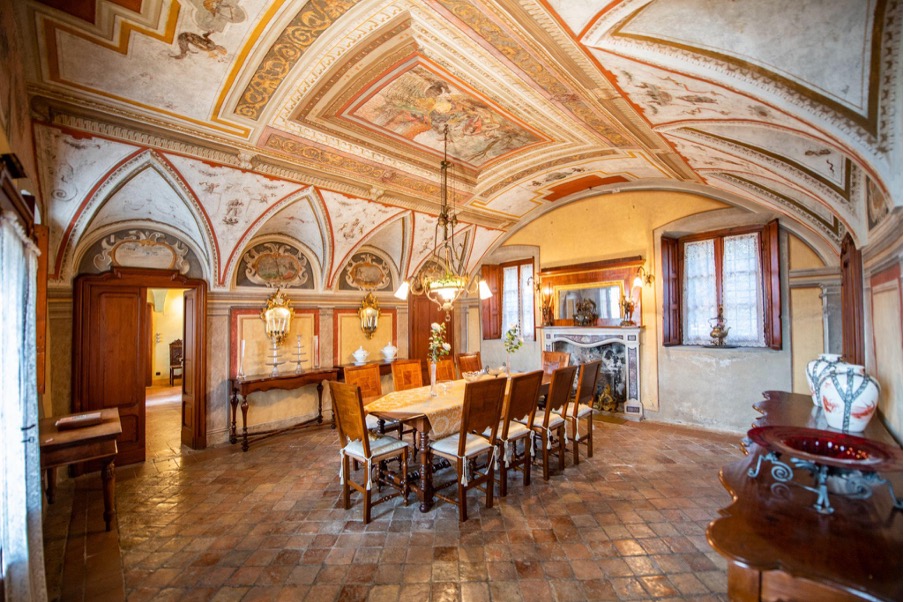
Inside the five-bedroom lakeside property, frescoed hallways lead to high-ceilinged rooms with stone fireplaces, where large windows frame views across the water. There are also three self-contained apartments on site. The villa itself requires modernisation and heating, making it a classic restoration project.
Whether restoring a manor on the mainland or securing a rare villa on Monte Isola, the decision is less about square metres than way of life. Ownership here carries with it the promise of long summers by the water, ferries instead of traffic, and a connection to traditions that larger lakes such as Como or Garda have largely lost.
Photography: Engel & Völkers; Getty Images
Read the full article here