

Unlock the Editor’s Digest for free
Roula Khalaf, Editor of the FT, selects her favourite stories in this weekly newsletter.
Recent scholarship tells us that Purcell’s 50-minute opera Dido and Aeneas was not written for a girls’ boarding school in London, as long believed, but probably for court performance in front of Charles II around 1683-4.
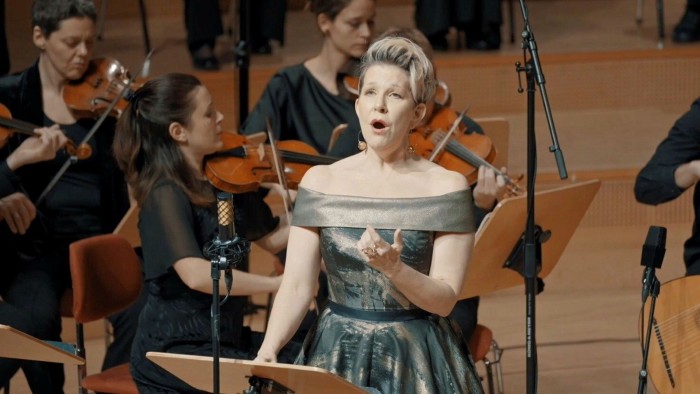
Either way, it is unlikely that the singer of Dido compared to the voice of a leading opera singer today. This new recording has a star in Joyce DiDonato and, for all that the performance as a whole is of high standard, she dominates the proceedings wherever she appears.
There is a quiet dignity to her interactions with Fatma Said’s pinpoint Belinda, softer perhaps than would carry in a theatre. Her other relationship is with Aeneas, sung by Michael Spyres, who was coincidentally Aeneas to DiDonato’s Dido in Erato’s 2017 recording of Les Troyens, Berlioz’s epic French version of the same story. In the Purcell, Spyres makes a demure character of the Trojan hero, far outplayed by DiDonato’s blazing fury as she packs him off to his destiny in Rome. Dido’s lament, the opera’s most celebrated number, is sung with a concentration that grips in every phrase.
There are a few moments when Maxim Emelyanychev rushes the music, delightfully in Belinda’s “Haste, haste to town”, less so in some of the other choruses and the Sailor’s buoyant aria. The dances, though, are done with vivid character.
Il Pomo d’Oro and its choir are a top-flight Baroque ensemble and Emelyanychev is alive to every quick-changing mood in Purcell’s brilliant, humorous, tragic masterpiece. Even in a crowded field this recording shines out.
★★★★★
‘Purcell: Dido and Aeneas’ is released by Erato
Read the full article here