

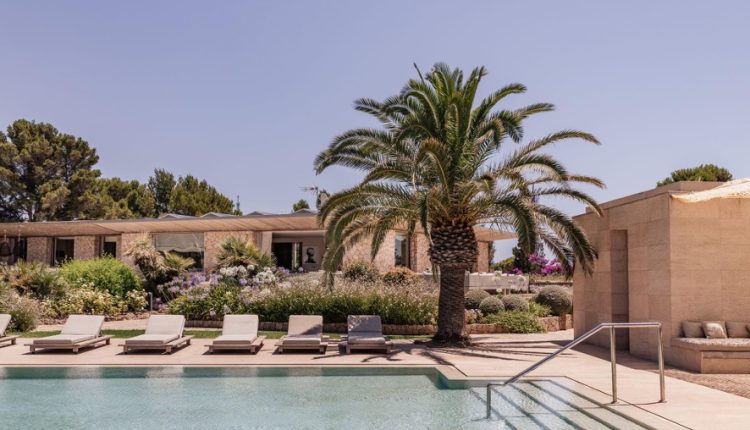
By Emma Bird
Of all the ways to express luxury in a home — through layout, landscaping, or the sweep of a sea view — few are as quietly powerful as the use of materials. Local stone, wooden beams and handmade tiles can anchor a building to its setting. In Mallorca, these traditional elements are being revalued.
Buyers — most of them from abroad — still want infinity pools and sea views but are increasingly drawn to homes that combine upmarket appeal with authenticity. Around half of all Balearic property sales are in the multi-million-euro range.
Architect Juan Llobera is among those responding to the shift. His Palma-based studio prioritises the use of local materials such as Santai sandstone — used in Palma Cathedral — and marès, a softer limestone-based sandstone. Many of his international clients, mainly from the UK,the USA and Germany, arrive unfamiliar with Mallorcan architecture. “Once you get to see it, and once you get to understand it, it’s something that a lot of people fall in love with,” he says. What resonates is the sense of permanence: the monumental stone, the layering of styles, and the way buildings seem rooted in the landscape.
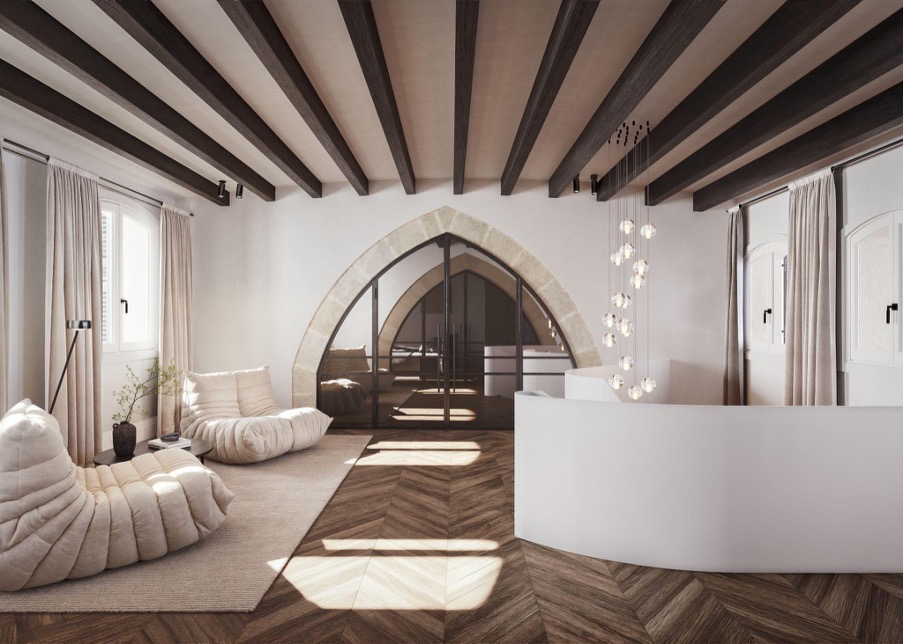
“Santanyí stone is the best on the island,” Llobera explains. Available in different grades, it is used for facades, structure and floors. Dry-stacked limestone shapes exterior walls, while pine beams support traditional slabs. Though not native to the island, iroko — a dense West African hardwood prized for its resistance to humidity and sea salt — is commonly used for shutters and window frames. Walls, if not clad in stone, are typically rendered in ochre plaster to reflect the surrounding landscape.
This respect for materials is central to Llobera’s practice—and comes into focus at Can Granada, a palacio in Palma’s old town dating to the late 16th century. Llobera is behind its revival, converting the historic structure into six high-spec residences. “We go floor by floor, slab by slab,” he says. “There’s a huge team — archaeologists, restorers, engineers. We don’t just design; we discover and rehabilitate.”
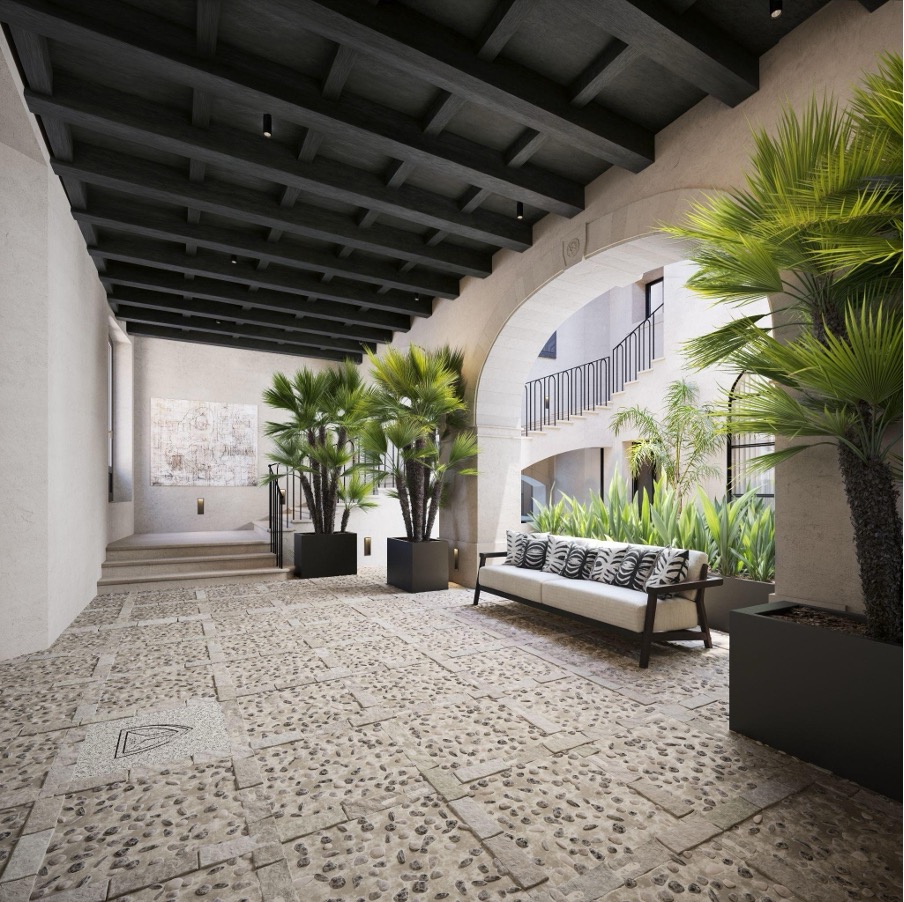
Each apartment includes a private patio or terrace and retains original features such as coffered ceilings, stone arches and wooden beams. Set to be completed next year, prices will start at €1.77mn for a two-bedroom apartment.
But historic renovations on the island are often complex. Can Granada is under strict heritage protection, meaning changes to slabs, windows or plumbing require approval from Palma’s City Hall. The works are proceeding slowly, with materials having to be hoisted in by hand.
The tactile approach continues at Villa Salimar, a seafront property in Santa Ponsa where traditional materials have been used with unexpected finesse. Handmade cement tiles by family-run Mallorcan company Huguet — based in Campos since it opened in 1933 — feature throughout the house, their chalky texture and softly pigmented tones lending a quiet richness to the interiors. Produced using hydraulic pressing techniques, these tiles can be plain or patterned and are often made bespoke. They aren’t just decorative; they carry with them a sense of place, craft and permanence.
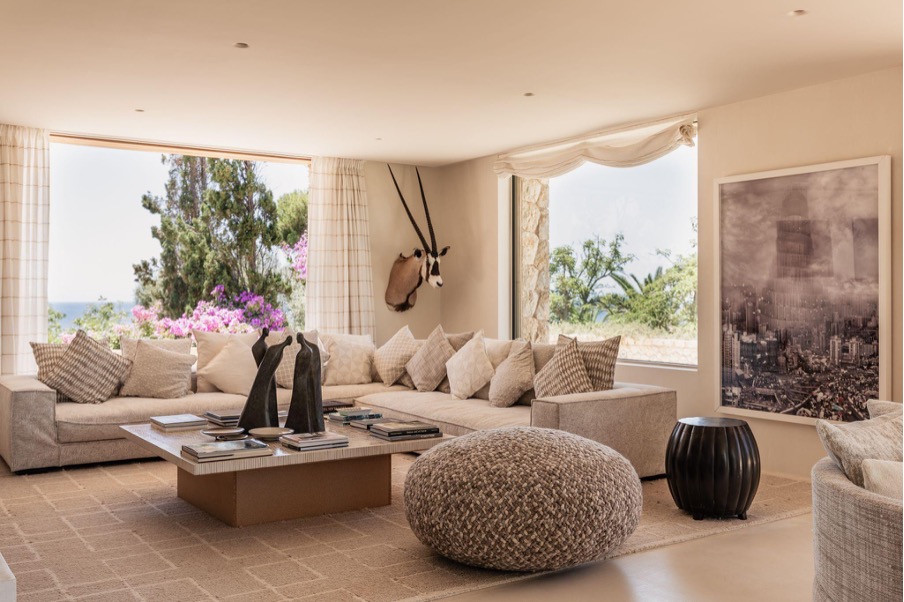
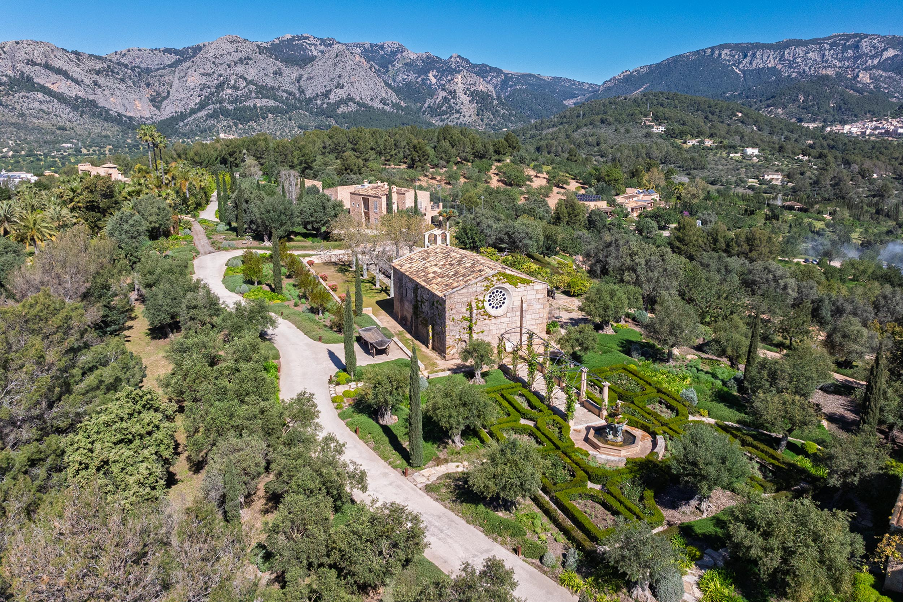
More rural is a Mediterranean mansion set among forests in the Unesco-listed mountain range the Serra de Tramuntana. Although the estate, near Banyola, was built only recently, the strategic use of local stone ensures the six independent residences are in harmony with their surroundings. Panoramic views, shaded courtyards, wine cellars and private gyms complete the 29-bedroom property.
Llobero sees the use of traditional materials — whether in a centuries-old palacio or a seafront villa — as part of the same impulse: to build something that feels like it blends seamlessly into Mallorca’s history. “There’s a richness in Mallorcan architecture,” he says. “It blends Moroccan, Andalusian and Greek influences. Even if it’s a new house, we want it to feel like it’s always been there.”
Photography: Engel & Völkers; Juan Llobero /Lloberarq; Spain Sotheby’s International Realty
Read the full article here