

Unlock the Editor’s Digest for free
Roula Khalaf, Editor of the FT, selects her favourite stories in this weekly newsletter.
I’ve been dreaming about creating an impact beyond the Pacific Ocean ever since I dropped out of school to start Coral Gardeners, my reef restoration non-profit, in French Polynesia in 2017. Now we’re a team of 80 employees, including scientists from Berkeley, who plant coral, develop monitoring methods and raise awareness around climate change.
In 2022, we were approached by a gentleman named Yodchai Sudhidhanakul, a successful businessman from one of the five local families who own Koh Mak, in eastern Thailand. He had been alarmed by the discovery that the island’s coral reef was one of the biggest in the region, but it was in bad shape, and he approached Coral Gardeners for some help. We shared a great connection from the get-go.
I first visited Koh Mak and Koh Kood, which are a 30-minute ferry from one another, on a scouting trip with some of our scientists. The islands have a lot to offer, from beautiful white-sand beaches to fields of caoutchouc (rubber). Koh Kood is bigger and more remote: it has a lush jungle with little waterfalls and old trees that are considered sacred. Koh Mak is so small you can bike the entire island in one go.
Going underwater blew my mind. I didn’t expect such a diversity of coral species. My new favourite is the bubble coral, which has hard, bubble-like polyps that are almost like candies. It’s crazy. There are also little yellow rays with electric-blue spots hiding in the reef, schools of fish in rainbow colours, soft coral, giant table coral, sea urchins… But there are also patches that are completely destroyed, sometimes due to global warming and ocean acidification, but also non-durable fishing methods such as dynamiting, which has destroyed the sea floor.
Thailand is our third Coral Gardeners branch and our biggest expansion project so far: our regional HQ is on Koh Mak and our offices are on Koh Kood, and we employ a team of 10 locals across both. We’re trying to turn the families of fishermen into gardeners who restore life to our oceans. We are building the first ever land-based coral farm in Thailand on Koh Mak, which allows us to cultivate slow-growing species at an accelerated rate by breaking them up into fragments and letting them grow in tanks. You can also adopt a Thai coral on our website so that you can follow our work.
Koh Rang National Park is known for its diving, which I love. It has beautiful brown rocks with corals that look like bouquets of flowers. I usually go around March or April for good weather and optimal underwater visibility. I also like Bang Bao beach on Koh Kood – it’s big and beautiful.
I’m more of a diver than a foodie guy, but Thai food is honestly an adventure in itself. The coconuts have a different taste on Koh Mak and Koh Kood – a bit more salty but really good. I go to Koh Mak Seafood restaurant for tom yum soup with ginger, lemongrass and coconut. For breakfast, I like the smoothies and acai bowls at Food Art Hut. It’s perfect ahead of a working day. And my favourite place for sunset drinks is the Blue Pearl Bar, which is located on a pier with beautiful views of the island. Order the Blue Lagoon, a curaçao-based cocktail, or a Leo, a local beer.
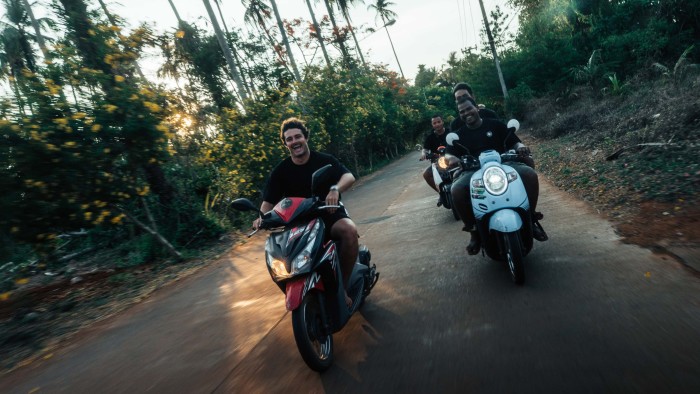
I grew up on a tiny pearl farm in French Polynesia so I’m used to these kinds of quiet islands. The locals understand that tourism is important for the economy and the development of the islands, but there is also a clear understanding of what they don’t want: littering, pollution (tourists should wear reef-safe sunscreen) or disturbing corals and other marine creatures. In Thailand, touching coral is against the law. Ride a bike here wherever possible, or use one of the electric golf carts you can leave anywhere on the island. Participate in a beach clean-up while you’re here with Trash Hero Koh Mak and in our coral-restoration projects. And eat the local food – first for your own discovery, and then for sustainability.
Koh Mak was listed in the top 100 sustainable destinations [by the Green Destinations Foundation] and the locals want to be at the top of that ranking. We have some bungalows at our headquarters where we are trying to develop eco-tourism by offering educational workshops and immersive experiences in coral restoration to our guests. For accommodation, I like the Little Moon Villa, which is cute, authentic and well located on Ao Ta Long beach. It’s important to remember that the islands’ families have welcomed you onto their beautiful land. So we should respect and appreciate the fact they’ve let us into their world.
Read the full article here