

Unlock the Editor’s Digest for free
Roula Khalaf, Editor of the FT, selects her favourite stories in this weekly newsletter.
Ibsen, Chekhov, Miller . . . in recent years Shakespeare’s Globe has expanded its roster of classic drama, offering welcome company for the house playwright. This spring saw a gorgeous, candlelit production of Three Sisters, a perfect fit for the intimacy of the indoor Sam Wanamaker Playhouse.
Now it’s the turn of the main theatre to embrace a modern classic — more of a challenge, perhaps, because the big, outdoor space calls for an epic work delivered with energy and elasticity and, moreover, the sort of spring-heeled dialogue that can vault through the night air and reach the top of the theatre. Arthur Miller’s The Crucible (mostly) fits the bill.
Plunging into the frenzy of the Salem witch trials, Miller’s forensic 1953 dissection of mass hysteria and persecution (written in the shadow of McCarthyism) is, dismayingly, always relevant. Right now, its depiction of a community in which individuals are demonised and the voices of reason drowned out feels all too resonant.
The Globe’s democratic quality — the open forum, the shared light — offers director Ola Ince a great opportunity to bring it close to home, spilling the action into the courtyard, erecting wooden platforms where miscreants can be whipped, or worse, and sending a cart bearing the so-called “witches” trundling through the crowd.
Her staging creates a tactile sense of small-town 17th-century New England: locals huddle in groups, gossiping, muttering and praying. You become keenly aware of the grievances, the disputes over land, the brooding misogyny — an atmosphere easily ignited by the spark of suspicion. And, for all the talk of souls, this is a story that deals in carnal desires and the control of female sexuality.
That feels important here in amplifying the tragedy: there’s a constant nagging sense of how easily all this could be put right if anyone could step back from the edge. One particularly awful moment comes when Danforth, the pompous deputy governor (Gareth Snook), ploughs on with hangings in the face of doubt because to do otherwise would essentially be to lose face.
There are challenges, however, to staging the play in this venue. It’s harder to build the drama’s feverish claustrophobia and, while Miller deploys a heightened language, the dialogue doesn’t have the thrust of a Shakespeare history play. It feels a bit slow and sticky to begin with.
But the fine cast draws you in and the play gradually asserts its febrile grip. There’s great, complex work from Hannah Saxby as Abigail Williams, a teenage girl spurned by an older man, who has grappled back some agency by crying witchcraft and is now trapped by her own strategy, and from Bethany Wooding as her agonised friend Mary Warren, who knows it all to be pretence. Set against them is the quiet integrity of Joanne Howarth’s Rebecca Nurse.
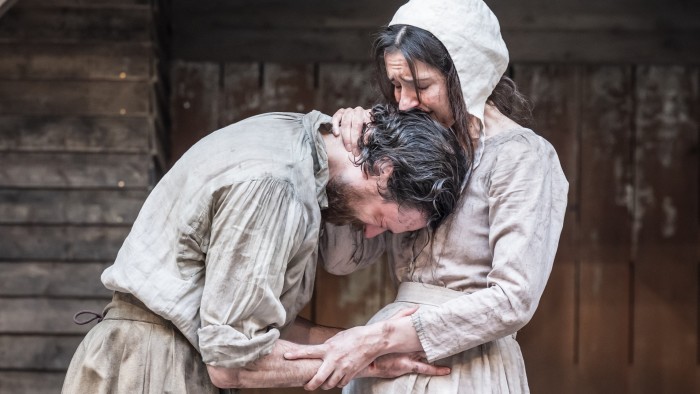
Howard Ward’s Giles Corey, Glyn Pritchard’s Francis Nurse and Jo Stone-Fewings’ Reverend Hale subtly track their characters’ growing horror as they realise the enormity of what has been unleashed, while Gavin Drea and Phoebe Pryce are riveting as John and Elizabeth Proctor, rediscovering their love for one another amid the destruction. It’s the awful waste that strikes you most powerfully here: how easily a society wrecks itself once gripped by paranoia.
★★★★☆
To July 12, shakespearesglobe.com
Read the full article here