

By Anthony Paletta
Oscar Niemeyer (1907-2012) is Brazil’s most renowned modernist architect. The country’s capital, Brasília, is full of his designs, though his scope stretches far beyond to Europe, north Africa and the Middle East. In the US, Niemeyer and Le Corbusier together were largely responsible for the final designs of the UN building in New York City, but he designed just one home there — Strick House in Santa Monica, California.
The reasons for this are largely political. Niemeyer was a member of the Brazilian Communist party (and became its president in 1992), a stance that did not win him any sympathy from the US government. Though he was appointed dean of the Harvard Graduate School of Design in 1953, he was denied a visa to enter the country. The five-bedroom Strick House that’s currently on the market is therefore a rare find.
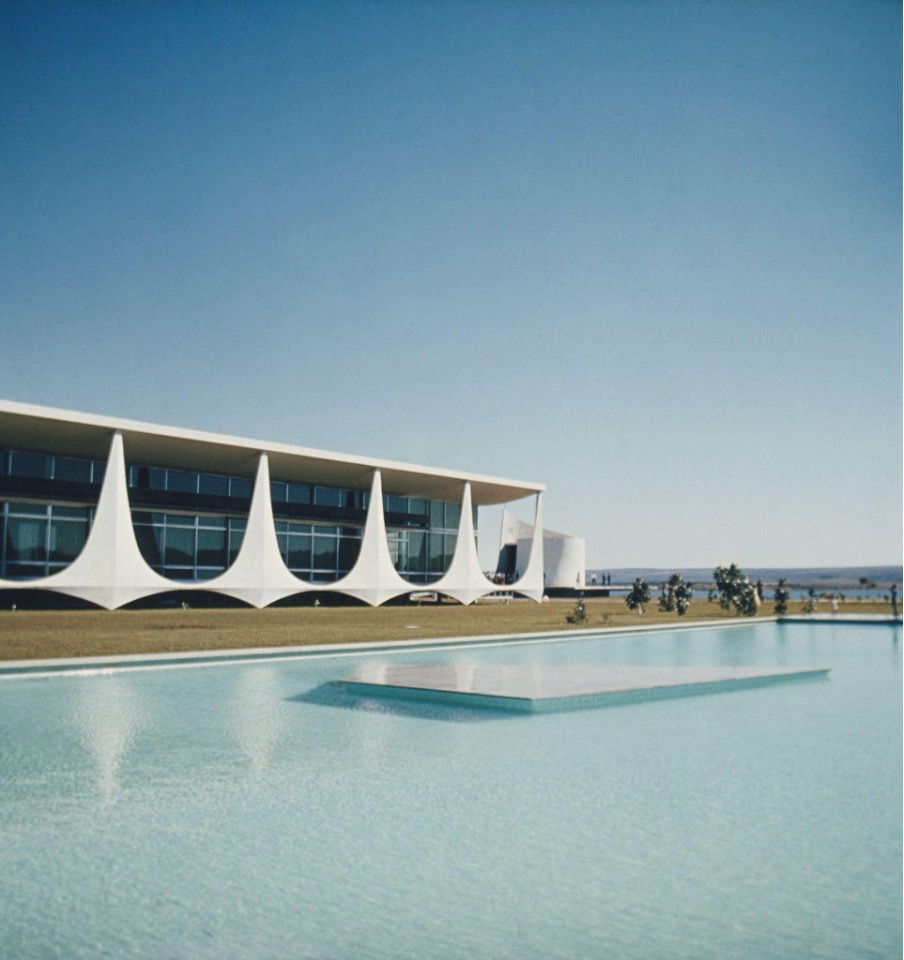
Joseph and Anne Strick were behind the commission. Joseph was a film director who worked on a number of literary adaptations — Ulysses and Tropic of Cancer; and documentaries (one of which, Interviews with My Lai Veterans won an Academy Award in 1971). Their son, Jeremy Strick, former director of both the Museum of Contemporary Art in Los Angeles and the Nasher Sculpture Center in Dallas, says: “My father went to Brasília so he could see Niemeyer’s work and was amazed. I remember seeing the photos. I had never seen anything like that before.”
The couple had a taste for modernism, previously living in a house by noted Los Angeles modernist Gregory Ain. The street where they built Strick House already featured homes by Paul Williams and Frank Lloyd Wright. Niemeyer accepted their request, though he did not attempt to visit during construction — or even meet the Stricks — given his prior difficulties. Instead he produced three different iterations of the design through correspondence. The project was supervised in Los Angeles by local architect Ulrich Plaut, and interior and landscaping details were the work of architect Amir Farr.
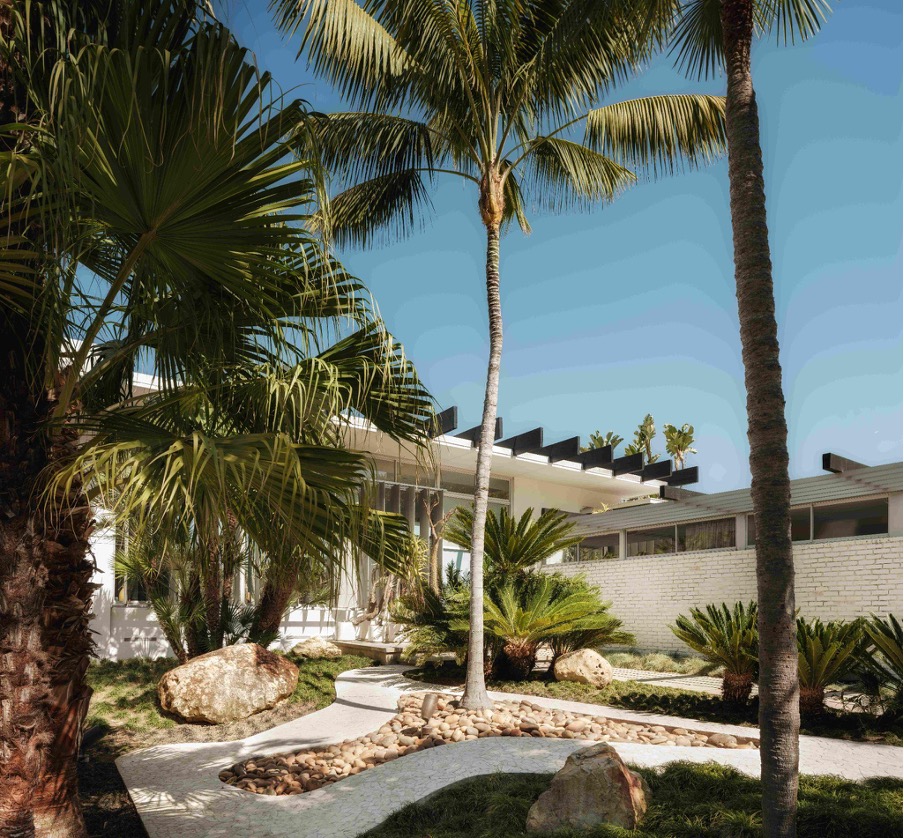
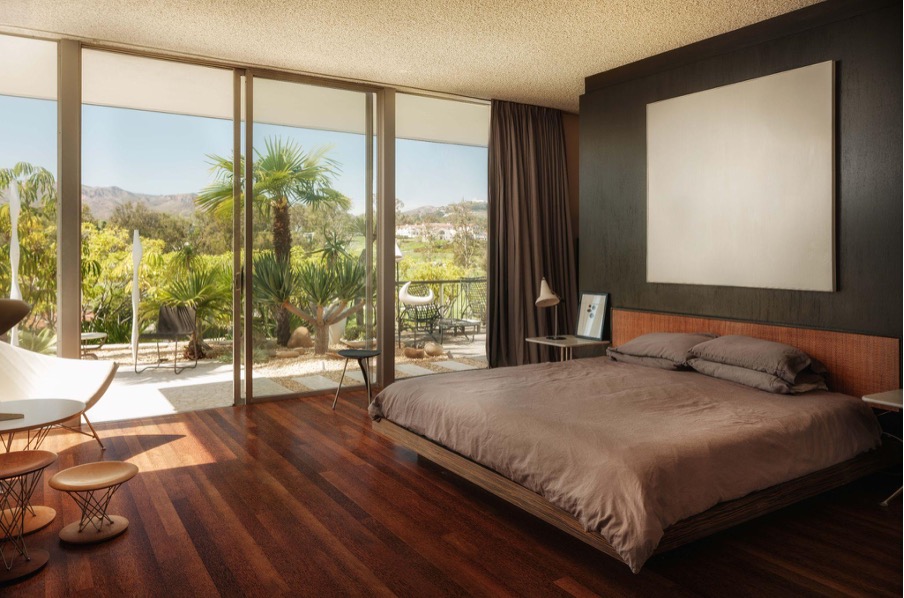
The finished house, constructed on the edge of a bluff, was a T-shape built of glass, stucco and brick. Featuring two bedroom wings — one largely containing the master suite and the other children’s bedrooms — and a base for the living room, kitchen and study with vast glass windows. Steel posts and beams and wooden joists hold the 68ft-long roof aloft.
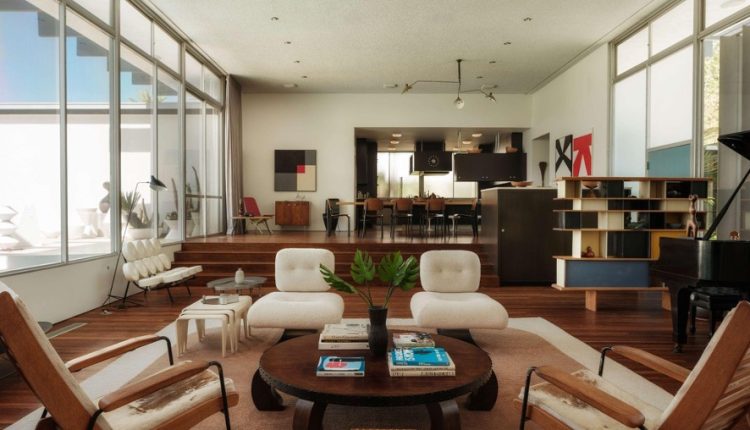
The Stricks separated before the house was completed in the mid-1960s but Jeremy and his siblings grew up in the house with their mother. “Visitors would enter and gasp,” he says. “The most spectacular space was the living room; that was the showstopper. You would enter through the front door, and you were immediately in the space — with its windows and the view out to the mountains.”
Anne sold the house in 2002 and the new owner soon proposed demolishing the house. The city of Los Angeles landmarked the property to prevent this, and it was sold the following year to new owners, designers Michael and Gabrielle Boyd.
The Boyds made a few minor alterations, some of which sought to infuse a more Niemeyer-esque spirit. The original kitchen and dining room floors were linoleum, and they replaced them with palm wood. The garage and study were converted into a two-storey library and a new garage was added.
The house has gone relatively unnoticed for much of its existence. Architectural historian Alan Hess, who authored a book on Niemeyer’s houses, recalled his surprise at finding one in his neighbourhood. There’s a tendency to identify Niemeyer largely by his trademark swooping designs, but Strick House doesn’t fit the mould. “It isn’t one of the more organic designs with curves; it’s much more rectilinear,” says Hess. He notes the exposed beams, high ceilings and orientation to maximise the view of the Santa Monica mountains. “All of that is part of his bag of tricks.”
The five-bedroom house is on sale for $19.9mn with Christie’s International Real Estate.
Photography: Archive Photos/Getty Images; Christie’s International Real Estate
Read the full article here