

By Megan Murray
Few symbols are so enduring as the knot. From sailor’s woven good-luck charms to Fairy King Oberon’s blessing of “knotted” young lovers, this simple motif has carried meanings of attachment, power and fate for thousands of years. In more recent centuries it found a new expression in the formal geometry of the knot garden.
“Symbolic knots go back to medieval and even Sumerian times, but not in gardens — that didn’t come until the late 1500s in Europe, before moving over to England,” says Pam Smith, senior national consultant for parks and gardens at the National Trust. “Before then, knots appeared everywhere indoors — in embroidery, panelling, plasterwork — so you don’t have to look far to see their importance.”
For an example in historical interior design, Smith suggests Hardwick Hall in Derbyshire. Failing that, she says, “just look up as you walk around your town. Geometric patterns are everywhere in architecture and probably your own home where artists have been inspired by the past. It could be a tile, an embroidered top or even a birthday card.”
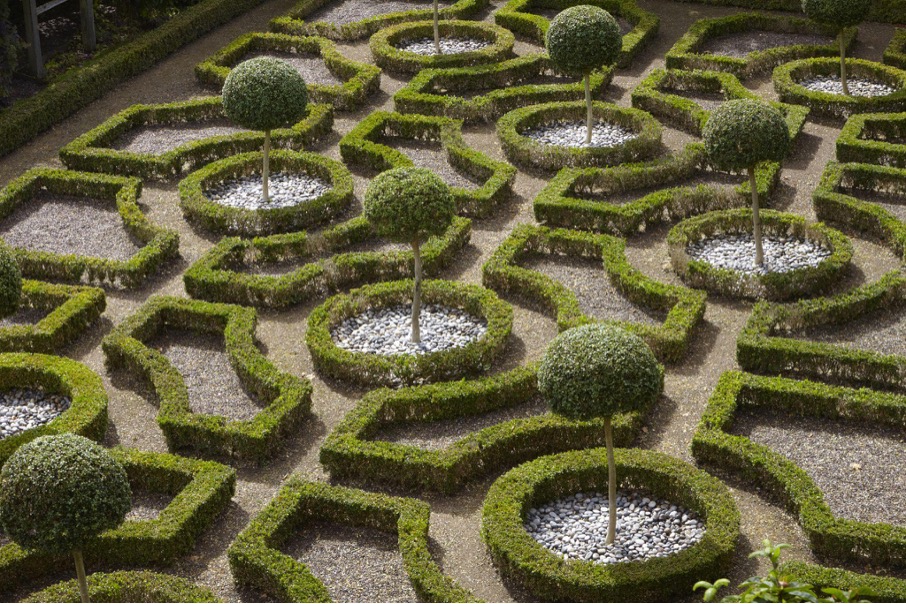
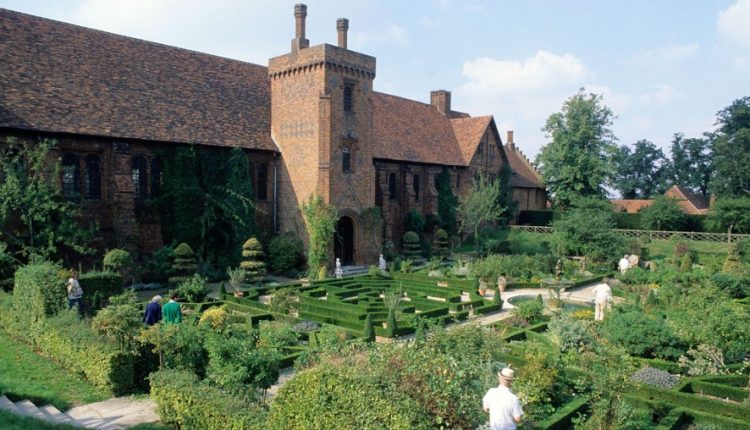
It was the Tudors who took the knot outside, arranging their herb gardens into ornate, interlacing schemes that might be translated from woodwork patterns. Often placed near kitchens but always within view of a large window, they were designed to be admired from a higher vantage point, as at Hatfield House’s Old Palace, in Hertfordshire (main image, top). Styles varied, but generally fell into two types: open (with grass, sand or gravel filling the gaps) or closed (planted densely with flowers and shrubs).
At Hunworth Mill, a seven-bedroom house in Norfolk that is on the market for £3.25mn, the knot garden can be seen from the kitchen window. “I loved it from the beginning,” says owner Rachel Hamwee, “watching it change through the seasons from summer sun to winter frost is magic.” Hamwee and her husband Nick bought the property in 2002 and the knot garden came with it — looking centuries old but in fact a more recent addition.
Award-winning designer Arne Maynard, then early in his career, had worked with the previous owners and was tasked, says Hamwee, with “waking the garden up a bit, but not too much”. In keeping with the mill’s medieval spirit, he chose a knot garden but drew inspiration from the couple’s love of Venice; “its formality, its rhythm, even stout posts nodding to gondola oars”.
Originally framed in box hedging and yew topiary spirals, the design was softened with wild strawberries, William Guinness’ aquilegia and winter hellebores. At its centre, terracotta pots add seasonal bursts of colour — particularly spectacular in spring when filled with pink tulips.
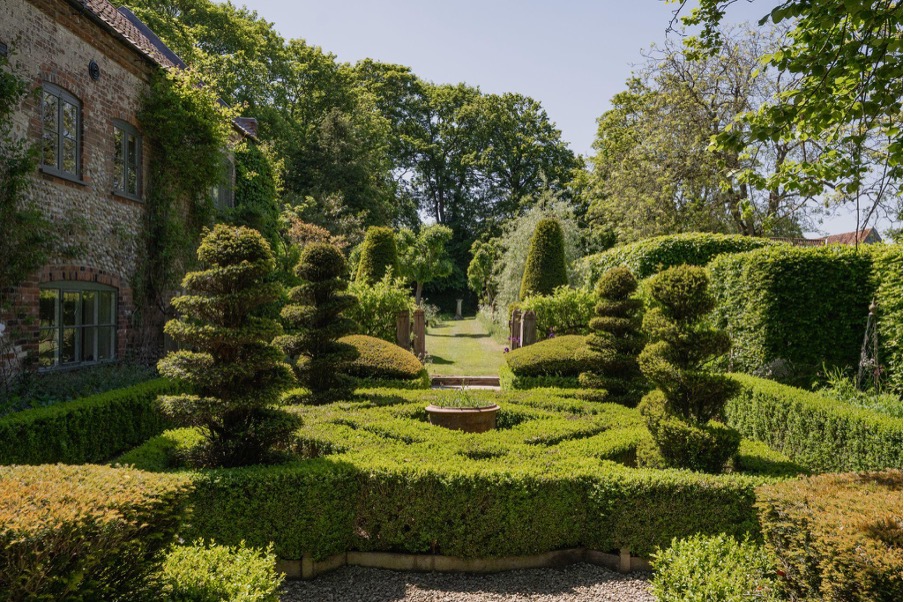
Hamwee once considered redesigning the knots: “After a few weeks of noodling, I realised I couldn’t improve on what was there.” She has since refreshed some planting, especially where box blight crept in, but maintenance, she insists, is manageable: “It’s really not high effort — a thorough chop once a year and professional help trimming the topiary swirls.”
While it isn’t physically demanding, the knot garden makes its presence felt. Its formal geometry anchors the property’s eight acres, a counterpoint to the free-flowing meadows, woodland and river. Indoors, the 18th-century converted mill reveals its history with rustic ceiling beams and vast wheels and cogs adding drama to the boot room.
Nestled in the Glaven Valley, cows can be seen roaming in the countryside beyond. “Our garden is rooted in nature, but this gives it identity — something that shifts with the seasons and draws people in,” Hamwee says. While insisting she isn’t overly sentimental, she admits to having grown deeply attached to the unique feature of the knot garden, and will very much miss her ever-changing kitchen-sink view.
Photography: Alamy; Strutt & Parker
Read the full article here