

Unlock the Editor’s Digest for free
Roula Khalaf, Editor of the FT, selects her favourite stories in this weekly newsletter.
New Year’s Eve 1999. As the millennium rolls in, 15-year-old Byron (Ellis Howard) is at home, lamenting how “everyone, everywhere is having wild, unadulterated grown-up fun.” By the end of the year Byron will become a hard-partying libertine worthy of their name — as well as a sex worker, a drug addict and a criminal accomplice.
Adapted from her titular memoir, What It Feels Like for a Girl is a new semi-autobiographical series by the trans writer Paris Lees. A coming-of-age tale, it is grittier and bolder than any staple BBC crime drama; the line between empowerment and abuse, self-realisation and self-destruction rarely distinguishable.
Byron’s uneasy transition from child to adult, confused boy to a confident trans woman, begins in the grime of a public toilet in the old mining town of Hucknall, Nottinghamshire. Abandoned by a selfish mother (Laura Haddock) and left to live with an abrasive, emotionally unavailable father (Michael Socha), Byron finds a literal sense of worth in being paid for sexual favours by men who don’t think to ask whether this waiflike adolescent is of age. “I’ve got something they want, and that gives me power,” they tell a friend, revealing both an assuredness and a naivety that others are all too ready to exploit.
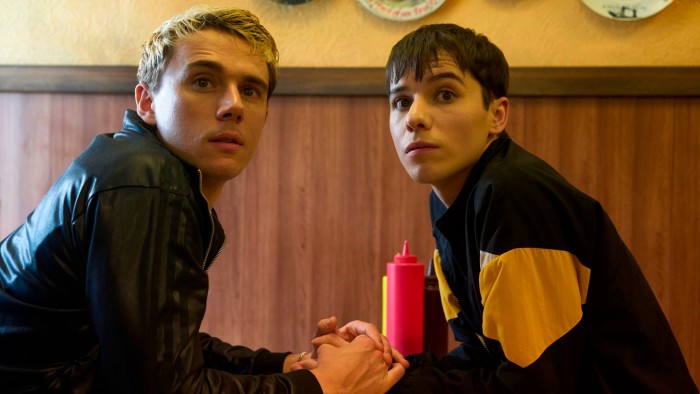
Looking for an escape from the bullies at school and at home, Byron is pulled ever deeper into a vortex of drugs and prostitution by a pimp named Liam (Jake Dunn). A mercurial bad boy, not only does he steal the teen’s heart, but also convinces the ketamine-addled Byron to assist him in an armed robbery of a “client”. A crisis of conscience and a life-resetting stint in jail soon follow.
If the show traces a fairly schematic trajectory of highs and lows, misjudgments and epiphanies, it fills this familiar narrative framework with a queasily realistic sense of Byron’s world: the clammy nightclubs, seedy drug dens, the night streets fraught with peril and excitement. Such intensity, however, can make for wearing viewing, the abundance of explicit sex scenes especially uncomfortable given the protagonist’s age.
But the aim of the series isn’t to provoke so much as to depict marginalised lives with honesty, understanding and empathy. It gives visibility and weight to both the individual experience of someone who feels trapped in the wrong place and the wrong body, and the wider community of trans women who take Byron in and give shape to the teen’s innate but hitherto indefinable feelings about their identity.
The relatively unknown Howard is a revelation in a psychologically layered, emotionally charged role; at once charismatic and vulnerable, exhilarated and fatalistic, sharp-tongued and soft-hearted. To watch Byron become their true self is also to watch a young actor come into their own.
★★★★☆
On BBC iPlayer now
Read the full article here