

Unlock the Editor’s Digest for free
Roula Khalaf, Editor of the FT, selects her favourite stories in this weekly newsletter.
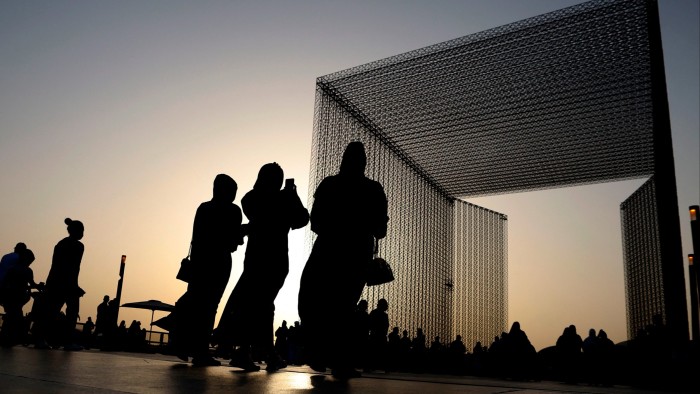
The legacy of France’s first World Expo in 1889 was the Eiffel Tower. Dubai’s Expo 2020 left the car-obsessed commercial hub with its first 15-minute city, connected to the gridlocked city via Metro link.
Yet the most transformational result was simply delivering the six-month gathering of 192 nations during the coronavirus era. After a year’s delay forced by the pandemic, about 200 pavilions opened in October 2021, achieving 24mn visits before the Expo’s close in March 2022 — the month the UK lifted the last of its travel restrictions. Dubai’s successful handling of Covid-19 — from one of the world’s strictest lockdowns to a rapid opening and speedy vaccine rollout — supercharged its growth from regional hub to global metropolis.
Today, Dubai is a go-to destination for billionaires, fuelling record-high property prices. The conservative Muslim state has unpicked anachronistic legislation to make foreigners more comfortable, such as decriminalising alcohol, and rolled out a long-term residency programme to persuade newcomers to put down roots. While social liberalisation did not go as far as LGBT rights, an underground gay culture thrives through an informal “don’t ask, don’t tell” policy.
“The Covid pandemic was a defining period for Expo — and for the world,” writes Reem Al-Hashimy, who led the event, in When Ground Shifts. “It accelerated global shifts and exposed the faultlines along which the world is being reshaped.”
A new generation of expatriates joined the oil workers and financiers who had long alighted on the emirate as a launch pad into the wealthy region. Legions of influencers, hedge fund managers and crypto-billionaires fled global lockdowns to party through Dubai’s Covid winter. Many stayed on.
The first-hand account of the UAE’s longest-serving female minister relates her experiences in delivering Expo 2020, starting by contrasting the modern United Arab Emirates with the famines of the 1930s-’40s endured by previous generations who survived on slithers of lizard meat.
In the early 2000s, she had been planning a career in teaching before Dubai’s ruler, Sheikh Mohammed bin Rashid Al Maktoum, parachuted her into the embassy in Washington DC, where a crisis erupted when the US blocked a deal involving Dubai’s ports operator, citing terrorism fears. An articulate spokesperson for the UAE, she rails against the “colonial gaze” and preconceptions of Dubai and Arab women. Characterisations of the emirate as “vulgar” wish failure on its economic model which, she argues, has confounded stereotypes of the Middle East.
Her history — a rare outing for Dubai officialdom — is “on message” but contains revelatory and personal vignettes as she organises the event through three pregnancies. Leading an overseas visit, she is asked by a foreign minister to point out the head of delegation. She “enjoys his moment of embarrassment” but it was her turn to blush when the expo played the wrong anthem at an official event. Mishaps aside, a core goal was for “cultures displayed on an equal footing”, says Hashimy. Dubai covered the US’s $60mn costs to guarantee its participation and funded individual pavilions for all developing nations.
The complicated diplomacy of welcoming Israeli and Palestinian pavilions reflected what she describes as the UAE’s “difficult choices” in promoting dialogue. In 2020, it had become the first Gulf state to agree diplomatic normalisation with Israel. That neutrality continued through Russia’s full-scale invasion of Ukraine in 2022, when the UAE refused to heed western calls to take sides. Dubai, especially, has reaped financial reward as a comfortable outpost for Russians escaping war and sanctions. The COP28 climate summit held at the Expo site in December 2023 elevated Dubai further. Hosting the conference in a petrostate was controversial, but the UAE claimed success when the final text for the first time recognised the need to transition from fossil fuels to reach net zero greenhouse gas emissions.
Expo was a coming-out party highlighting Dubai’s ambition to attract even more of the world’s wealth and talent. Many arrivals, especially the migrant worker underclass, still face hardship, but never before has the city been such an aspirational target for millions from the global south — as well as billionaires fleeing UK tax.
When Ground Shifts: The Story of Dubai Expo: Creating Hope in Times of Upheaval by Reem Al-Hashimy Profile £25, 208 pages
Simeon Kerr, the FT’s Scotland correspondent, covered the Gulf from Dubai between 2001 and 2024
Join our online book group on Facebook at FT Books Café and follow FT Weekend on Instagram and X
Read the full article here