

Unlock the Editor’s Digest for free
Roula Khalaf, Editor of the FT, selects her favourite stories in this weekly newsletter.
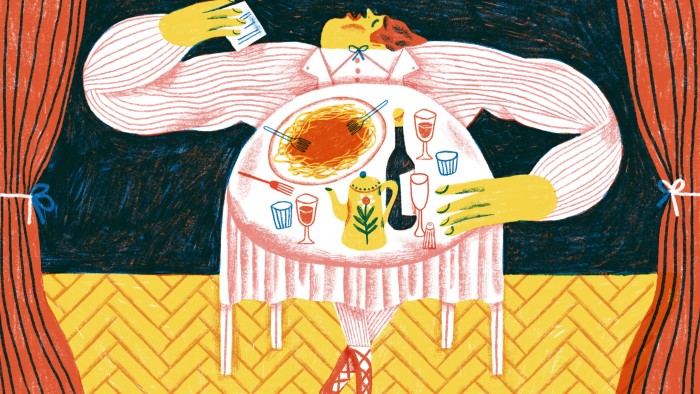
You know when you’re watching a seasoned waiter at work. There’s something timeless and beautiful in the way they gracefully waltz across the floor of a busy restaurant. Sadly for us all though, we may be witnessing the final throes of that vocation, the death of the career waiter.
When I first started working in restaurants in my teens, it was not unusual to encounter servers who were considerably older than me — talented people in their sixties, even seventies, who had waited tables for decades. And it showed: they were experienced, meticulous, calm and economical in both speech and movement. I will never forget one such colleague from a year I spent in Melbourne, Massimo, a Roman waiter well into his sixties, who worked the floor so elegantly I was awestruck. With a smile, a frown and two or three graceful hand gestures, he would have taken orders for a table of six and be opening the wine he had recommended, seemingly without uttering a word.
Now there’s a worrying shortage of serious wait staff, attributed to myriad forces. Some people point to Covid-19, others to Brexit, a few even resort to blaming a generation of “layabouts”. (Classic.) Perhaps, however, it’s the gradual disappearance of waiters like Massimo from restaurants.
Things were different back in his day, though. A career in waiting provided enough financial security and savings potential to consider taking on a mortgage. Today, as the possibility of achieving the traditional goals of career, home and family becomes more ephemeral — largely due to the increasing cost of living and property — people are abandoning traditional work models. Why toil with the same committed continuity of our forebears if we’re not rewarded with the same security and stability?
Maybe that kind of dedication just isn’t glamorous any more. Perhaps it never was. Regardless, there has been a marked shift in the way my colleagues see waiting nowadays, less a career and more of a stop-gap. In my past couple of jobs, I have worked with actors, which is nothing new, but also ceramicists, economists and quite a few content creators, but the older, experienced waiters seem to have vanished. It’s not hard to understand why. Most wait jobs in Britain pay little more for a seasoned professional than a first-time waiter.
What do we lose if the career waiter disappears? A time-honoured craft. There is an art to waiting, to providing a seamless service that allows diners to focus on the food and company. This can be both a point of pride and a source of inspiration for a waiter, just as it is for baristas, sommeliers or chefs, but there’s a lot more room to progress in those professions.
If this is the end of the career waiter, hopefully there is at least a middle ground between Massimo and the service that comes from a waiter looking into the distance, waiting for their big break in content creation.
Find out about our latest stories first — follow FT Weekend Magazine on X and FT Weekend on Instagram
Read the full article here