

Unlock the Editor’s Digest for free
Roula Khalaf, Editor of the FT, selects her favourite stories in this weekly newsletter.
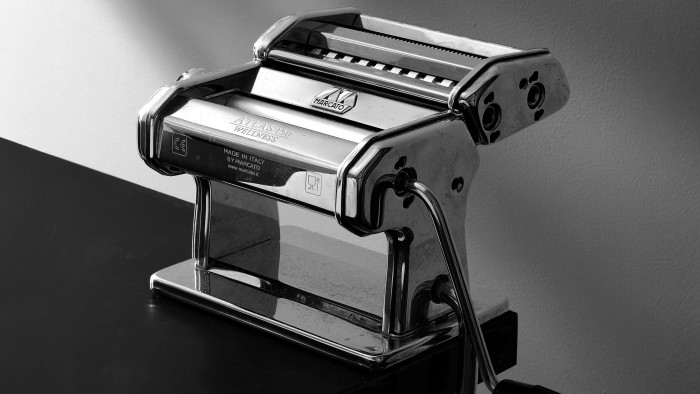
In many homes with a pasta machine, they have migratory tendencies. A new machine might spend a few weeks in regular use on the countertop before beginning its slow retreat to the back of the kitchen cabinet and perhaps, after a few years of neglect, the charity shop.
But it is a mistake to abandon your machine to the graveyard of gadgetry. Making fresh pasta isn’t simply a fun and deeply rewarding activity (although it is that), it’s a process through which you can create an entirely different dish from anything you might be able to buy in a shop. Fresh pasta behaves differently from dried pasta. It doesn’t just carry sauce, it absorbs it. And some shapes only truly come alive when freshly made.
The recipes that follow each demonstrate how deeply rewarding making pasta from scratch can be. They are an inducement to fall back in love with your machine or — if you’re a total newcomer to this most gratifying of hobbies — to buy one, and never let it gather dust.
Fresh egg pasta
Serves 4 to 6
How to make and roll the dough
-
Tip the flour on to a wooden board or clean work surface, and shape it into a mound. Use the base of a bowl or your hand to press a deep well into the centre, deep enough to hold the eggs without any runaway spills.
-
Pour the olive oil and a generous pinch of salt into the well, then crack in the eggs. With a fork, gently whisk the eggs, drawing in a little flour from the inner edges as you go, much like beating eggs for an omelette. Keep going, gradually incorporating more flour until the mixture starts to come together into soft, floury clumps.
-
Now switch to your hands. Press and squeeze the mixture into a rough ball, then begin to knead with the heel of your hand: stretch the dough away from you, fold it back over itself, give it a quarter turn, and repeat. After about five minutes of steady kneading, you should have a smooth, elastic dough that’s no longer sticky. Shape it into a tight ball, cover with an upturned bowl or a damp tea towel, and leave to rest at room temperature for 30 minutes.
-
Divide the rested dough into eight even pieces. Lightly dust your surface with semolina, then take one piece (keeping the rest covered) and roll it into a rough rectangle about 1cm thick using a rolling pin.
-
Set your pasta machine to its widest setting (usually 0) and feed the dough through. Fold it in half and pass it through again. Repeat this process three times. It helps build strength and structure into your dough.
-
Now begin to roll the dough thinner by turning the dial to the next setting. Feed the sheet through, gently guiding it with one hand while you turn the crank with the other. If it feels tacky at any point, lightly rub it into semolina. This helps prevent sticking and tearing.
-
Continue reducing the settings one step at a time until you reach your desired thinness. For most shapes (tagliatelle, tagliolini or maltagliati) a setting of 6 is ideal. For lasagne sheets or stuffed pasta, you might prefer to go one notch thinner.
-
Once rolled, lay the pasta sheets out on a wooden board or tray generously dusted with semolina to prevent sticking.
Maltagliati with burst cherry tomatoes, basil & toasted pine nuts
Serves 4 to 6
Quick, cheerful and wonderfully forgiving, maltagliati are the ideal starting point for anyone easing back into fresh pasta-making. Their name means “badly cut” and that’s the whole point. These charming, uneven diamond shapes don’t ask for precision, just a good sharp knife and a bit of instinct.
Their irregular form is perfect for catching a chunky sauce of blistered cherry tomatoes, while toasted pine nuts and torn basil echo the spirit of pesto without the need for a blender.
How to make maltagliati
-
Generously dust your freshly rolled pasta sheets with semolina and leave them to rest on a floured surface for about 15 minutes. This allows the dough to dry slightly, making it easier to cut.
-
Using a sharp knife or a wheeled pasta cutter, slice each sheet into strips roughly 2cm wide, then cut diagonally to create diamond-shaped lozenges. Scatter with a little more semolina to stop them sticking, then gently lift with a spatula and transfer to a tray.
-
You can cook your maltagliati straight away, or refrigerate them for up to a day.
How to make the sauce and serve
-
Place the cherry tomatoes into a wide pan along with the unpeeled garlic cloves, pine nuts, olive oil, a pinch of chilli flakes and a generous pinch of salt.
-
Cover with a lid and cook over medium heat for about 10 minutes, until the tomatoes are starting to blister and collapse. Remove the lid and gently crush them with the back of a wooden spoon. Let it all bubble away for another five minutes, then stir in the torn basil. Taste and adjust the seasoning as needed. Turn off the heat and set aside.
-
Bring a large pot of water to the boil. Once it reaches a rolling boil, season generously with salt. Add the pasta and cook for about two minutes, until al dente. Drain well, then toss with the warm sauce. Dust with grated parmigiano reggiano and serve.
Tagliolini with lemon butter sauce
Serves 4 to 6
Tagliolini are the most delicate of the long pasta shapes, never wider than 3mm. Their fine strands cook in moments and pair beautifully with lighter sauces, like this zesty, buttery dressing infused with lemon, thyme and a touch of pecorino.
Using the tagliolini cutter attachment on your pasta machine (one many people have but rarely use!), this shape becomes a perfect canvas for a sauce that’s fresh, fragrant and gentle enough to let the texture of homemade egg pasta truly shine.
How to make tagliolini
-
Generously dust your freshly rolled pasta sheets with semolina and leave them to rest on a floured surface for about 15 minutes. This allows the dough to dry slightly, making it easier to cut.
-
Feed the pasta sheets through the tagliolini cutter attachment, supporting the dough with one hand as you crank with the other. Let the cut strands fall on to the floured surface beneath the machine. Once all the tagliolini are cut, gently dust them with semolina and shape into loose nests on a floured board.
-
Use the tagliolini straight away, or store in the fridge for up to a day.
How to make the sauce and serve
-
Bring a large pot of water to the boil. Once boiling, salt generously.
-
Meanwhile, place the butter and anchovy fillets in a wide skillet. Melt the butter gently over low heat, using a wooden spoon to break up the anchovies until they dissolve.
-
Add the lemon juice and zest, and let the sauce bubble for a minute to reduce slightly, and then remove from the heat.
-
Cook the tagliolini in the boiling water for about one minute. Drain while still al dente and transfer directly to the pan with the lemon butter sauce, along with a couple of tablespoons of the pasta cooking water.
-
Add the grated pecorino, a few grinds of black pepper, and the fresh thyme leaves. Toss everything together for a minute or two, allowing the cheese to melt and emulsify with the butter and lemon into a light, zesty sauce. Serve immediately.
Herb-laminated pappardelle with asparagus sauce
Serves 4 to 6
For those ready to take their pasta-making up a notch, herb-laminated pappardelle are a satisfying weekend project. Wide ribbons of dough are layered with edible herbs — parsley, mint, basil, chervil or even flower petals — then rolled again to create a delicate marbled effect. The result is not just delicious, but also visually striking on the plate.
These Tuscan-born pappardelle, typically 2cm to 4cm wide, are made for sauces with texture and depth. Here, they’re paired with a bright green asparagus sauce, chunky and generous with olive oil, parmigiano and fresh mint, a true celebration of spring in every bite.
How to make the pappardelle
-
As soon as a pasta sheet comes out of the machine, lay it flat and scatter herb leaves or petals over half of it. Fold the sheet over to enclose the herbs, press gently with your hands, then pass it once more through the machine at the same setting to seal the layers.
-
Dust the herb-laminated sheets generously with semolina flour and let them rest on a floured surface for about 15 minutes. This helps the dough firm up slightly, making it easier to cut.
-
Loosely roll each pasta sheet into a log and slice into ribbons about 2cm wide. Unroll the strands carefully and toss them with a little more semolina to prevent sticking. Lay them flat on a tray or board dusted with semolina and allow to dry slightly.
-
Use the pappardelle immediately or refrigerate for up to a day.
How to make the sauce and serve
-
Trim and clean the asparagus, snapping off any woody ends. If the spears are thick, peel them lightly, then slice into thin rounds. Halve the tips lengthwise and set them aside. Thinly slice the spring onions, using both the white and green parts.
-
Place the asparagus and spring onions in a pan. Drizzle with olive oil, season with a generous pinch of salt, and cook over medium-low heat for about 10 minutes, stirring occasionally, until soft. Taste and adjust seasoning with salt and pepper. Set aside.
-
Bring a large pot of water to the boil. Once boiling, salt generously. Cook the pappardelle for about four minutes, or until al dente. Drain and transfer to the pan with the asparagus sauce, adding a couple of tablespoons of pasta cooking water.
-
Add the grated parmigiano and mint leaves. Toss gently for a minute or two, until the cheese melts and blends into the sauce. Serve immediately.
Giulia Scarpaleggia is the author of “Cucina Povera” and a cooking school instructor based in Tuscany
Find out about our latest stories first — follow FT Weekend Magazine on X and FT Weekend on Instagram
Read the full article here