

Unlock the Editor’s Digest for free
Roula Khalaf, Editor of the FT, selects her favourite stories in this weekly newsletter.
Bulgaria became the 21st member of the Eurozone on Thursday, completing a long-sought step in its European integration despite years of political instability and pro-Russian campaigning against the move.
Sofia has failed to form a stable government for nearly five years. Large protests in November led to the collapse of the latest cabinet and raised the prospect of an eighth election in as many years. Allegations of corruption and mismanagement, the absence of a 2026 budget and sustained fear-mongering by pro-Russian forces have all tainted the moment of euro adoption.
“This step is good for Bulgaria, and it strengthens Europe as a whole,” said European Commission president Ursula von der Leyen. “It makes our economy more resilient and competitive globally.”
What might otherwise have been a celebration of European values has proved more divisive in the Balkan country. Support for the euro stands at about 40 per cent, while opposition exceeds half the population, according to two Eurobarometer surveys conducted in 2025.
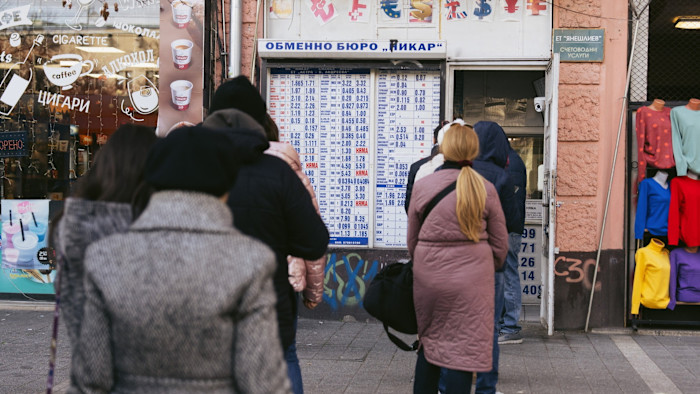
Public scepticism is driven in part by fears that retailers will round up prices during the currency conversion, as occurred in other countries after euro entry. The prolonged absence of a stable government has also undermined official efforts to defend the changeover.
Disinformation watchdogs say opposition has been amplified by a sustained campaign from pro-Russian political forces and co-ordinated messaging on social media. Parties such as the far-right Revival, along with Bulgaria’s pro-Russian president Rumen Radev, have called for a referendum on the euro.
Anti-euro activism has been led chiefly by Revival, which has organised protests across Bulgaria, some featuring Russian flags and clashes with police outside EU institutions. During one demonstration in Sofia, supporters attempted to set fire to part of the European Commission’s delegation, chanting slogans such as “No to the euro” and “We want to keep the lev”. The messaging centres on claims that joining the euro would erode national sovereignty, undermine Bulgarian identity and benefit political elites.
Goran Georgiev, an expert on Russian disinformation at the Centre for the Study of Democracy in Sofia, points to a “decades-long push by the Kremlin and its proxies to block Bulgaria’s accession first to the EU and Nato, and later to Schengen and the Eurozone.
“Bulgaria’s euro-Atlantic integration succeeded despite this, and despite systemic problems such as corruption and the lack of an independent justice system,” he said. “The reforms pledged at EU accession in 2007 are still the ones the country struggles to deliver.”
Outgoing prime minister Rosen Zhelyazkov acknowledged “challenges” ahead but said the euro would have a “long-term positive effect” on the economy. He added that Bulgaria’s inflation rate of 5.2 per cent in November “had nothing to do with the euro”.
The switch from the lev to the euro is expected to have limited immediate economic impact, as the national currency has been pegged to the Deutsche mark and later the euro since the 1990s to guard against hyperinflation.
Eurozone membership, however, gives Bulgaria a seat on the European Central Bank’s governing council for the first time, granting it a direct voice in monetary policy.
Read the full article here