

Unlock the Editor’s Digest for free
Roula Khalaf, Editor of the FT, selects her favourite stories in this weekly newsletter.
The writer is global systems and policy manager at the Climate and Community Institute and research manager at Transition Security Project
In the summer, the Pentagon announced plans to purchase nearly 7,500 tonnes of cobalt, reviving stockpiling at a scale not seen since the cold war. Amid an influx of new funding authorised by the Trump administration’s One Big Beautiful Bill Act, the solicitation for cobalt is a part of a wider push by the military to expand its reserves of critical minerals.
Since July, the US defence department has pursued contracts to stockpile a growing list of critical minerals which it says are used to manufacture virtually every weapons system it deploys, from unmanned aerial vehicles and fighter jets to an emerging arsenal of military technologies such as AI-driven autonomous warfare platforms.
And while it ramps up stockpiling, it is simultaneously deploying a wider suite of strategies to tighten its grip over critical mineral supply chains — from extending the Biden-era use of the Defense Production Act to finance mining projects to taking direct equity stakes in mineral companies. In July, for example, the Pentagon agreed to take a $400mn stake in MP Materials, a natural resources company. And earlier this month, a White House official said the US government planned to take more stakes in critical minerals companies.
All this is an effort to “onshore” supply and reduce dependence on foreign, especially Chinese, sources.
Yet many of the same minerals coveted for weapons systems are also indispensable to the technologies needed to decarbonise the economy. Military demand risks diverting these materials from sectors vital to the energy transition.
Estimates suggest that at least 30 energy transition minerals and metals, such as lithium, cobalt and rare earth elements, form the material basis of the shift to green energy. These materials are core components of renewable energy technologies and essential to electrification, used in wind turbines, solar panels and, critically, the batteries that store renewable energy, electrify transit and stabilise the electricity grid.
Many of the materials now being funnelled into the National Defense Stockpile could instead accelerate the deployment of renewable energy technologies at a time when the narrowing climate window demands rapid, decisive action.
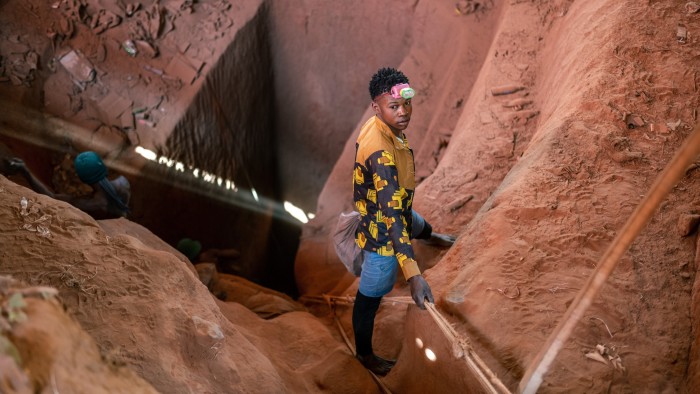
The Pentagon’s plan to stockpile cobalt is one example. Cobalt is a crucial component of many high-performance lithium-ion batteries used across the electrification ecosystem, from electrified transit to grid-scale storage. The cobalt slated for the National Defense Stockpile could be used instead to produce 80.2 gigawatt hours of battery capacity — more than double the existing energy storage capacity in the US.
Cobalt is not the only transition mineral the Pentagon is stockpiling. Graphite, which is another key component of energy storage systems, is the largest of the defence department’s recent solicitations at nearly 50,000 tonnes. Together, planned cobalt and graphite stockpiles would be enough to manufacture over 100,000 electric buses. This is a substantial share of the fleet required to reorganise the US transportation system around expanded public provision. Today, there are less than 6,500 electric buses in operation nationwide.
Despite their potential to propel the energy transition, materials in the National Defense Stockpile remain directed towards military priorities, limiting their deployment to the civilian economy.
Originating in the years between the first and second world wars, mineral stockpiling has always been tied to military readiness. The very notion of “criticality” emerged from this context. By law, materials in the stockpile can only be released by the president in times of declared war or “to serve the interest of national defence only”.
Current trends point towards a dark and fragile future. While the US sits out of global climate talks, the Pentagon maintains the world’s largest military budget and is the planet’s biggest institutional polluter. As it has since the Kyoto climate negotiations in 1997 — where the US lobbied successfully to exempt the Pentagon from climate agreements — the vast scale of US global military infrastructure continues to block the effort required to mitigate the climate crisis.
As mineral extraction becomes increasingly zero-sum and climate impacts intensify, the US faces a pivotal choice: continue shovelling resources into an expanding military apparatus or direct them towards an industrial strategy that delivers public benefits, stabilises the climate and provides the foundation for climate co-operation, including between the US and China.
Read the full article here